
Information verified: August 28, 2026. Shikoku’s four prefectures are home to a wonderfully varied lineup of festivals, from one of Japan’s largest dance festivals to a powerful clash of ornate festival floats. This guide covers three standouts: the “Awa Odori,” one of Japan’s largest Bon dance festivals with over 100,000 dancers (Tokushima); the “Yosakoi Festival,” famous for its free-spirited choreography (Kochi); and the “Niihama Taiko Festival,” counted among “Shikoku’s Three Great Festivals” (Ehime). Dates are broadly consistent year to year, but please check each official website for the latest information before you travel.
Awa Odori — One of Japan’s Largest Bon Dance Festivals, With 400 Years of Tradition
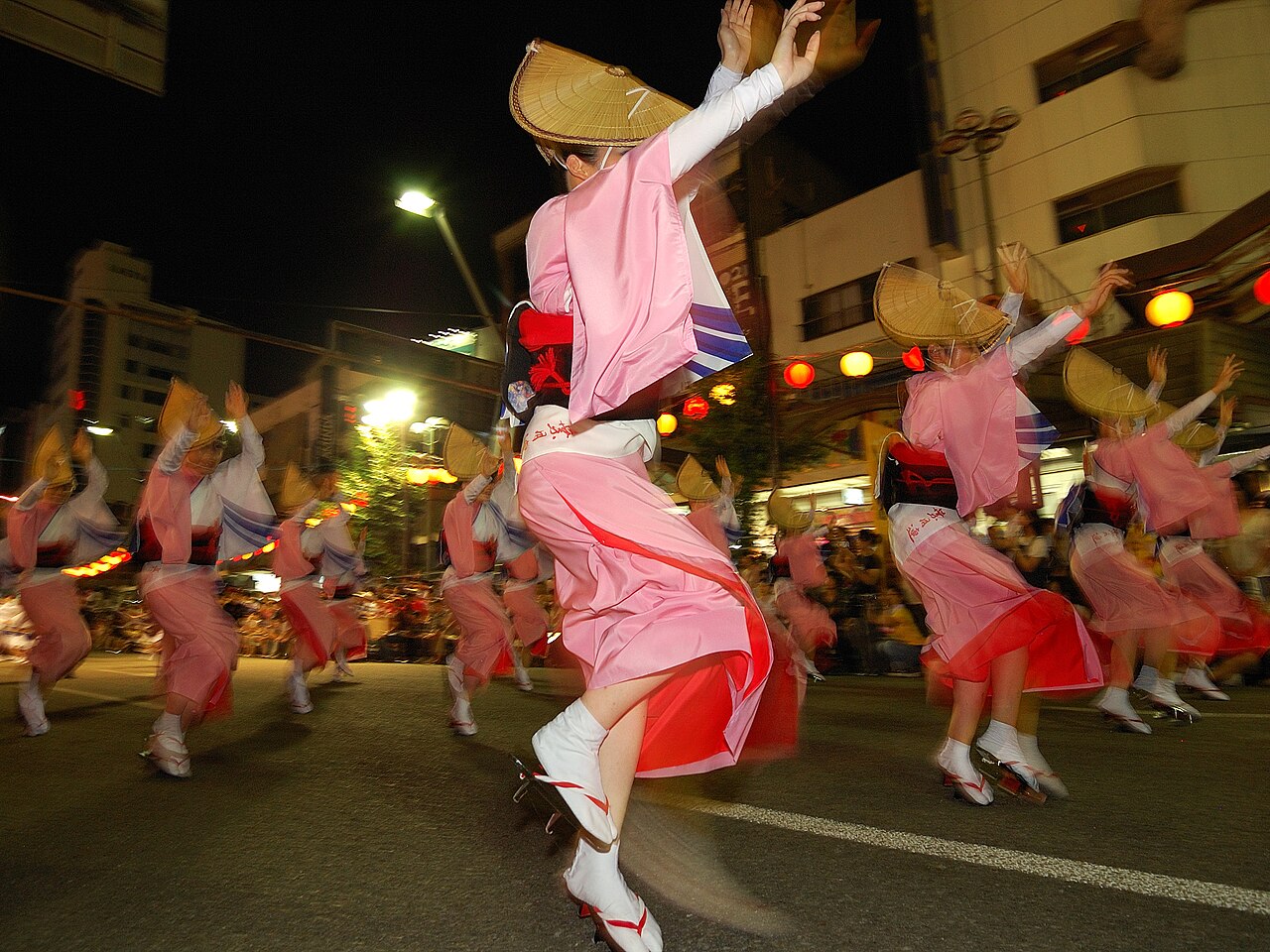
Known for its chant “the dancing fool and the watching fool are both fools alike, so you might as well dance,” this Tokushima City Bon dance festival has roughly 400 years of history. Male and female dancers move through the streets to the upbeat “Awa Yoshikono” melody played on two shamisen, flute, gongs, and drums. During the festival, dance stages are set up throughout Tokushima City, where over 100 dance troupes called “ren” show off their skills.
| Item | Details |
|---|---|
| Dates | Traditionally August 12–15 each year; in 2026 the festival runs five days, Tuesday, August 11 through Saturday, August 15 |
| Main venue | Central Tokushima City, Tokushima Prefecture (Minami-Uchimachi, Shinmachibashi, and Ryogoku-Honmachi dance stages, among others) |
| Access | About a 5–10 minute walk from JR Tokushima Station |
| Cost | Free stages are free to watch (paid stages and reserved seating also available) |
| Official website | Tokushima City official website (Awa Odori information) |
Highlights include the contrast between the powerful, tightly choreographed male dance and the graceful, flowing female dance. Full performances by the famous ren troupes can be seen at the paid stages, while the free stages also have time slots for a “niwaka-ren,” where visitors can join in on the spot. The lantern-lit atmosphere after dark adds to the festival’s enchanting mood.
Yosakoi Festival — Kochi’s High-Energy Celebration of Free-Form Choreography and Naruko Clappers
Begun in 1954, this Kochi City summer festival is known for dancers holding “naruko” wooden clappers in each hand while performing to the “Yosakoi Naruko Odori” song. Music, choreography, and costumes are left entirely to each team’s creativity, resulting in a spectacular range of styles from traditional Japanese to rock and samba. The festival is recognized as the origin of yosakoi-style festivals now held across Japan.
| Item | Details |
|---|---|
| Dates | Traditionally August 9–12 each year (eve festival, main festival, and closing festival); the 73rd festival in 2026 runs an eve festival on August 9, the main festival on August 10–11, and a closing festival on August 12 |
| Main venue | Central Kochi City, Kochi Prefecture (around 16 competition and performance venues citywide, including Otesuji, Harimaya-bashi, and Obiyamachi) |
| Access | About a 15-minute walk from JR Kochi Station, or by Tosaden Kotsu streetcar |
| Cost | Free to watch (some paid seating available) |
| Official website | Yosakoi Festival official website |
Highlights include touring the many competition and performance venues, where over 200 teams each showcase their own distinctive music, costumes, and choreography. Awards are announced on the final day of the main festival, followed by a “national championship” featuring the top-ranked teams. Moving between venues to compare the wide variety of performances is the true joy of this festival.
Niihama Taiko Festival — A Powerful Clash of Ornate Festival Floats, Among Shikoku’s Three Great Festivals
An autumn festival in Niihama City, Ehime Prefecture, counted among “Shikoku’s Three Great Festivals.” Over 100 bearers carry each magnificent “taiko-dai” festival float — weighing more than 2.5 tons — through the streets of the city. The highlight is the “kaki-kurabe,” where multiple floats compete in a powerful, thrilling display of carrying prowess as they clash together.
| Item | Details |
|---|---|
| Dates | Traditionally fixed on October 16–18 each year (2026 is expected to follow the same dates; check the official website in the festival year for confirmed details) |
| Main venue | Various locations across Niihama City, Ehime Prefecture (including Yamane Ground and the area around Niihama Station) |
| Access | Shuttle bus or on foot from JR Niihama Station |
| Cost | Free to watch (Yamane Ground seating may require a fee) |
| Official website | Niihama City official website (Niihama Taiko Festival information) |
The highlight is the “toitsu-yose” gathering at Yamane Ground, where multiple taiko-dai floats assemble to compete in carrying displays. The sight of these gold- and silver-embroidered floats parading in the light of the setting sun is breathtaking. A free shuttle bus runs between Niihama Station and the venue.
Tips for Enjoying Shikoku’s Festivals
Because the Awa Odori and Yosakoi Festival are both concentrated in early August, careful planning can let you enjoy both Tokushima’s and Kochi’s summer festivals on the same trip. The Niihama Taiko Festival is held in October, making it a good choice for an autumn visit. All draw very large crowds, so use public transportation and book accommodation early.
Booking tickets for the Awa Odori’s paid dance stages in advance lets you fully enjoy the polished performances of the famous ren troupes. At the Niihama Taiko Festival, the floats do clash together at times, so follow staff instructions and keep a safe distance while watching.
FAQ
Can anyone join in dancing the Awa Odori?
Yes — during the “niwaka-ren” time slots held at the free dance stages, visitors can sometimes join in on the spot even without a yukata. Check the Tokushima City official website for details.
Do these festivals go ahead in the rain?
Both the Awa Odori and the Yosakoi Festival generally proceed in light rain, though some performances may be cancelled or changed in severe weather such as a typhoon. The Niihama Taiko Festival also generally proceeds in rain, but check the official website for details.
Can I visit Tokushima, Kochi, and Ehime all on one trip?
Since the Awa Odori and Yosakoi Festival fall in nearby weeks (early August), they’re easy to combine. The Niihama Taiko Festival is held in October, so seeing all three on a single trip takes careful planning.
Are these festivals suitable for children?
The Awa Odori and Yosakoi Festival are both popular with families and offer plenty of festival food. Because the Niihama Taiko Festival involves powerful clashes between festival floats, families with young children should watch from a safe location.
Official references: Tokushima City official website (Awa Odori information) / Yosakoi Festival official website / Niihama City official website (Niihama Taiko Festival information)