

Information verified: August 28, 2026. Facing both the Seto Inland Sea and the Sea of Japan, the Chugoku region is home to festivals ranging from elegant rites passed down since ancient times to boisterous citywide dance celebrations. This guide covers three standouts: the “Miyajima Kangen-sai,” held at the UNESCO World Heritage site Itsukushima Shrine; the “Tottori Shan-Shan Festival,” famous for its Guinness-certified mass umbrella dance; and “Uraja” (the Okayama Momotaro Festival), which keeps the region’s Momotaro legend alive. Dates are broadly consistent year to year, but please check each official website for the latest information before you travel.
Miyajima Kangen-sai — One of Japan’s Three Great Boat Rites, Carrying Heian-Era Elegance Into Today
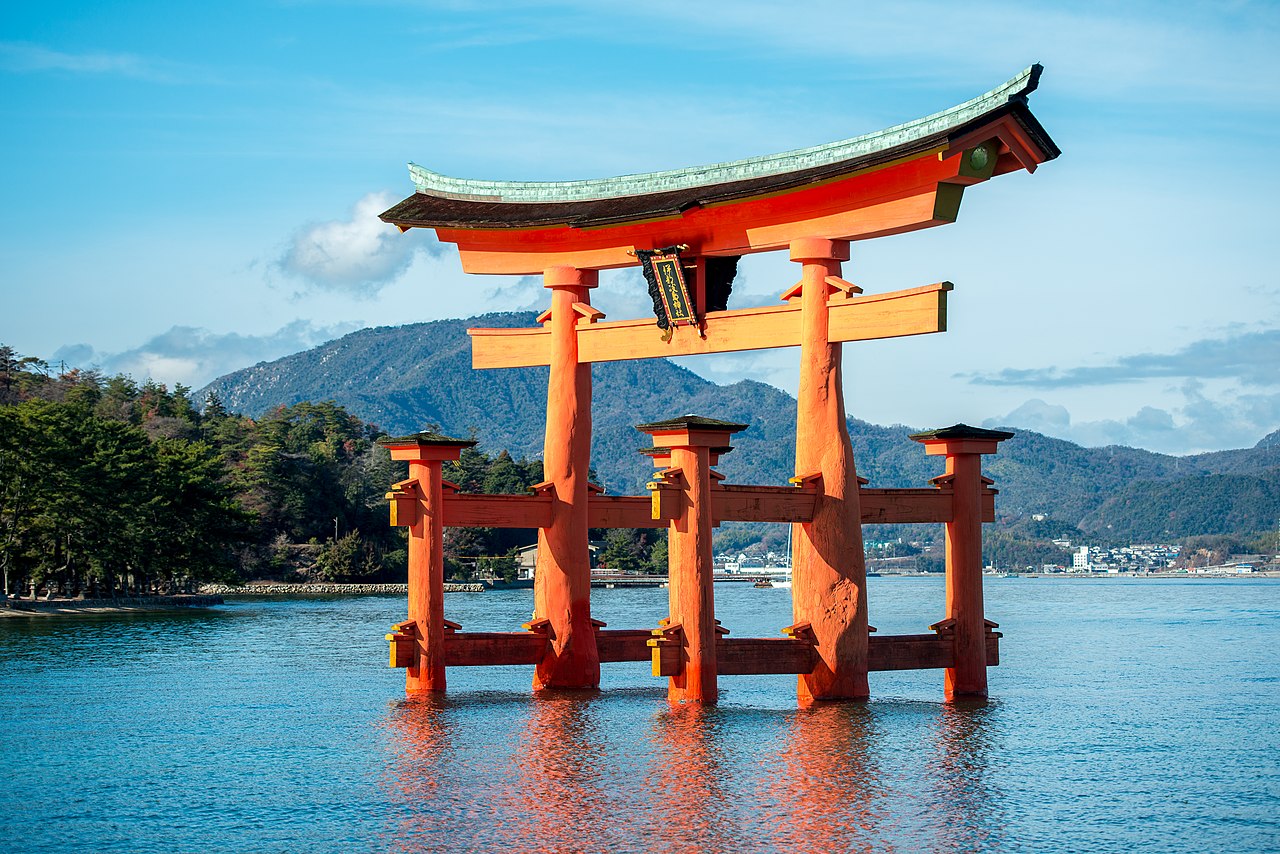
A ritual of the UNESCO World Heritage site Itsukushima Shrine, said to originate from the elegant boating pastime of Heian-period nobility known as “kangen-asobi.” A sacred barge carrying the shrine’s portable deity passes beneath the great floating torii gate to the sound of ancient court music, visiting Jigozen Shrine, Nagahama Shrine, and Omoto Shrine in turn. Counted among Japan’s Three Great Boat Rites, the sight of the flotilla lit by bonfires late into the night is not to be missed.
| Item | Details |
|---|---|
| Dates | Held on the 17th day of the 6th lunar month, so the modern-calendar date shifts every year. In 2026, it falls on Thursday, July 30 |
| Main venue | Itsukushima Shrine and the waters off Miyajima, Hatsukaichi City, Hiroshima Prefecture; also Jigozen Shrine |
| Access | About 10 minutes by ferry (Miyajima Matsudai Kisen or JR West Miyajima Ferry) from JR Miyajimaguchi Station or the Hiroden Miyajimaguchi tram stop to Miyajima Pier |
| Cost | Free to watch (the area around the shrine and torii gate gets very crowded) |
| Official website | Itsukushima Shrine official website |
Highlights include the moment after sunset when the sacred barge passes beneath the great torii gate, and the ancient court music played by the four accompanying “kangen-bune” boats that lead the way. The rite runs from evening into the middle of the night and is timed to the tide, so exact timing shifts from year to year. Good viewing spots include the area around Miyajima Pier and anywhere with a clear view of the torii gate.
Tottori Shan-Shan Festival — A Guinness World Record for the Largest Mass Umbrella Dance
Tottori City’s largest summer festival, famous for its “issei kasa odori” (mass umbrella dance), in which thousands of bell-hung umbrellas open in unison to a chorus of ringing bells — a feat certified by Guinness World Records as the largest participation umbrella dance. Rooted in the traditional Inaba umbrella dance, dancers carrying flower-decorated, bell-hung umbrellas fill the city’s main boulevard in a spectacular sight.
| Item | Details |
|---|---|
| Dates | A three-day event held in mid-August each year. The 62nd festival in 2026 runs Thursday, August 13 through Saturday, August 15 |
| Main venue | Wakasa-kaido Street and central Tottori City, Tottori Prefecture |
| Access | About a 5-minute walk from JR Tottori Station |
| Cost | Free to watch |
| Official website | Tottori Shan-Shan Festival official website |
The highlight is the “issei kasa odori” held along Wakasa-kaido Street on the final night, where thousands of dancers move through a unified choreography with their bell-hung umbrellas — a truly spectacular sight. A citizens’ fireworks display runs alongside the festival, letting visitors enjoy both the dance and the fireworks in one visit. Besides watching from the roadside, there are also time slots where visitors can join in the dancing themselves.
Uraja (Okayama Momotaro Festival) — A Mass Finale Dance Inspired by the Ogre of the Momotaro Legend
A modern dance festival themed around “Ura,” the ogre believed to be the model for the demon in Okayama’s Momotaro (Peach Boy) legend. Though it began relatively recently, in 1994, it has grown into one of Okayama Prefecture’s largest summer festivals, now drawing over 200 dance teams and around 10,000 dancers. Performers carrying naruko clappers parade through central Okayama City in original choreography and costumes.
| Item | Details |
|---|---|
| Dates | A two-day event on the fourth Saturday and Sunday of August each year. The 31st festival in 2026 runs Saturday, August 22 and Sunday, August 23 |
| Main venue | Multiple venues in central Okayama City, including around Okayama Station and the Omotecho shopping arcade, Okayama Prefecture |
| Access | A short walk from JR Okayama Station (venues are scattered around the station area) |
| Cost | Free to watch |
| Official website | Uraja official website |
The highlight is the “So-odori” mass finale dance held in front of Okayama Station toward the end of the second day, where every participating team gathers for a powerful joint performance. Each team’s own choreography and music, showcased throughout the festival in “Uraja Hon-odori” performances, is also well worth seeing, with dancing continuing at venues across the city from daytime into the night.
Tips for Enjoying Chugoku’s Festivals
Because the Miyajima Kangen-sai’s date shifts every year, always check the official website for the modern-calendar date before visiting. The Tottori Shan-Shan Festival and Uraja are both held in August, making them a good pair for a Chugoku summer trip that also takes in Hiroshima, Tottori, and Okayama. All three draw large crowds, so book accommodation early.
Since the Miyajima Kangen-sai is a nighttime rite, check the last ferry departure time in advance. The Shan-Shan Festival and Uraja both sometimes offer time slots where visitors can join the dancing — check each official website for the latest details.
FAQ
Why does the date of the Miyajima Kangen-sai change every year?
It’s a rite held on the 17th day of the 6th lunar month, so its date on the modern calendar shifts from year to year. In 2026, it’s scheduled for Thursday, July 30. Please check the official website for the latest schedule before visiting.
Do these festivals go ahead in the rain?
The Miyajima Kangen-sai, as a religious rite, proceeds as scheduled unless the weather is severe. The Shan-Shan Festival and Uraja also generally proceed in light rain, though some programs may be cancelled or changed in severe weather such as a typhoon.
Can I visit Hiroshima, Tottori, and Okayama all on one trip?
Since the Miyajima Kangen-sai falls at a different time (late July) than the Shan-Shan Festival and Uraja (mid- to late August), seeing all three on a single trip takes careful planning. The Shan-Shan Festival and Uraja fall in nearby weeks, making them easier to combine.
Are these festivals suitable for children?
All three festivals are popular with families. The Shan-Shan Festival and Uraja both offer time slots for spontaneous participation, so children can join the dancing too. Since the Miyajima Kangen-sai runs late into the night, families with young children may want to watch for a shorter, more manageable stretch.
Official references: Itsukushima Shrine official website / Tottori Shan-Shan Festival official website / Uraja official website