

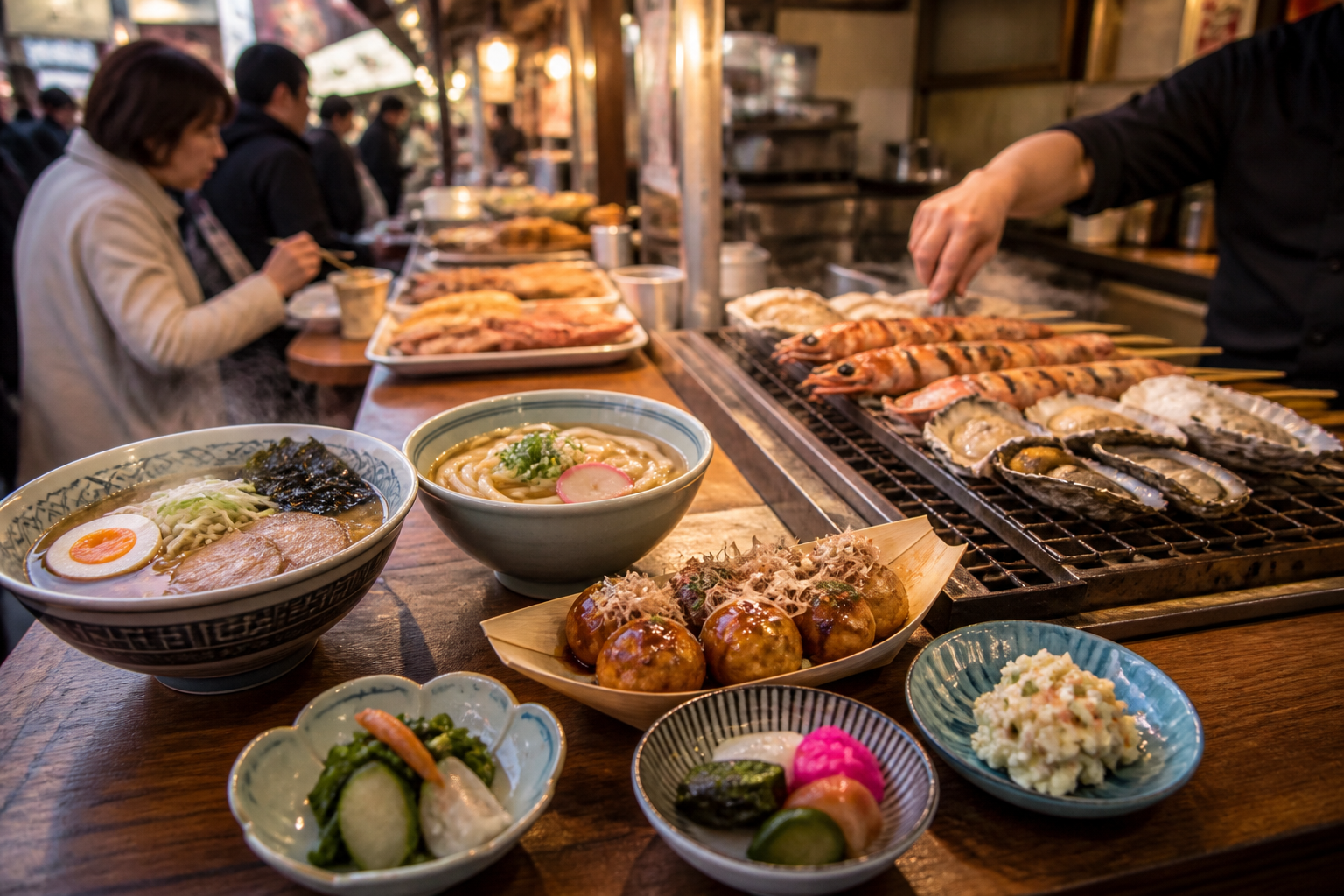
Japanese regional food reflects climate, ports, farming and preservation. Use this list to decide what deserves a meal slot, what works as a snack, and how much to budget.
Prices and operating dates can change because of snow, maintenance, peak dates or special events. Check the linked official site before departure.
Quick comparison
| Region | Foods / products | Typical budget |
|---|---|---|
| Hokkaido | Seafood rice bowls, soup curry, jingisukan | Meals ¥1,500–3,500; snacks ¥400–900 |
| Tohoku | Kiritanpo hot pot, Sendai beef tongue, wanko soba | Meals ¥1,000–3,000; sweets ¥500–1,500 |
| Kanto | Edomae sushi, monjayaki, Utsunomiya gyoza | Casual lunch ¥800–2,000; sushi varies widely |
| Koshinetsu/Hokuriku | Hoto noodles, hegi soba, trout sushi, winter crab | Noodles ¥900–1,500; crab needs a separate budget |
| Tokai | Hitsumabushi, miso katsu, Shizuoka oden | Meals ¥1,000–4,000; oden ¥100–250 each |
| Kansai | Okonomiyaki, takoyaki, Kyoto yudofu, Kobe beef | Snacks ¥400–900; yudofu from about ¥2,000 |
| Chugoku | Hiroshima okonomiyaki, Izumo soba, Shimonoseki fugu | Casual meal ¥900–1,800; fugu costs more |
| Shikoku | Sanuki udon, seared bonito, tai-meshi | Udon ¥400–900; seafood ¥1,200–2,500 |
| Kyushu | Hakata ramen, chicken nanban, Kagoshima pork | Ramen ¥700–1,200; pork dishes from ¥1,500 |
| Okinawa | Okinawa soba, goya champuru, sata andagi | Noodles ¥700–1,100; snacks ¥150–500 |
How to choose
Plan one substantial regional meal per day and leave market snacks flexible. Morning markets and station food halls are efficient, but specialist neighborhoods often give better context. Seafood and raw dishes require allergy and pregnancy precautions; queue etiquette and eating-space rules vary by market.
Practical tips
- Busy stalls may ask you to eat beside the shop instead of walking.
- Ask about dashi, shellfish, buckwheat, egg and dairy if allergic; vegetarian-looking dishes can contain fish stock.
- Visit markets before lunch because signature items may sell out.
Official sources and date checked
Information checked on 30 August 2026.