

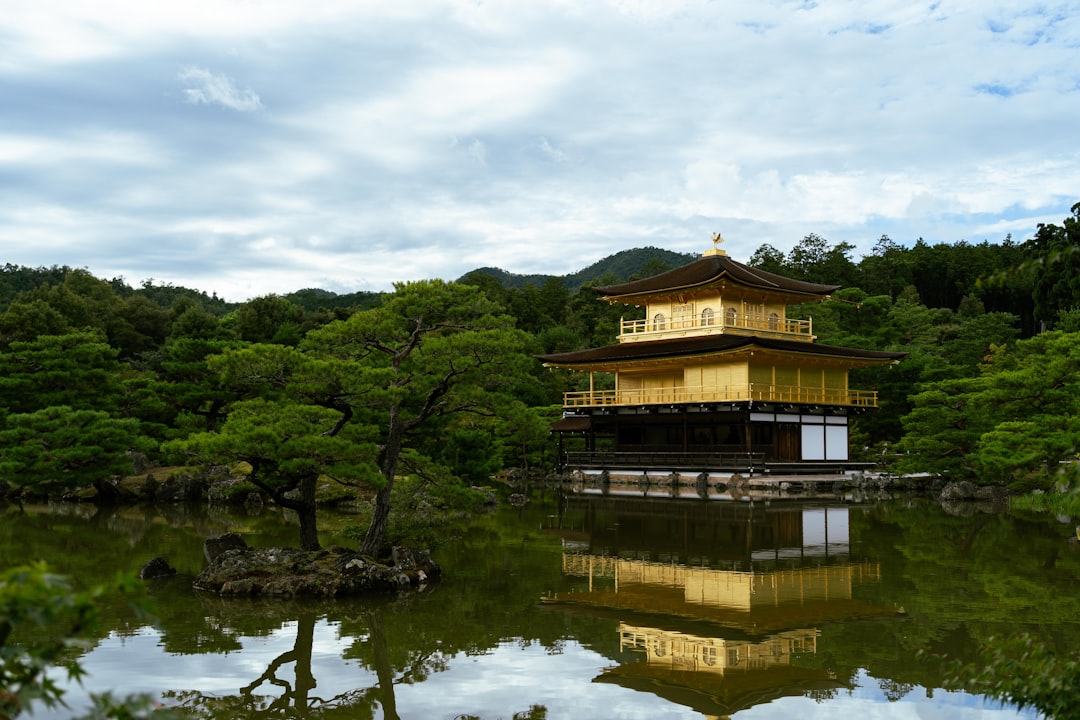
Kinkaku-ji and Ginkaku-ji are not a matching “gold and silver” pair. They stand on opposite sides of Kyoto and express two different moments in Muromachi culture: the brilliant, outward-looking world of Ashikaga Yoshimitsu and the restrained, contemplative Higashiyama culture associated with Ashikaga Yoshimasa. This guide explains what to notice, how to reach each temple, current admission details and the most sensible ways to plan your day.
1. Kinkaku-ji or Ginkaku-ji? A quick comparison
| Kinkaku-ji | Ginkaku-ji | |
|---|---|---|
| Official temple name | Rokuon-ji | Higashiyama Jisho-ji |
| Patron | Ashikaga Yoshimitsu | Ashikaga Yoshimasa |
| Visual focus | Gold-leaf pavilion reflected in Kyokochi Pond | Unpainted pavilion, sand garden, moss and hillside views |
| Cultural context | Kitayama culture | Higashiyama culture |
| Typical visit | About 45–60 minutes | About 45–75 minutes |
Choose Kinkaku-ji for an iconic architectural image and strong visual contrast. Choose Ginkaku-ji for a slower garden walk and a deeper connection to the aesthetics that shaped tea rooms, flower arrangement, ink painting and later ideas of understated beauty. If time permits, both are worthwhile—but they are not close neighbors.
2. Kinkaku-ji: Yoshimitsu’s retirement villa and a reconstructed icon
Shogun Ashikaga Yoshimitsu acquired the site in 1397 and developed his Kitayama villa here. After his death, the estate became the Zen temple Rokuon-ji. The famous Shariden, commonly called the Golden Pavilion, was destroyed by arson in 1950 and reconstructed in 1955. Its cultural meaning is therefore not based on untouched age alone: it also tells a modern story of loss, reconstruction and Kyoto’s careful stewardship of inherited forms.
The temple forms part of UNESCO’s Historic Monuments of Ancient Kyoto, but visitors should remember that “Kinkaku-ji” commonly refers both to the temple grounds and, more narrowly, to the pavilion they have come to photograph.
3. What to notice at Kinkaku-ji
The prescribed garden route first reveals the pavilion across Kyokochi Pond. Pause before rushing to the camera: the building’s three levels deliberately combine different architectural vocabularies. The first floor evokes aristocratic residential architecture, the second a warrior residence, and the upper floor a Chinese-influenced Zen hall. Gold leaf covers the upper stories, while a phoenix crowns the roof.
- Kyokochi Pond: islands, rocks and borrowed scenery turn the pavilion into one element of a larger composition.
- Viewing angle: walk a few steps along the pond rather than competing for the first opening; reflections change with wind and light.
- Upper garden: continue beyond the famous façade to Anmintaku Pond and Sekkatei teahouse area rather than leaving immediately.
The pavilion interior is not part of the ordinary visitor route. The experience is primarily an exterior and garden viewing.
4. Ginkaku-ji: why the Silver Pavilion is not silver
Ashikaga Yoshimasa began developing his Higashiyama retreat in 1482 after a long period of political conflict. The estate became Jisho-ji after his death. Its Kannonden is popularly called the Silver Pavilion, but it was never covered in silver leaf. The familiar name arose in contrast with Kinkaku-ji and should not be treated as evidence of a failed silver-plating project.
The pavilion’s dark, weathered surfaces are central to its effect. Rather than dazzling from across a pond, it gains meaning through changing viewpoints, close relationships with trees and water, and the rhythm of the complete garden circuit.
5. What to notice at Ginkaku-ji
- Kannonden: the two-story Silver Pavilion, normally viewed only from outside.
- Togu-do: a National Treasure closely associated with the development of shoin-style interior space; ordinary access is exterior-only except during special openings.
- Ginshadan and Kogetsudai: carefully formed white-sand features. Their exact original meanings are uncertain, so be cautious with romantic stories presented as fact.
- Moss garden and hill path: the climb gives a layered view over the temple and Kyoto. Some elevated sections are not wheelchair accessible.
The official temple FAQ suggests about 30 minutes, but architecture and garden enthusiasts should allow closer to an hour, especially when the path is busy.
6. Kitayama and Higashiyama culture: two ways of seeing beauty
Kinkaku-ji is associated with Kitayama culture, when elite Zen, courtly traditions and continental influences met in a setting of political confidence and display. Ginkaku-ji belongs to the Higashiyama cultural world, where cultural practices flourished even amid instability. Yoshimasa’s circle helped shape traditions connected with tea, incense, flower arrangement, ink painting, garden design and domestic space.
It is tempting to label Kinkaku “luxury” and Ginkaku “wabi-sabi,” but that shortcut hides complexity. Look instead at how each site controls movement, frames nature and balances architecture with water, stone, sand and vegetation.
7. Hours, admission and addresses
| Practical information | Kinkaku-ji | Ginkaku-ji |
|---|---|---|
| Address | 1 Kinkakuji-cho, Kita-ku, Kyoto 603-8361 | 2 Ginkakuji-cho, Sakyo-ku, Kyoto 606-8402 |
| Hours | 9:00–17:00 | Mar–Nov 8:30–17:00; Dec–Feb 9:00–16:30 |
| General admission | ¥500 | ¥1,000 |
| Primary/middle school | ¥300 | ¥500 |
| Regular closure | None; open year-round | None; open year-round |
Hours and fees were checked on the temples’ official websites on August 27, 2026. Special openings can change admission conditions. Neither site should be treated as a late-evening attraction.
8. Access without spending the day in traffic
Kinkaku-ji
From Kyoto Station, Kyoto City’s official tourism guidance recommends taking the Karasuma Subway Line to Kitaoji, then bus 204 or 205 to Kinkakuji-michi; the entrance is about a five-minute walk away. This is generally more reliable than riding bus 205 all the way from Kyoto Station through traffic. From JR Enmachi Station, buses 204 or 205 are another option.
Ginkaku-ji
Get off at Ginkakuji-michi and walk roughly 7–10 minutes, or use a service stopping at Ginkakuji-mae for a shorter walk. Current services include several city bus routes; limited express EX100 operates on specified days rather than as an all-day universal solution. Check Kyoto City’s current journey planner on the day.
Direct buses 102 or 204 can connect the two temple areas, but road congestion makes timing unpredictable. Do not plan a tight reservation immediately afterward.
9. Recommended ways to visit
Best west Kyoto half-day: arrive at Kinkaku-ji near opening, then continue along Kinukake-no-michi to Ryoan-ji and Ninna-ji. This creates a coherent route and avoids crossing the entire city.
Best east Kyoto half-day: enter Ginkaku-ji near opening, walk south along the Philosopher’s Path, then choose Honen-in, Eikan-do or Nanzen-ji according to time and season.
Both in one day: visit Ginkaku-ji at 8:30 during March–November, transfer west before midday, and see Kinkaku-ji in the afternoon. It is feasible, but less satisfying than grouping each temple with its surrounding district. In winter, Kinkaku-ji opens earlier than Ginkaku-ji, so reverse the order.
10. Photography, accessibility and crowd etiquette
- Both are active Zen temples, not only photo locations. Keep voices low and follow one-way route signs.
- Do not block the first pond viewpoint for a prolonged photo session; better angles appear as the path continues.
- Buildings are normally viewed from outside. Follow temporary signs during special openings and never photograph where prohibited.
- Ginkaku-ji permits wheelchair visits but some scenic hillside points are inaccessible; ask staff for the appropriate route. Kinkaku-ji also has slopes and a prescribed circuit, so contact the temple in advance for individual mobility needs.
- Early entry is usually calmer. Autumn foliage, weekends and snow days can produce exceptional congestion.
Official references: Kinkaku-ji access, hours and admission, Ginkaku-ji access, hours and admission, Ginkaku-ji visitor FAQ and Kyoto City’s Kinkaku-ji transport guidance.
Information checked August 27, 2026. Verify temporary closures, special viewings and transport changes on the official sites before travel.