

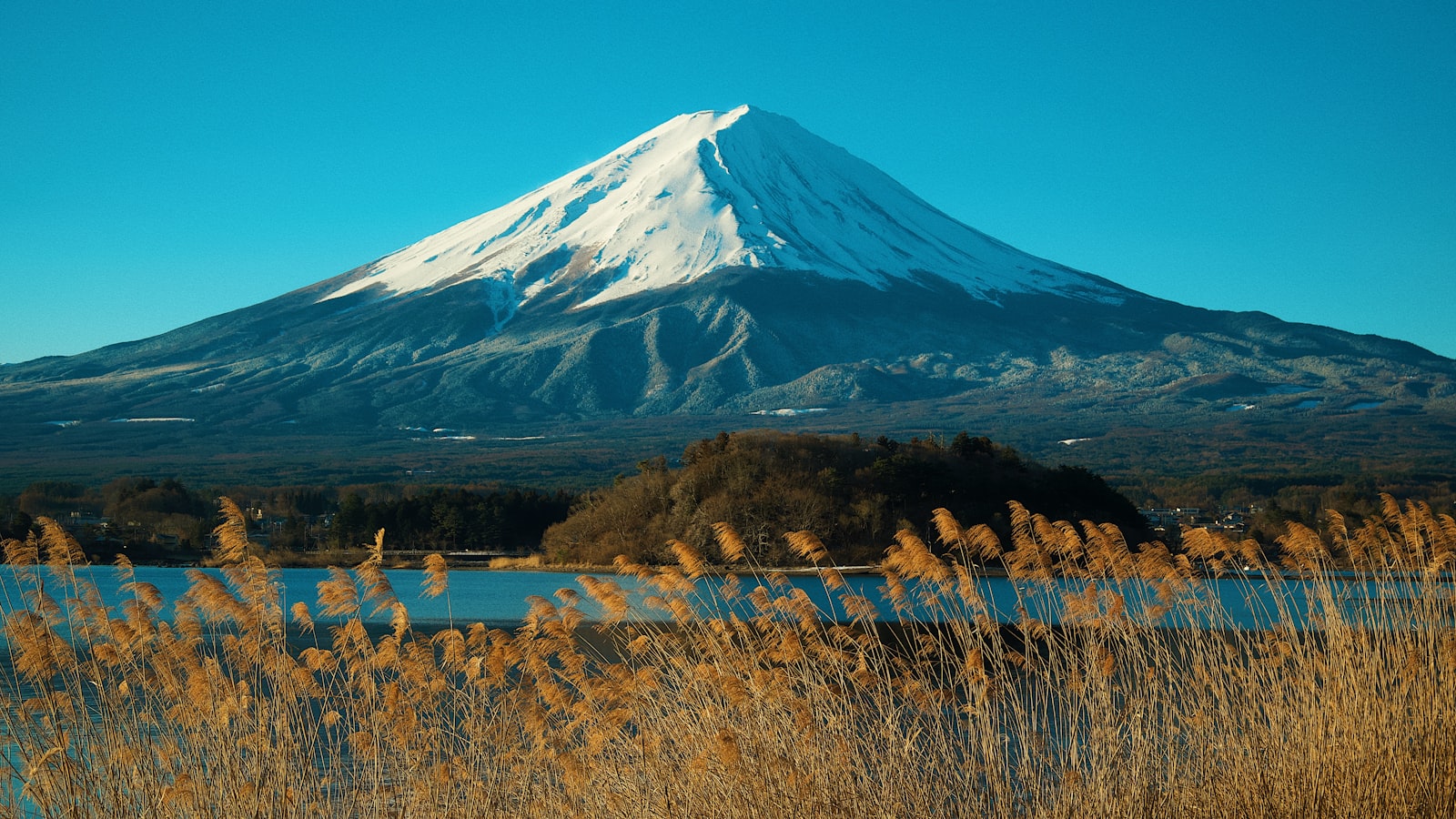
27 mountains, the largest number of 100 famous mountains, are concentrated in the Kanto and Koshinetsu regions. There is a wide variety of mountains, ranging from mountains that can be taken on a day trip from central Tokyo to full-fledged 2000m-class mountains.
🏔 Echigo Komagatake (2,003m) Niigata
A famous peak that represents the Echigo mountains. It is also one of Japan’s 200 famous mountains.
Approximately 1 hour by bus from JR Koide Station → Edori Pass trailhead
Climbing season: Early June to late October
Be careful during the snow season. The wind is strong on the ridge.
🏔 Hiragatake (2,141m) Niigata/Gunma
The mountaintop is a vast plateau. There are ponds scattered around.
Approximately 1 hour and 30 minutes by bus from JR Muikamachi Station → Hiragatake trailhead
Climbing season: Early July to early October
The approach is long. 1 night and 2 days recommended.
🏔 Makikiyama (1,967m) Niigata/Gunma
A beautiful mountain with a primeval beech forest and a pond.
Approximately 50 minutes by bus from JR Muikamachi Station → Makikiyama trailhead
Climbing season: Early June to late October
🏔 Mt. Hiushigatake (2,356m) Fukushima
The highest peak of Oze. You can enjoy it together with Ozegahara.
Approximately 1 hour and 30 minutes by bus from JR Aizu-Tajima Station → Oike trailhead
Climbing season: Early June to late October
Oze requires a mountain entry fee (1,000 yen). Strict observance of boardwalk manners.
🏔 Mt. Shibutsu (2,228m) Gunma
Mountain that represents Oze. A unique plant community in serpentine.
Approximately 1 hour and 30 minutes by bus from JR Numata Station → Hatomachi Pass
Climbing season: Early July to mid-October (limited entry times to protect the serpentine rock)
You can enter Mt. Shibutsu from July 1st to October 31st (for environmental protection reasons). Strictly follow Oze’s rules.
🏔 Mt. Tanigawa (1,977m) Niigata/Gunma
There is a ropeway. Famous as one of Japan’s three major rocky areas. The two ear peaks of Toma’s ear and Oki’s ear.
Approximately 40 minutes by bus from JR Jomo Kogen Station → Tanigawadake Ropeway
Climbing season: Mid-May to early November (ropeway available all year round)
There are difficult rocky areas. Winter is an extremely harsh period. Equipment is required as there are many accidents on the mountain.
🏔 Amakashiyama (1,963m) Niigata/Nagano
The beech forest and Arasugazawa wetland are beautiful.
Approximately 30 minutes by bus from JR Minami-Otari Station → Amakashiyama trailhead
Climbing season: Mid-June to late October
There are parts of the mountain trail that are steep.
🏔 Mt. Naeba (2,145m) Niigata/Nagano
A vast wetland spreads out at the top of the mountain. Japan’s 200 famous mountains.
About 1 hour by bus from JR Echigo Yuzawa Station → Naeba Ski Resort
Climbing season: Early July to early October
Please strictly follow the wooden path to protect the wetland.
🏔 Mt. Myoko (2,454m) Niigata
The grandeur rivals the Northern Alps. Japan’s 300 famous mountains.
Approximately 30 minutes by bus from JR Myoko Kogen Station → Mt. Myoko trailhead
Climbing season: Early June to mid-October
Check the volcano information as it is an active volcano.
🏔 Mt. Hiuchi (2,462m) Niigata
Two great places in Niigata along with Mt. Myoko. The high marshes are beautiful.
Approximately 30 minutes by bus from JR Myoko Kogen Station → Sasagamine trailhead
Climbing season: Mid-June to mid-October
Course time is long. Be careful of sudden changes in weather.
🏔 Mt. Takatsuma (2,353m) Niigata/Nagano
The highest peak of the Togakushi mountain range. mountain of faith.
About 1 hour by bus from JR Nagano Station → Togakushi Campsite
Climbing season: Mid-June to late October
There are rocky areas. There is a chain.
🏔 Mt. Nantai (2,486m) Tochigi
Symbol of sunlight. The object of worship at Futarasan Shrine.
About 40 minutes by bus from JR Nikko Station → Chuzenji Onsen → Trailhead
Climbing season: Early May to late October (only during the opening period of the shrine)
Admission fee: 1,000 yen. The opening period is from late April to mid-November.
🏔 Nikko Shirane (2,578m) Tochigi/Gunma
The highest peak in Kanto. There is a ropeway.
About 1 hour by bus from JR Nikko Station → Marunuma Kogen Ski Resort → Ropeway
Climbing season: Early June to late October (ropeway from April to November)
The summit is the highest peak in the Kanto region and the temperature is low. Beware of bears.
🏔 Kokaizan (2,144m) Tochigi/Gunma
One of the three major steep climbs in Japan. A steep mountain.
Approximately 1 hour by bus from JR Numata Station → Mt. Kokai trailhead
Climbing season: Early June to late October
It requires a lot of physical strength as it is a continuous steep climb. A day trip is possible, but you must leave early in the morning.
🏔 Mt. Musaka (2,158m) Gunma
Famous peak on the Joetsu border. Japan’s 300 famous mountains.
Approximately 1 hour by bus from JR Jomo Kogen Station → Mt. Musaka trailhead
Climbing season: Early June to late October
🏔 Mt. Akagi (1,828m) Gunma
One of the largest volcanoes in Kanto. Beautiful scenery such as Onuma and Kakumanbuchi.
About 1 hour by bus from JR Maebashi Station → Akagiyama Visitor Center
Climbing season: Mid-April to late November
There is a driveway. Many climbers throughout the year.
🏔 Mt. Kusatsu Shirane (2,171m) Gunma
An active volcano that is still active. Emerald green crater lake of Yugama.
About 30 minutes by bus from JR Naganohara Kusatsuguchi Station → Kusatsu Onsen → Ski resort
Climbing season: Late June to mid-October
Volcanic information is required as it is an active volcano. There is still fumarolic activity. Be careful of restricted areas.
🏔 Mt. Shia (2,354m) Gunma/Nagano
The mountain is gentle and easy to climb. One of the peaks of the Asama mountain range.
Approximately 40 minutes by bus from JR Komoro Station → Mt. Shia trailhead
Climbing season: Mid-May to early November
One of the 100 famous mountains that is easy to climb even with the whole family.
🏔 Mt. Asama (2,568m) Gunma/Nagano
One of Japan’s most active volcanoes. A powerful figure that constantly raises smoke.
Approximately 30 minutes by bus from JR Karuizawa Station → Mt. Asama trailhead
Climbing season: Access to the area around the crater is restricted due to the eruption alert level (be sure to check before climbing)
As it is an active volcano, access to the area around the crater is restricted at all times. Mount Asama is a restricted area within 2km of the crater. It may be possible to climb up to Maekakeyama. It is absolutely essential to check volcano information in advance.
🏔 Mt. Tsukuba (877m) Ibaraki
It is the lowest among the 100 famous mountains (the only one below 1,000m). The oldest of Japan’s 100 Famous Mountains.
Approximately 40 minutes by bus from JR Tsukuba Station → Tsukubasan Shrine (cable car available)
Climbing season: Year-round climbing possible (but be careful of freezing in winter)
Fully equipped with cable car and ropeway. Easy to climb even for beginners. A day trip from the city center is possible.
🏔 Ryokamiyama (1,723m) Saitama
A rocky peak close to the highest peak in Saitama Prefecture. There is a chain.
Approximately 1 hour by bus from Seibu Chichibu Station → Mt. Ryokami trailhead
Climbing season: Mid-May to late November
There are rocky and chained areas. If the weather worsens, it will be necessary to decide to retreat.
🏔 Mt. Kumotori (2,017m) Saitama/Tokyo/Yamanashi
The highest peak in Tokyo. The 100 famous mountains closest to central Tokyo.
About 30 minutes by bus from JR Okutama Station → Kamozawa bus stop → walk
Climbing season: Mid-May to late November (with snowfall in winter)
There is a mountain hut (you can stay overnight). Day trips are possible, but you must leave early in the morning.
🏔 Kobu Shingatake (2,475m) Saitama/Nagano/Yamanashi
A mountain located on the border of three prefectures. The source of the Chikuma River (Shinano River).
Approximately 1 hour by bus from JR Enzan Station → Tokuwa trailhead
Climbing season: Early June to late October
Course time is long. 1 night and 2 days recommended.
🏔 Mt. Kinpu (2,599m) Nagano/Yamanashi
Gojo Rock is the symbol of this rocky peak. Arakawa source.
Approximately 1 hour by bus from JR Kobuchizawa Station → Mt. Kinpu trailhead
Climbing season: Early June to late October
There are steep rocky areas.
🏔 Mt. Mizugaki (2,230m) Yamanashi
A landscape with a series of strangely shaped granite rocks and huge rocks.
About 1 hour by bus from JR Nirasaki Station → Mt. Mizugaki trailhead
Climbing season: Mid-May to early November
Be careful when passing through rocky areas.
🏔 Daibosatsumine (2,057m) Yamanashi
A popular mountain that is relatively easy to climb. Famous as an observation deck for Mt. Fuji.
Approximately 1 hour by bus from JR Enzan Station → Kamihikawa Pass
Climbing season: Mid-May to late November
There is a lodge. Day trip possible.
🏔 Mt. Tanzawa (1,567m) Kanagawa
The most popular mountain area in the Kanto area. The traverse of Mt. Tonodake and Mt. Hirugatake is popular.
Approximately 30 minutes by bus from Shibusawa Station on the Odakyu Line → Okura bus stop → Mountain trail
Climbing season: Year-round climbing possible (with snowfall in winter)
Good access from the city center. It has one of the highest numbers of climbers in Japan each year. Very crowded on weekends.
English Version: Hyakumeizan (100 Famous Japanese Mountains) Guide Vol.3 — Kanto & Koshinetsu Region
The Kanto and Koshinetsu region boasts the highest concentration of Hyakumeizan mountains in Japan, with 27 peaks. The range spans from day-trip mountains accessible from central Tokyo to serious 2,000m-class climbs.
🏔 Echigo-Komagatake (2,003m) — Niigata
A representative peak of the Echigo mountains. Also listed among the Nihon 200 Famous Mountains.
Access: ~1hr bus from JR Koide Station → Shioritoge Trailhead
Season: Early June to Late Oct
Notes: Watch for lingering snow. Ridge lines are very windy.
🏔 Hiragatake (2,141m) — Niigata & Gunma
The summit area forms a vast plateau dotted with alpine ponds.
Access: ~1hr 30min bus from JR Muikamachi Station → Hiragatake Trailhead
Season: Early Jul to Early Oct
Notes: Long approach. A 1-night/2-day trip recommended.
🏔 Makihata-yama (1,967m) — Niigata & Gunma
Beautiful beech primeval forest and alpine ponds.
Access: ~50min bus from JR Muikamachi Station → Makihata-yama Trailhead
Season: Early June to Late Oct
🏔 Hiuchigatake (2,356m) — Fukushima
The highest peak in Oze National Park. Can be enjoyed together with Ozegahara marshland.
Access: ~1hr 30min bus from JR Aizu-Tajima Station → Mikelke Trailhead
Season: Early June to Late Oct
Notes: Oze requires a conservation cooperation fee (¥1,000). Strictly observe boardwalk etiquette.
🏔 Shibutsu-san (2,228m) — Gunma
A representative mountain of Oze. Unique plant communities on serpentinite rock.
Access: ~1hr 30min bus from JR Numata Station → Hataodaira Pass
Season: Early Jul to Mid Oct (entry restricted for serpentinite protection)
Notes: Shibutsu-san is open Jul 1–Oct 31 for environmental protection. Strictly follow Oze rules.
🏔 Tanigawa-dake (1,977m) — Niigata & Gunma
Has a ropeway. Famous as one of Japan’s three great rock-climbing areas. Twin peaks: Toma-no-mimi and Oki-no-mimi.
Access: ~40min bus from JR Jomo-Kogen Station → Tanigawadake Ropeway
Season: Mid May to Early Nov (ropeway runs year-round)
Notes: Difficult rock sections. Extreme winter conditions. Essential gear required — this mountain sees many accidents.
🏔 Amazari-yama (1,963m) — Niigata & Nagano
Beautiful beech forest and the wetlands of Arasugezawa.
Access: ~30min bus from JR Minami-Otari Station → Amazari-yama Trailhead
Season: Mid Jun to Late Oct
Notes: Some steep sections on the trail.
🏔 Naeba-san (2,145m) — Niigata & Nagano
Vast wetlands spread across the summit. Nihon 200 Famous Mountain.
Access: ~1hr bus from JR Echigo-Yuzawa Station → Naeba Ski Resort
Season: Early Jul to Early Oct
Notes: Strictly stay on boardwalks to protect the wetlands.
🏔 Myoko-san (2,454m) — Niigata
Majestic scale rivaling the Northern Alps. Nihon 300 Famous Mountain.
Access: ~30min bus from JR Myoko-Kogen Station → Myokosan Trailhead
Season: Early June to Mid Oct
Notes: Active volcano — check volcanic activity reports.
🏔 Hiuchi-yama (2,462m) — Niigata
One of Niigata’s twin great peaks alongside Myoko-san. Beautiful high-altitude wetlands.
Access: ~30min bus from JR Myoko-Kogen Station → Sasagamine Trailhead
Season: Mid Jun to Mid Oct
Notes: Long course time. Watch for sudden weather changes.
🏔 Kozu-san (2,353m) — Niigata & Nagano
The highest peak of the Togakushi mountain range. A sacred mountain.
Access: ~1hr bus from JR Nagano Station → Togakushi Campground
Season: Mid Jun to Late Oct
Notes: Rocky sections and chain sections.
🏔 Nantai-san (2,486m) — Tochigi
The symbol of Nikko. Sacred body of Futarasan Shrine.
Access: ~40min bus from JR Nikko Station → Chuzenji Onsen → Trailhead
Season: Early May to Late Oct (only during shrine’s open season)
Notes: Climbing fee ¥1,000. Open season is late Apr to mid Nov.
🏔 Nikko-Shirane-san (2,578m) — Tochigi & Gunma
The highest peak in the Kanto region. Has a ropeway.
Access: ~1hr bus from JR Nikko Station → Marunuma Kogen Ski Resort → Ropeway
Season: Early Jun to Late Oct (ropeway runs Apr–Nov)
Notes: The summit is the highest in Kanto so temperatures are low. Watch for bears.
🏔 Sukai-san (2,144m) — Tochigi & Gunma
One of Japan’s three great steep climbs. A rugged mountain.
Access: ~1hr bus from JR Numata Station → Sukaisan Trailhead
Season: Early Jun to Late Oct
Notes: Continuous steep climbs require stamina. Day-trip possible but an early start is essential.
🏔 Hotaka-san (2,158m) — Gunma
A famous peak on the Joetsu border. Nihon 300 Famous Mountain.
Access: ~1hr bus from JR Jomo-Kogen Station → Hotakasan Trailhead
Season: Early Jun to Late Oct
🏔 Akagi-yama (1,828m) — Gunma
One of Kanto’s major volcanic mountains. Beautiful scenery including Onuma pond and Kakumanbuchi.
Access: ~1hr bus from JR Maebashi Station → Akagiyama Visitor Center
Season: Mid Apr to Late Nov
Notes: Driveway available. Many visitors year-round.
🏔 Kusatsu-Shirane-san (2,171m) — Gunma
An active volcano. The emerald green crater lake of Yugama.
Access: ~30min bus from JR Naganohara-Kusatsuguchi Station → Kusatsu Onsen → Ski resort
Season: Late Jun to Mid Oct
Notes: Active volcano — volcanic information essential. Ongoing fumarole activity. Watch restricted areas.
🏔 Azuma-yama (2,354m) — Gunma & Nagano
Gentle mountain shape, easy to climb. One of the Asama mountain range peaks.
Access: ~40min bus from JR Komoro Station → Azumayama Trailhead
Season: Mid May to Early Nov
Notes: An easy Hyakumeizan suitable for families.
🏔 Asama-yama (2,568m) — Gunma & Nagano
One of Japan’s major active volcanoes. A powerful sight constantly emitting smoke.
Access: ~30min bus from JR Karuizawa Station → Asamayama Trailhead
Season: Access restrictions around the crater depend on the eruption warning level (check before climbing)
Notes: Active volcano — area around crater is permanently restricted. Zone within 2km of Asama’s crater is off-limits. Mae-kake-yama may be climbable in some conditions. Advance volcano information check is absolutely essential.
🏔 Tsukuba-san (877m) — Ibaraki
The lowest altitude among all Hyakumeizan (the only one under 1,000m). The most long-standing Hyakumeizan peak.
Access: ~40min bus from JR Tsukuba Station → Tsukubasan Shrine (cable car available)
Season: Year-round (watch for ice in winter)
Notes: Cable car and ropeway available. Easy for beginners. Day-trip possible from central Tokyo.
🏔 Ryogami-san (1,723m) — Saitama
A rocky peak near the highest point in Saitama Prefecture. Has chain sections.
Access: ~1hr bus from Seibu Chichibu Station → Ryogami-san Trailhead
Season: Mid May to Late Nov
Notes: Rocky and chain sections. Be prepared to turn back if weather deteriorates.
🏔 Kumotori-yama (2,017m) — Saitama, Tokyo & Yamanashi
The highest peak in Tokyo. The Hyakumeizan closest to central Tokyo.
Access: ~30min bus from JR Okutama Station → Kamosawa Bus Stop → on foot
Season: Mid May to Late Nov (snow in winter)
Notes: Mountain hut available (overnight possible). Day-trip possible but an early start essential.
🏔 Kobushigatake (2,475m) — Saitama, Nagano & Yamanashi
Located on the border of three prefectures. The source of the Chikuma River (Shinano River).
Access: ~1hr bus from JR Enzan Station → Tokuwa Trailhead
Season: Early Jun to Late Oct
Notes: Long course time. A 1-night/2-day trip recommended.
🏔 Kinpu-san (2,599m) — Nagano & Yamanashi
A rocky peak symbolized by Gojo-iwa rock. Source of the Ara River.
Access: ~1hr bus from JR Kobuchizawa Station → Kinpusan Trailhead
Season: Early Jun to Late Oct
Notes: Steep rocky sections.
🏔 Mizugaki-yama (2,230m) — Yamanashi
A landscape of unusual granite rock formations and boulders.
Access: ~1hr bus from JR Nirasaki Station → Mizugakiyama Trailhead
Season: Mid May to Early Nov
Notes: Caution when passing rocky sections.
🏔 Daibosatsu-rei (2,057m) — Yamanashi
A relatively easy, popular mountain. Famous as a viewpoint for Mt. Fuji.
Access: ~1hr bus from JR Enzan Station → Kamihikawa Pass
Season: Mid May to Late Nov
Notes: Lodge available. Day-trip possible.
🏔 Tanzawa-san (1,567m) — Kanagawa
The most popular mountain area in the Kanto region. Traverses to Tono-dake and Hirugatake are popular.
Access: ~30min bus from Odakyu Line Shibusawa Station → Okura Bus Stop → Trail
Season: Year-round (snow in winter)
Notes: Excellent access from central Tokyo. Among the highest annual climber counts in Japan. Very crowded on weekends.