

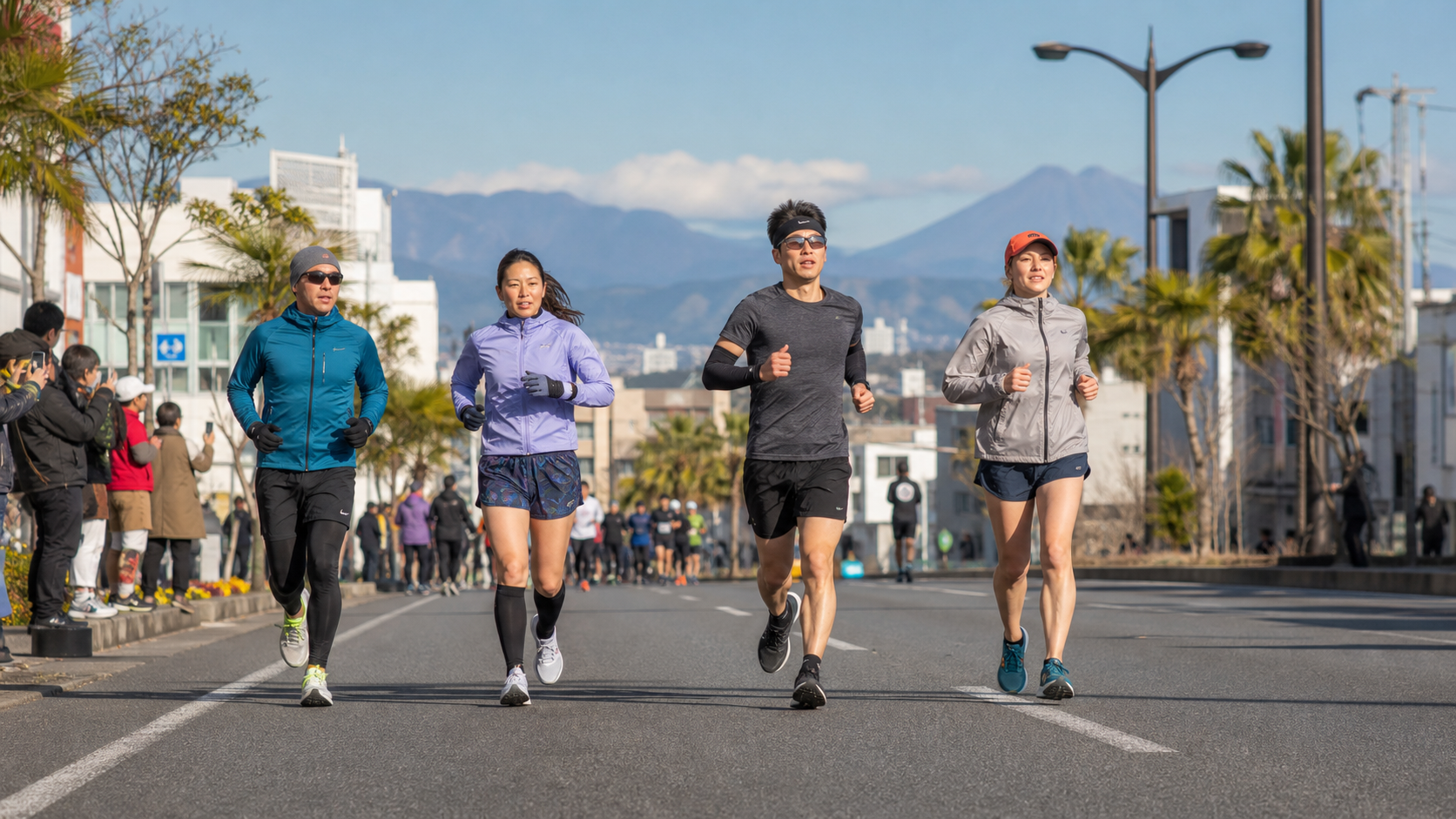
Entry status rechecked: October 26, 2026. A marathon in Kyushu or Okinawa can connect castle towns, working ports, volcanic scenery and subtropical streets in one memorable Japan trip. Yet “southern Japan” is not one climate: Kitakyushu in February and Naha in December require different clothing, transport and heat plans. This guide separates confirmed closed entry from a published deadline that may close early, then explains total costs, packet pickup and practical itineraries. Always recheck the official rules before paying.
2026–2027 race snapshot
| Race | Date | Full fee / limit | Status checked Oct 26 | Key travel issue |
|---|---|---|---|---|
| Fukuoka 2026 | Nov 8, 2026 | Japan ¥16,000; overseas ¥30,000 / 7h | General entry closed | Tenjin start, Itoshima finish; paid return shuttle |
| Kitakyushu 2027 | Feb 21, 2027 | Japan ¥15,500; overseas ¥20,000 / 6h | General entry closed; overseas entry page says closed | Do not rely on the originally advertised Nov 6 overseas deadline |
| Kumamoto Castle 2027 | Feb 21, 2027 | Japan ¥13,750; overseas ¥20,000 / 7h | Entry closed Sep 24 | In-person pickup Feb 19–20 |
| Kagoshima 2027 | Mar 7, 2027 | Standard ¥15,000 / 7h | Published deadline Oct 31; first-come, check live availability | Allow for coastal wind and ash notices |
| 40th NAHA 2026 | Dec 6, 2026 | See official rules | Sold out | No waitlist or extension |
Payment fees, merchandise, donations and transport may be extra. Limits are generally measured from the gun, not each runner’s chip start.
Which race fits your trip?
- More time for a first full: Fukuoka, Kumamoto and Kagoshima allow seven hours, but intermediate gates still apply.
- Entering in late October: Kitakyushu’s overseas page and Kumamoto’s organizer both say entry is closed. Kagoshima publishes an October 31 deadline, but first-come places can fill sooner; confirm the live form before booking non-refundable travel.
- Cultural story: Kumamoto offers a living castle-reconstruction story; Kagoshima connects Sakurajima with Satsuma history; Fukuoka changes from downtown to Itoshima coast.
- Warm winter: NAHA is appealing, but the 2026 race is already full. Never buy or borrow another person’s entry.
Fukuoka: a point-to-point run from Tenjin to Itoshima
The course starts in central Tenjin and finishes at Itoshima Exchange Plaza Shima-kan. The finish is not in central Fukuoka; reserve the official paid shuttle back to Tenjin or Hakata. Packet pickup is at the west-side plaza of Fukuoka City Hall on Nov 6, 12:00–20:00, or Nov 7, 10:00–20:00; there is no race-day pickup. Tenjin and Tenjin-minami subway stations serve the start area.
Enjoy mizutaki, udon or a yatai after—not before—the race, and keep cash plus a small appetite for busy stalls. Official race outline
Kitakyushu: a working port-city course
This certified course runs from Kitakyushu City Hall to Kitakyushu International Conference Center. The full has 10,800 places and a six-hour limit. General lottery entry ended on Sep 24. Although the overseas listing gives Nov 6 at 20:00 as its original deadline, its live page now says “An entry has been closed”; do not assume that quota remains available. Overseas entry was priced at ¥20,000. A Japan-resident advance-bib-mailing option adds ¥4,000 to the ¥15,500 fee.
Stay near JR Kokura Station for access to both sides of the event. Save local yaki-udon for recovery. Organizer entry flow and linked overseas entry status
Kumamoto Castle: run through a recovering castle town
The 13,000-runner History Full Marathon has a seven-hour limit. The organizer says runner entry ended on Sep 24, including the 300-place overseas first-come window. The following costs and pickup details are for confirmed entrants, not an invitation to register now. Official totals are ¥13,750 plus an ¥825 domestic payment fee, or ¥20,000 plus a ¥2,800 overseas fee.
- Pickup: Hanabata Hiroba, 7-7 Hanabatacho, Chuo-ku, Kumamoto; Feb 19, 12:00–20:00, or Feb 20, 10:00–20:00
- Access: Kumamoto City Tram to Karashimacho or Hanabatacho
- Critical rule: face-authenticated personal pickup; no proxy or race-day pickup
Kumamoto Castle is still a story of long-term recovery, not a “fully restored” attraction. Respect closed areas. Official entry page
Kagoshima: Sakurajima across the bay
The March 7 race offers 10,000 full places, a seven-hour limit and a standard ¥15,000 fee. The organizer lists a first-come entry window from Aug 7 at 18:00 to Oct 31 at 23:59, with a 6% processing fee. That deadline does not guarantee places remain: check the live entry form and payment confirmation before booking non-refundable travel. The central event area is near Kagoshima City Hall and the waterfront, normally reached by tram from Kagoshima-Chuo Station. Check wind and Sakurajima ash information, avoid a long pre-race hot-spring soak, and enjoy kurobuta pork afterward. Official entry instructions
NAHA 2026: useful only for confirmed runners and spectators
The 40th race is on Dec 6, but registration closed after reaching capacity; there is no waitlist or planned extension. The main venue is Onoyama Park, 52 Onoyamacho, Naha, reached from Onoyama Koen or Tsubogawa monorail station. December can still be sunny, warm and humid, so do not copy a mainland-winter hydration plan. Use official aid as your base even though community cheering and informal support are beloved features. Official website
Beppu–Oita, Nobeoka, Aoshima and Ibusuki
Beppu–Oita Mainichi and Nobeoka Nishi-Nippon are performance-focused races with demanding qualifying standards, not casual sightseeing runs. Aoshima Taiheiyo and Ibusuki Nanohana offer a friendlier southern-Kyushu atmosphere, but verify the next edition and live entry status. Aid-station foods, course claims and fees can change annually; never treat an old “flat and fast” or gourmet promise as guaranteed.
If these entry windows no longer fit your trip, see our Kansai marathon planning guide; its race statuses also require a fresh organizer check before booking.
Build entry, pickup and transport into one itinerary
- Confirm selection and payment before booking inflexible travel.
- For personal pickup, schedule arrival at least three hours before closing—not the last flight of the day.
- Fukuoka, Kitakyushu and Kumamoto connect by rail; Kagoshima and especially Okinawa require a separate transport buffer.
- Monitor both the organizer and transport operator for typhoon, ash, wind or rail disruption.
- Keep alcohol, raw food, rich local dishes and long onsen sessions until after the race.
Road-race etiquette and final checklist
A Japanese city marathon borrows residents’ streets for hours. Do not enter private property for photos, litter cups, run abreast on sidewalks or fly a drone without authorization. Thank volunteers and residents. At an onsen, wash before entering and keep towels out of the bath.
- Match registration and passport names; verify residence eligibility
- Add processing fees, donations, pickup and finish transport to the budget
- Save gun-time limits and intermediate gates offline
- Carry pickup QR code, ID, medication and insurance details
- Download the latest participant guide one week before travel
This is travel-planning guidance. Current official eligibility, medical and refund rules always take precedence.