
Kamakura is one of Japan’s most beloved travel destinations, where ancient history meets the laid-back charm of a seaside resort. Famous as the setting of the iconic manga and anime Slam Dunk, Kamakura draws visitors from across Asia and beyond who come to stand at the legendary Kamakura Koko Mae crossing. But Kamakura is far more than a pilgrimage site — the Great Buddha at Kotoku-in, the sacred island of Enoshima, and the historic temples and shrines scattered throughout the city offer a full day (or more) of exploration.
Kamakura Koko Mae Crossing — The Slam Dunk Sacred Site
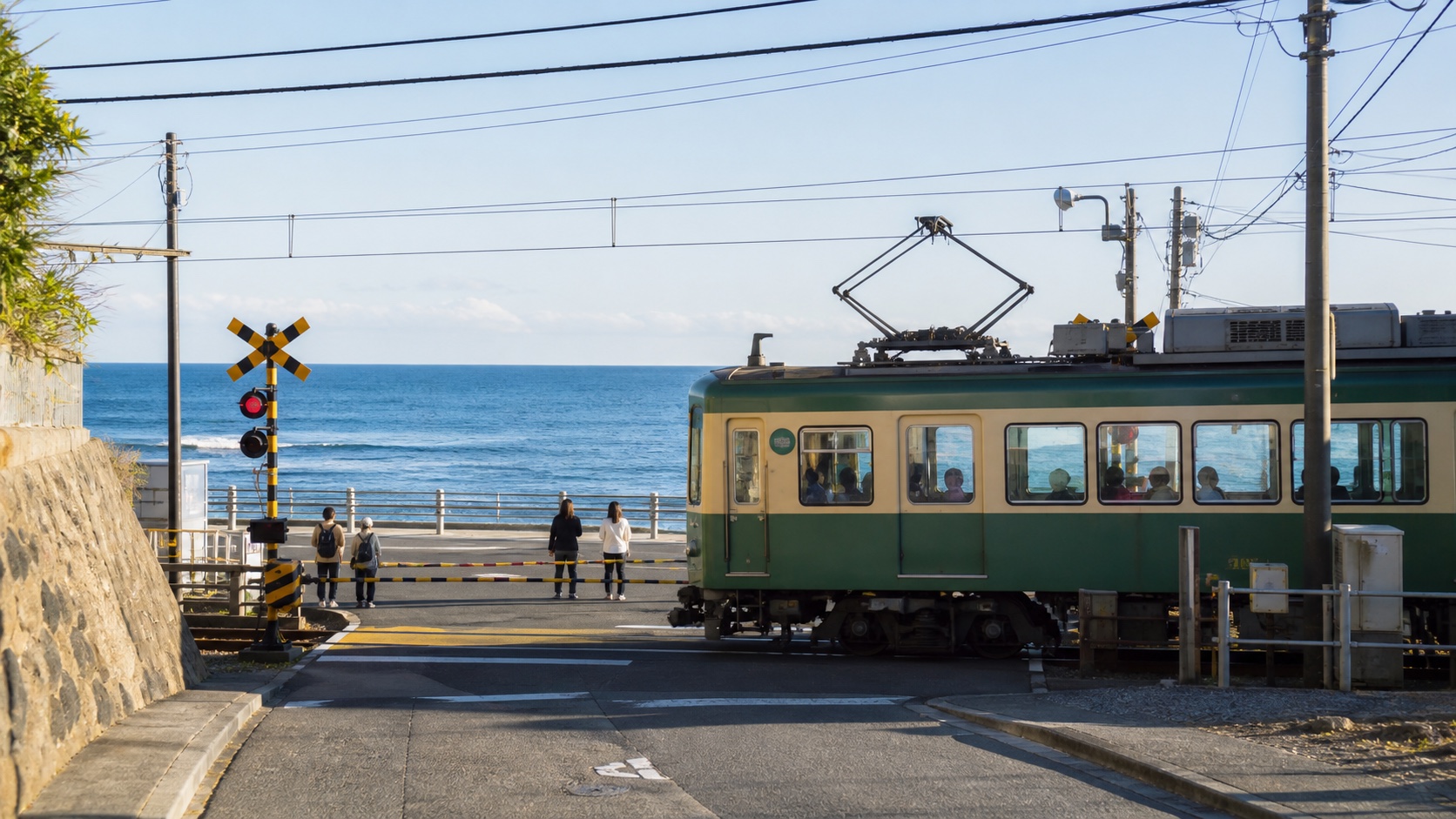
Just steps from the Enoden (Enoshima Electric Railway) Kamakura-Koko-Mae Station lies one of Japan’s most photographed spots: the level crossing immortalized in the opening sequence of Takehiko Inoue’s basketball masterpiece Slam Dunk. The view framing the crossing, Enoshima island, and Sagami Bay beyond is breathtaking even for those unfamiliar with the manga.
| Item | Details |
|---|---|
| Location | Koshigoe, Kamakura City, Kanagawa (immediately beside Enoden Kamakura-Koko-Mae Station) |
| Access | Enoshima Electric Railway: approx. 16 min from Kamakura Station, 24 min from Fujisawa Station |
| Admission | Free |
| Caution | This is an active railway crossing — never cross when the barrier is down. Avoid lingering on the roadway during busy periods. |
For the best shot, position yourself on the west side of the crossing to frame the train with Enoshima and the sea in the background. Morning light is ideal as you avoid shooting into the sun. The train passes every 10–15 minutes, so be ready to capture the brief window when the barrier opens.
The Kamakura Great Buddha (Kotoku-in) — Japan’s Iconic Open-Air Bronze
Officially known as the Dōzō Amida Nyorai Zazo (Bronze Seated Amida Buddha), the Kamakura Great Buddha is a designated National Treasure and one of Japan’s most recognizable landmarks. Standing 11.3 meters tall and weighing approximately 121 tonnes, this colossal bronze figure once sat inside a great wooden hall — the hall was destroyed by typhoons and a tsunami during the Muromachi period, and the Buddha has sat serenely outdoors ever since.
| Item | Details |
|---|---|
| Location | Kotoku-in, 4-2-28 Hase, Kamakura City, Kanagawa |
| Access | Enoden Hase Station, 7-min walk; or bus from Kamakura Station (Kamakura Bus, about 7 min) |
| Hours | 8:00–17:30 (Apr–Sep); 8:00–17:00 (Oct–Mar) |
| Admission | Adults ¥300, Children (6–12) ¥150. Interior visit (inside the statue): +¥50 |
You can enter the interior of the statue through two small windows in its back — a fascinating experience that reveals the hollow bronze construction. Arrive early to avoid the crowds, and spare a moment to read the inscriptions on the statue’s pedestal. The spacious precinct also features the Kamakura Great Buddha Discovery Museum nearby.
Enoshima Shrine — A Sacred Island Rising from the Sea
Just a short trip from Kamakura via the Enoden, Enoshima is a small island connected to the mainland by a bridge, and home to the celebrated Enoshima Shrine. The entire island is considered sacred ground, dedicated to Benzaiten, the goddess of beauty, music, and the sea. The shrine complex is divided into three sections (Hetsumiya, Nakatsumiya, and Okitsumiya), linked by a winding path through the island’s lively shopping street.
| Item | Details |
|---|---|
| Location | 2-3-8 Enoshima, Fujisawa City, Kanagawa |
| Access | Odakyu Line to Katase-Enoshima Station (10-min walk to bridge), or Enoden to Enoshima Station (12-min walk) |
| Shrine Hours | 8:30–17:00 (some areas open later) |
| Admission | Shrine precincts: Free. Iwaya Caves: Adults ¥500, Children ¥200. Enoshima Escar (escalator): ¥360 |
Don’t miss the Iwaya Caves at the island’s far end — a network of sea caves carved by waves, used by monks for centuries. Sunset over Sagami Bay from the observation deck is also stunning. The island’s shopping street is a great place to try Enoshima’s specialty: shirasu (young whitebait), served on rice bowls or as crispy tempura.
Travel Tips
- The Enoden 1-Day Pass “Noriorikun” (¥800) gives unlimited Enoden rides — ideal for hopping between Kamakura Station, Hase, Kamakura-Koko-Mae, and Enoshima Station.
- Kamakura is most crowded on weekends and during autumn foliage (late November). Weekday visits are significantly less congested.
- Komachi-dori in central Kamakura is a must-walk shopping street with local snacks, crafts, and souvenirs.
- Allow at least a full day to cover all three main sights comfortably.
Frequently Asked Questions
How do I get to Kamakura from Tokyo?
From Tokyo Station, take the JR Yokosuka Line direct to Kamakura (about 55 minutes, ¥940). From Shinjuku, the Odakyu Line to Fujisawa (about 65 minutes) is also popular.
Can I visit Kamakura and Enoshima in one day?
Yes — with an early start, a day is enough to see the Slam Dunk crossing, the Great Buddha, Hase-dera Temple, and Enoshima. Prioritize based on your interests.