

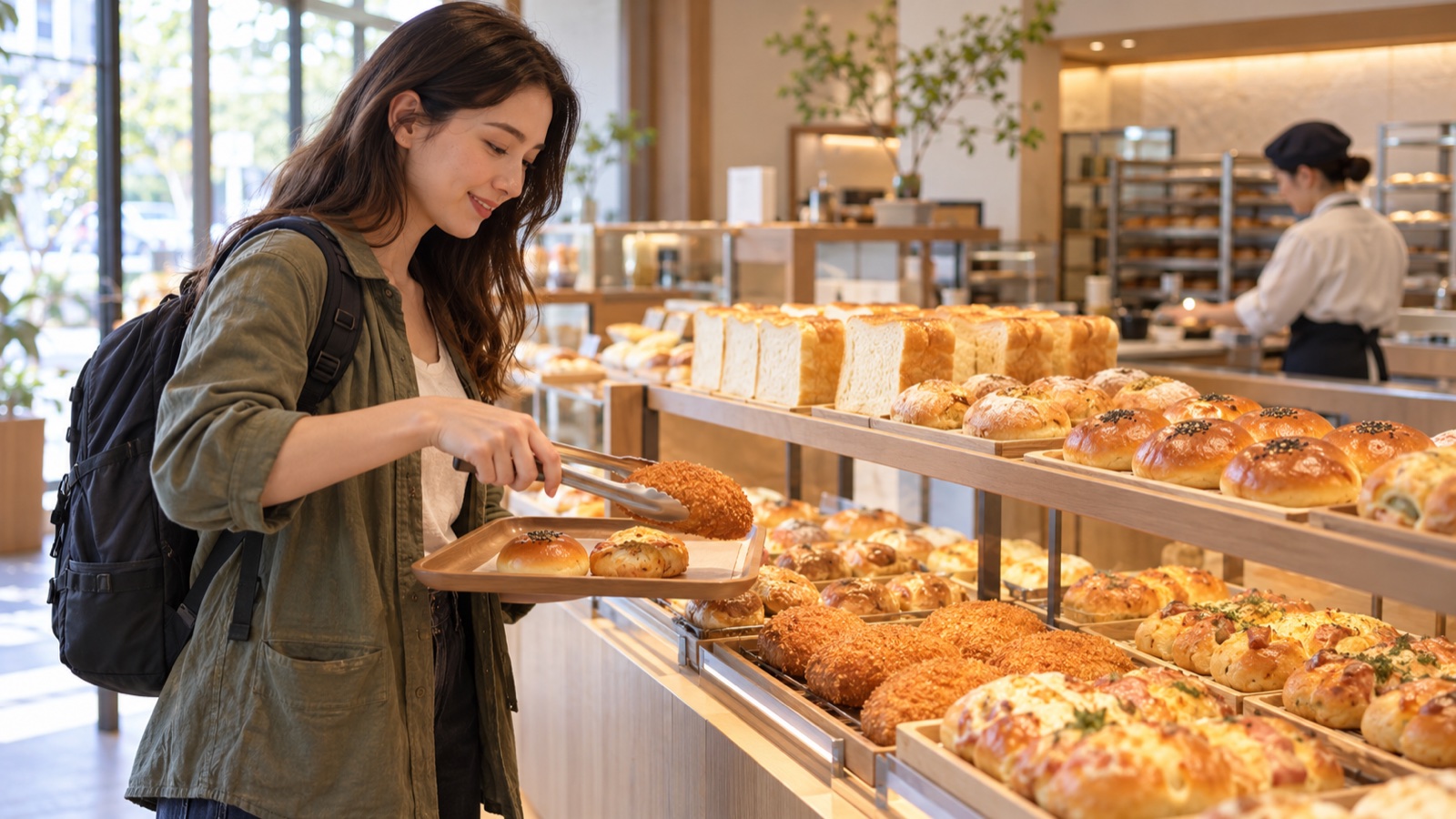
Japanese bakeries are an easy breakfast stop, but the system may be unfamiliar: take a tray and tongs, choose uncovered bread yourself, then bring everything to the register. The harder part is identifying fillings and allergens, because freshly displayed bread is not always covered by the same label you would find on packaged food.
How a self-service bakery works
- Take one tray and one pair of tongs near the entrance.
- Use the tongs—not your hands—to place bread on the tray.
- Keep the tongs and tray with you; do not return selected bread to the shelf.
- Carry the tray to the register and indicate dine-in or takeaway.
- Return equipment only where staff directs.
Popular breads to recognize
- Shokupan: soft square milk-bread style loaf, sold whole or sliced.
- Anpan: bun commonly filled with sweet red-bean paste.
- Curry pan: curry-filled bread, often fried.
- Melon pan: sweet bun with a crisp cookie-like top; usually not melon-flavored.
- Cream pan: custard-style cream filling.
- Yakiso pan: soft roll filled with fried noodles.
Names describe a common style, not a guaranteed recipe. Butter, milk, egg, wheat, nuts, sesame, soy, meat or alcohol-derived flavoring can appear unexpectedly.
Allergies: ask before choosing
Japan’s Consumer Affairs Agency explains that mandatory allergen labeling applies to packaged processed food, while bread sold loose at a bakery should be checked with staff. Cross-contact can occur through shared ovens, trays, oil, tongs and preparation areas. If a reaction could be severe, do not rely only on appearance or a translation app.
Show a written allergy card and ask: Kore ni ___ wa haitte imasu ka? (Does this contain ___?). Also ask whether shared equipment is used. If staff cannot confirm safety, choose a sealed product with a readable ingredient label or do not purchase it.
Dine-in, takeaway and reheating
Some bakeries have seats; others are takeaway only. Tell the cashier before payment because the consumption setting may affect how the sale is handled. Ask before eating food from another shop. If reheating is offered, confirm which items are suitable and whether packaging must be removed.
Freshness and carrying bread
- Eat cream, egg, meat and seafood fillings promptly and keep them out of heat.
- Keep crisp and soft items in separate bags when possible.
- Do not leave bakery food in a hot car or luggage locker.
- For a long journey, choose a simpler bread and follow staff storage advice.
Payment and etiquette
Payment methods vary; keep cash as a backup. Queue without blocking the display, avoid touching bread with clothing or bags, and supervise children near open shelves. Photography may be restricted, so ask before photographing staff or displays.
A practical breakfast order
For a balanced, portable breakfast, combine one savory item, one simple roll or slice of shokupan, and a drink. Check filling temperature and allergens first. Buying extra perishable sandwiches for late evening is usually a poor idea unless you can refrigerate them.
Useful phrases
- Mochikaeri desu. — Takeaway, please.
- Koko de tabemasu. — I will eat here.
- Atatamete moraemasu ka? — Could you warm this?
- Arerugī hyōji wa arimasu ka? — Is allergen information available?
FAQ
Can I put bread back after picking it up?
No. Once it has been on your tray, take it to the register or ask staff what to do.
Is melon pan made with melon?
Usually the name refers to its shape or patterned crust, but recipes vary; check the label or ask staff.
Are bakery items safe for a wheat allergy?
Most are not, and shared-air/shared-equipment cross-contact is likely. Seek explicit confirmation and a suitable sealed alternative.
Information checked October 31, 2026. Official reference: Consumer Affairs Agency food-labeling guidance. Recipes and cross-contact controls vary by bakery.