

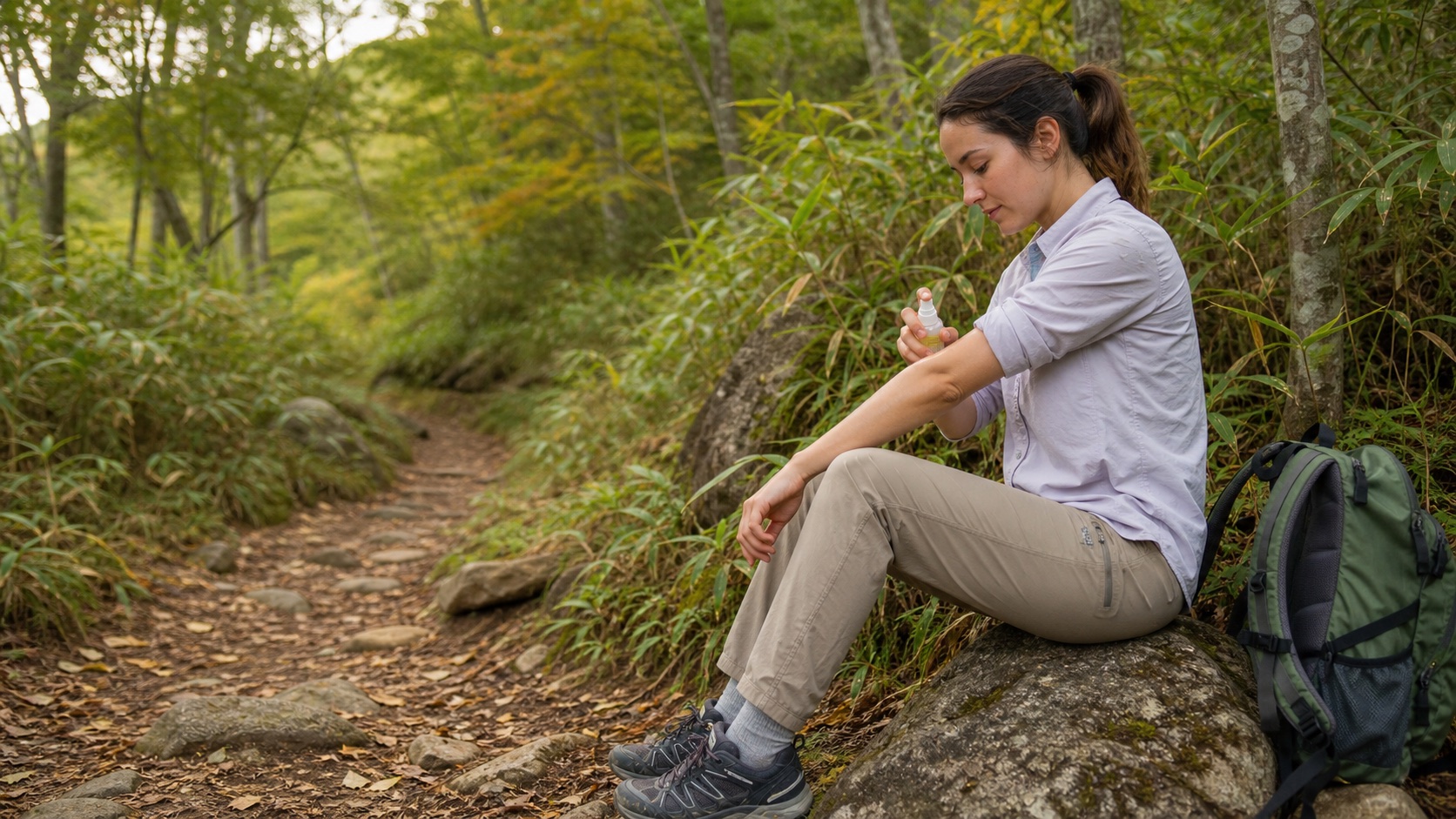
Checked September 3, 2026. Mosquitoes and ticks should not stop you from enjoying Japan, but the right precautions differ between a city park and a mountain trail. Japan’s Ministry of Health, Labour and Welfare (MHLW) says the Asian tiger mosquito is active mainly from around mid-May to late October and bites mostly outdoors during the day. Hard ticks are especially active from spring through autumn in grass, brush and woodland.
This guide turns the official advice into a practical packing and after-walk routine. It is general travel information, not medical diagnosis.
Quick decision guide
| Your plan | Main exposure | Minimum preparation |
|---|---|---|
| City streets and indoor attractions | Usually low; higher in shaded parks and gardens | Carry repellent if parks are on the itinerary |
| Temple gardens, cemeteries and riversides | Day-biting mosquitoes around vegetation | Repellent plus clothing that limits exposed skin |
| Hiking, camping or farm stays | Mosquitoes and ticks | Long sleeves, long trousers, closed shoes, socks and repellent |
| Walking through tall grass or brush | Higher tick contact | Stay on the path, cover ankles and check your body afterward |
What to pack or buy in Japan
- Skin repellent: in Japan, look for mushi-yoke (虫よけ). Products may contain DEET (ディート) or icaridin/picaridin (イカリジン). Follow the product label, including age restrictions and reapplication instructions.
- Light-colored clothing: it makes ticks easier to see. Choose breathable long sleeves and trousers rather than relying only on repellent.
- Closed footwear and socks: particularly for trails, grass and brush. Sandals leave feet and ankles exposed.
- A small sealable bag: useful for isolating outdoor clothing until you can inspect or wash it.
Do not assume that a stronger concentration is suitable for every traveler. Children, pregnancy, sensitive skin and use on clothing require particular attention to the Japanese label. Ask a pharmacist if you cannot confirm the directions.
Before entering a park or trail
- Apply repellent exactly as directed, covering small exposed areas such as wrists and ankles without spraying into the eyes or mouth.
- Tuck the trouser hem into socks or use hiking gaiters where tick contact is plausible.
- Keep to the center of the path and avoid brushing against tall grass or dense vegetation.
- Check the day’s heat and weather. Protective clothing still needs to be breathable, and heat safety takes priority.
- Save the location of a nearby clinic if the route is remote.
Mosquitoes: what visitors should know
MHLW states that the Asian tiger mosquito is found across most of Japan from Honshu southward. It is active mainly during daylight and is common in shaded parks, gardens, bamboo areas and other vegetation. Japan is not presented here as a routine dengue destination: the practical point is that a mosquito capable of transmitting dengue exists in Japan, so bite prevention is sensible.
If you are bitten but feel well, a bite alone is not a reason to panic. If fever, severe headache, rash, marked muscle or joint pain, unusual bleeding, or other concerning symptoms appear, seek medical advice and mention recent travel and mosquito exposure. MHLW notes that dengue has no specific antiviral treatment and that some pain medicines may be unsuitable when dengue is suspected; do not self-diagnose or keep adding medicines without professional advice.
Ticks: the after-walk check matters
After hiking or walking through brush, inspect your clothes and gear before entering your room. Bathe or shower and check the neck, around the ears, armpits, wrists, waist, groin and behind the knees. Check children and travel companions who may not notice a small attached tick.
If a tick is attached, do not forcibly pull it off. MHLW advises having it removed by a medical institution such as a dermatology clinic because part of the tick can remain in the skin. Note the date and place of possible exposure. If fever, digestive symptoms, unusual fatigue or a rash develops afterward, promptly seek care and state that a tick bite or outdoor exposure occurred.
Useful Japanese phrases
| Japanese | Meaning |
|---|---|
| 虫よけはありますか? | Do you have insect repellent? |
| マダニにかまれたかもしれません。 | I may have been bitten by a tick. |
| いつから症状が出たか説明します。 | I will explain when the symptoms began. |
| 皮膚科はどこですか? | Where is a dermatology clinic? |
Common mistakes
- Thinking mosquitoes only bite at night. The common Asian tiger mosquito is a daytime biter.
- Wearing sandals into grass because the walk is short.
- Applying repellent once in the morning without checking its label or duration.
- Forgetting that rain, sweat and swimming can affect protection.
- Pulling an attached tick with bare fingers or squeezing it.
- Ignoring later symptoms because the bite happened several days earlier.
FAQ
Do I need repellent for Tokyo or Kyoto?
Not for every indoor itinerary. It is useful from late spring through autumn when visiting leafy parks, shaded gardens, riversides or similar outdoor areas.
Can I remove a tick myself?
Official Japanese guidance says not to forcibly pull off an attached tick and recommends removal at a medical institution such as dermatology.
Where can I find medical help?
JNTO’s Japan Visitor Hotline operates around the clock for tourist information and assistance, including illness and emergencies. For an ambulance, call 119. Also check your travel insurer’s assistance service.
Summary
For urban parks, carry repellent and limit exposed skin. For trails and grass, add long trousers, closed shoes, socks and an after-walk tick check. Follow the product label, do not forcibly remove an attached tick, and tell a clinician about the exposure if symptoms develop.