
Japan’s secondhand shops range from neighborhood “recycle shops” selling household goods to curated vintage boutiques and specialist stores for cameras, instruments, games or luxury items. The best bargains come from checking condition and total value—not assuming every used item is cheap, authentic or suitable to take home.
Choose the right type of store
- Recycle shop: practical clothing, appliances, furniture and household items.
- Vintage boutique: selected fashion, often at higher prices.
- Specialist reseller: cameras, watches, instruments, games or hobby goods with more detailed grading.
- Flea market: variable schedules, cash needs and seller-specific return rules.
Read the condition before the price
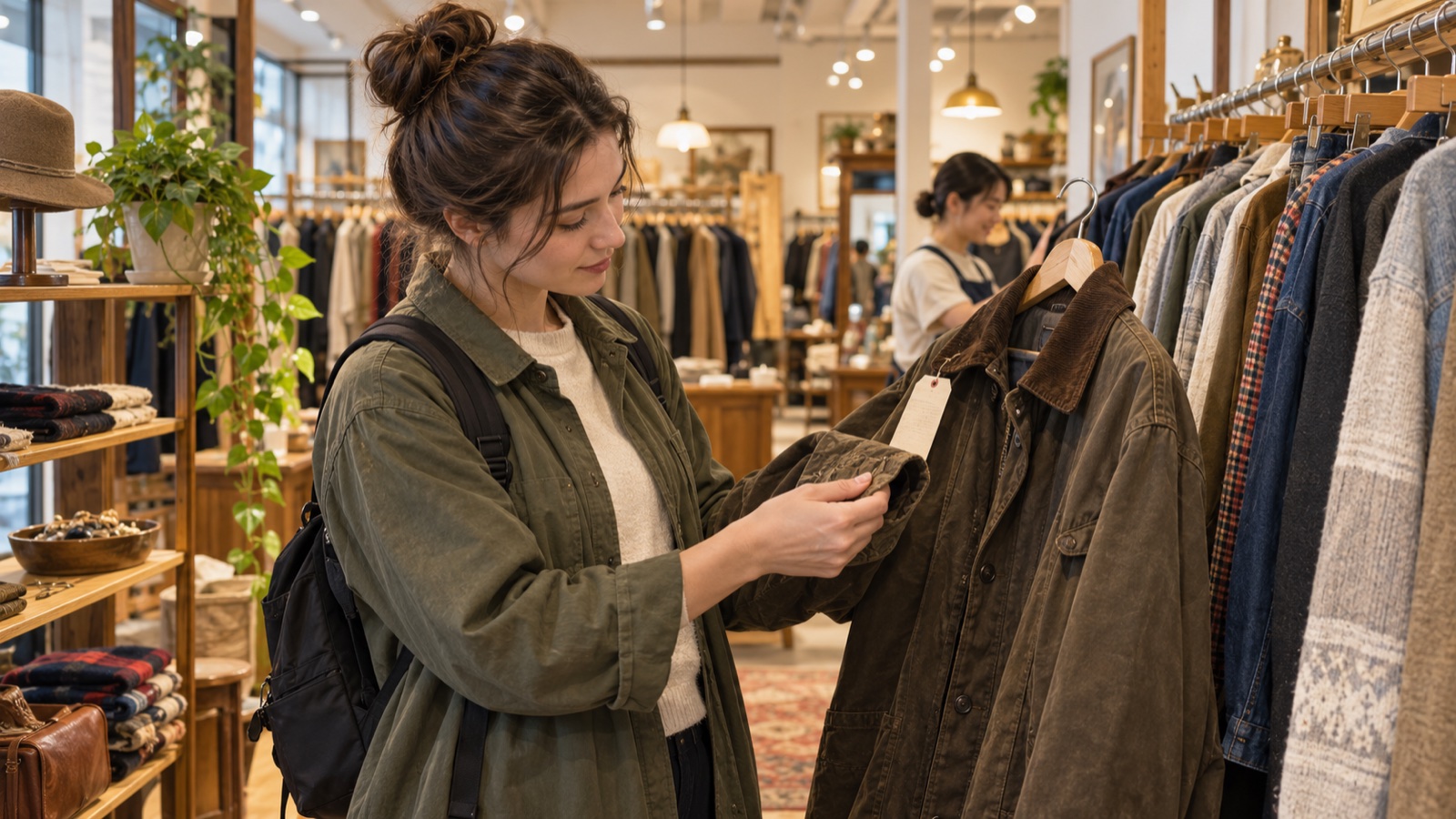
Inspect seams, zippers, cuffs, lining, odors and alterations. For electronics, confirm voltage, battery health, included accessories, language settings and whether testing is allowed. A tag may describe scratches, stains or missing parts only in Japanese; use a translation app and ask staff before paying.
Useful condition words
- 中古 (chūko): used
- 未使用 (mishiyō): unused, though packaging may have been opened
- 傷 (kizu): scratch or damage
- 汚れ (yogore): stain or dirt
- 動作確認済み: operation checked
- ジャンク: junk/as-is; may be untested or defective
Try-on and returns
Ask before using a fitting room. Follow shoe-removal and face-cover instructions. Returns on used, sale, luxury, hygiene-sensitive or “junk” goods may be limited or unavailable. Confirm the return deadline, receipt requirement and whether overseas returns are possible before paying.
Authenticity and high-value goods
For a costly watch, bag, camera or collectible, choose a seller that explains its inspection process and provides itemized condition notes. Keep the receipt, serial information and authenticity documentation. A low price, vague provenance or pressure to pay quickly is a reason to walk away. Japan Customs lists goods infringing intellectual-property rights among prohibited articles, so check both authenticity and your destination country’s import rules.
Tax-free shopping is not automatic
Only eligible stores and customers can use the visitor tax-free system, and an individual used item may not qualify. Rules also change: JNTO explains that purchases made from November 1, 2026 use a departure-confirmed refund method. Ask the store how the current system applies and keep the goods, passport record and receipt available for departure procedures.
Can you take it home?
- Measure luggage dimensions and weight before buying.
- Check airline rules for batteries, blades, tools and fragile items.
- Confirm voltage and radio-frequency compatibility for electronics.
- Research plant, animal-material and cultural-property restrictions.
- Do not mail tax-free purchases unless the current rules explicitly permit the chosen method.
Payment and negotiation
Many chain stores accept cards, but small sellers may prefer cash. Prices in fixed-price shops are generally not negotiated; asking aggressively can be uncomfortable. At a flea market, polite negotiation may be possible, but accept “no” immediately.
A five-minute inspection checklist
- Confirm size, model and included parts.
- Read every condition note.
- Test only with permission.
- Check return, warranty and tax-free terms.
- Calculate luggage, repair and import costs.
- Photograph the receipt and condition tag after purchase.
FAQ
Does “unused” mean factory-new?
Not necessarily. It can mean the item was not used, while packaging or storage condition may differ from retail-new stock.
Are “junk” electronics a bargain?
Only for buyers prepared for failure or repair. Treat junk goods as as-is unless the store gives a written guarantee.
Can I return a used item because it does not fit?
Do not assume so. Ask before purchase and try it on when permitted.
Information checked October 31, 2026. Official references: JNTO tax-free guidance and Japan Customs passenger procedures. Store policies and destination-country import rules vary.