

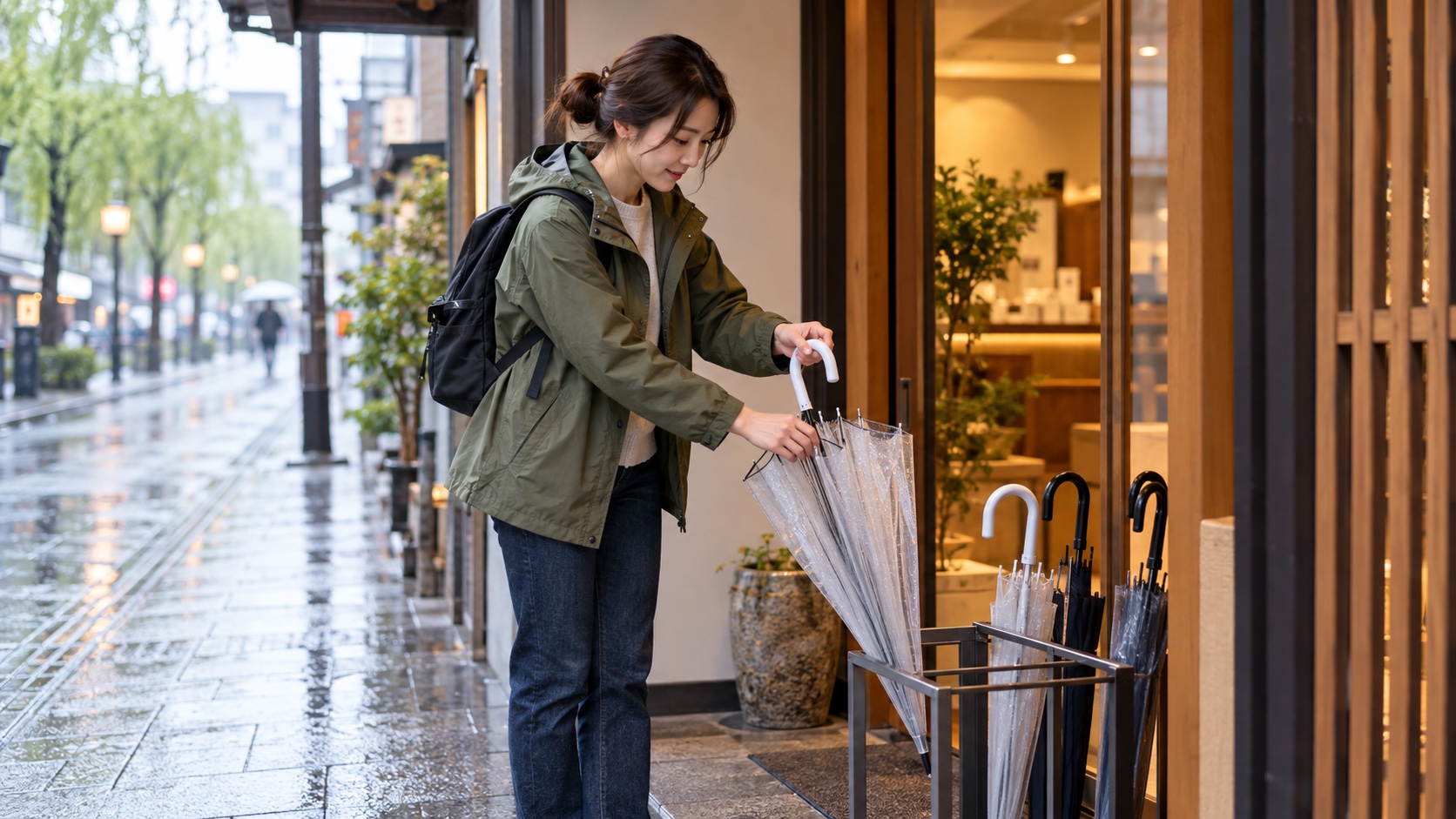
Rain in Japan can be a brief shower, a long rainy-season spell or part of a serious storm. An umbrella is easy to buy, but using and storing it considerately matters in crowded stations, shops, temples and trains.
Umbrella or rain jacket?
A compact umbrella suits city walking and light rain. A sturdy full-size umbrella offers more coverage, while a rain jacket keeps both hands free on stairs, trails and windy days. In typhoon conditions, an umbrella can become unsafe; follow weather and transport warnings instead of sightseeing as planned.
Check the forecast by region
Japan’s rainy periods differ by region. JNTO notes that Okinawa’s rainy season can begin in May, while northern areas start later and Hokkaido is less affected. Check the local forecast each morning rather than assuming June weather is identical nationwide.
Entering a shop or hotel
Close the umbrella outside the doorway, shake off water away from people, and use the stand, lock rack or plastic cover provided. Do not carry a dripping umbrella through a dry lobby. If no system is provided, keep it folded and pointed down without wetting merchandise or other guests.
Umbrella stands and theft prevention
Similar transparent umbrellas are easily confused. Use a removable marker, strap or distinctive handle cover, but do not damage rental or borrowed property. An umbrella in a public stand is not free to take. Keep valuables with you; never attach keys or identifying documents to the umbrella.
On trains and buses
Fold the umbrella before boarding, hold it vertically with the tip down, and keep it close to your body. Avoid placing a wet umbrella on a seat, overhead rack or another passenger’s bag. A small absorbent sleeve is useful for compact umbrellas.
Walking in crowds
Raise or angle the umbrella carefully when passing, and check behind you before opening it. Do not spin water off near others. On narrow sidewalks, bridges and station stairs, slow down rather than forcing two open umbrellas past each other.
Temples, gardens and historic buildings
Follow the facility’s umbrella instructions. Wet stone, wooden steps and moss can be slippery; use handrails without blocking traffic. Some interiors require umbrella storage before entry. Do not lean an umbrella against artworks, gates or fragile walls.
Disposable covers and waste
Use a cover only when required, then place it in the designated collection bin. Do not leave covers in ordinary recycling slots. A reusable absorbent umbrella bag reduces waste and can be carried until it dries.
If you lose an umbrella
Return promptly to the shop, station or facility and describe the time, place, color and handle. Lost property may be held locally before transfer. Do not take a similar umbrella as a replacement. For a low-cost transparent umbrella, decide whether the recovery journey is practical.
Severe weather
Strong wind, lightning, flooding and transport suspension require a different plan from ordinary rain. Move indoors, avoid rivers and underpasses, and check official warnings. A clear umbrella is not protection from lightning or flying debris.
Useful Japanese
傘立てはどこですか。 (Where is the umbrella stand?)
傘を忘れました。 (I left my umbrella.)
この傘を借りられますか。 (May I borrow this umbrella?)
Official planning resources
Frequently asked questions
Can I take an umbrella from a shop stand?
No. It belongs to another customer unless clearly marked as a loan service.
Are transparent umbrellas disposable?
No. Reuse them, give them to an authorized recipient, or follow local disposal rules.
Should I use an umbrella in a typhoon?
Strong winds can make umbrellas dangerous. Prioritize official warnings and shelter.
Official travel information checked November 1, 2026.