

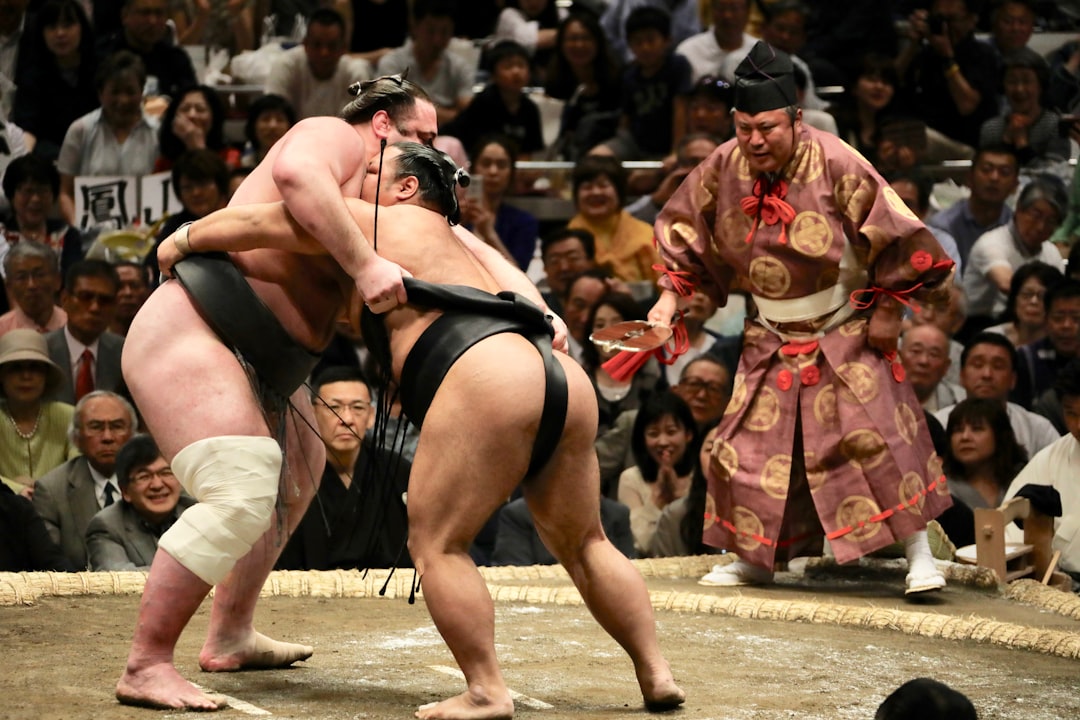
Sumo is easy to understand in seconds, yet deep enough to study for a lifetime. Its appeal comes from explosive collisions, technique overcoming size, ritualized movement, stable life and a striking visual world. This guide explains the rules, culture and practical ways to experience sumo in Japan.
1. Rules you can understand at a glance
Sumo uses no sporting equipment and has no weight divisions. A wrestler loses when any part of his body other than the soles of his feet touches the ground, or when he steps or is forced outside the ring. A gyoji indicates the winner, while ringside judges may confer over a close or disputed result.
2. Speed, impact and the drama of unequal bodies
At the tachiai, two large athletes launch forward and often decide a bout within seconds. Footwork, balance, hand position and instant decisions matter as much as mass. With no weight classes, a smaller wrestler can defeat a larger opponent through speed or a throw such as shitatenage; the rare utchari is a dramatic twisting counter at the ring edge. Watch who disrupts the other wrestler’s balance first, not simply who is heavier.
3. More than sport: ritual and history
Sumo is connected with ancient myth, court contests, shrine observances and prayers for abundant harvests, and is often described as having more than 1,500 years of history. Modern professional sumo nevertheless developed over many centuries; not every present-day detail has remained unchanged since antiquity.
| Action | Meaning and focus |
|---|---|
| Shiko | Leg-lifting stamp that trains balance and carries a ritual association with driving out harmful spirits |
| Salt throwing | Purifies the ring; mainly seen before juryo and makuuchi bouts |
| Chirichozu | Clapping and showing empty palms traditionally demonstrates that no weapon is held |
| Dohyo-iri | Ring-entering ceremony with brilliantly embroidered kesho-mawashi |
4. Gyoji, yobidashi, costume and sound
A gyoji wears ornate clothing based on traditional court dress, including an eboshi-style hat, and directs the bout with a gunbai. Yobidashi announce wrestler names in a distinctive cadence, maintain the ring and support tournament operations. Wrestlers compete in mawashi and enter ceremonially in colorful kesho-mawashi. These voices, colors and prescribed movements give sumo its theatrical rhythm.
5. Communal life in a sumo stable
Professional wrestlers belong to a heya, where they train and live under a stablemaster. Morning practice includes shiko, sliding footwork, collision drills and practice bouts. Stable life is hierarchical: rank and seniority affect training order, chores, clothing and personal freedom. Wrestlers wear traditional hairstyles and kimono or yukata in public. Customs vary by stable, and the demanding hierarchy should not be romanticized.
6. Chanko cuisine and traditional hairdressing
Chanko means food prepared and eaten by wrestlers, not only hot pot. Chankonabe often combines meat or fish, tofu and vegetables for communal eating. It can be nutritionally balanced; weight gain also reflects portion size, rice, training and rest, rather than one inherently fattening recipe.
Specialist hairdressers called tokoyama maintain wrestlers’ topknots. The fan-shaped oicho style worn by higher-ranking wrestlers requires precise combing, oiling and tying, and is reserved for appropriate rank and formal occasions.
7. Watching an official Grand Sumo tournament
Six 15-day tournaments are normally held each year: Tokyo in January, May and September; Osaka in March; Nagoya in July; and Fukuoka in November. Check the Japan Sumo Association’s current calendar and ticket pages. Lower divisions begin earlier, while juryo and makuuchi ceremonies and headline bouts fill the afternoon. Ringside tamari seats carry strict rules, floor-level box seats can be physically demanding, and chair seats are often easiest for first-time visitors. Do not assume foreign-language earphone commentary is always available.
8. Morning practice and interactive sumo entertainment
Morning practice reveals breathing, sweat, repetition and hierarchy without tournament spectacle. A stable is not a walk-in attraction: reserve through an official stable channel or reputable operator, arrive punctually, remain silent and follow that day’s photography rules.
Some private restaurants offer former-wrestler demonstrations, chanko and safe challenges in padded suits. These can suit families and short visits, but they are not Japan Sumo Association tournaments or stable practice. Check performer credentials, language, age limits, allergens, total price, cancellation terms and safety instructions before booking.
9. The international history of professional sumo
Hawaii-born Akebono became the first foreign-born yokozuna in 1993, followed by Musashimaru. Mongolian champions including Asashoryu, Hakuho, Harumafuji, Kakuryu, Terunofuji and Hoshoryu continued that history. European wrestlers such as Bulgaria’s Kotooshu and Estonia’s Baruto also reached high rank. These athletes competed within the same stable, ranking and ritual systems, showing how strict tradition and international participation can coexist.
10. Choosing the right sumo experience
- Choose a tournament for full ceremony and elite competition, practice for technical detail, or a private show for accessible interaction.
- At tournaments, stay in your assigned seat, avoid flash, never throw cushions and keep aisles clear.
- Practice can change at short notice and usually starts early.
- Ask about meat, fish, alcohol and allergens before ordering chanko; there is no single universal recipe.
Official sources: Japan Sumo Association introduction, sumo ceremonies, annual tournament schedule and official yokozuna history.
Information checked August 28, 2026. Confirm current tournament, ticket and experience rules with the organizer.