

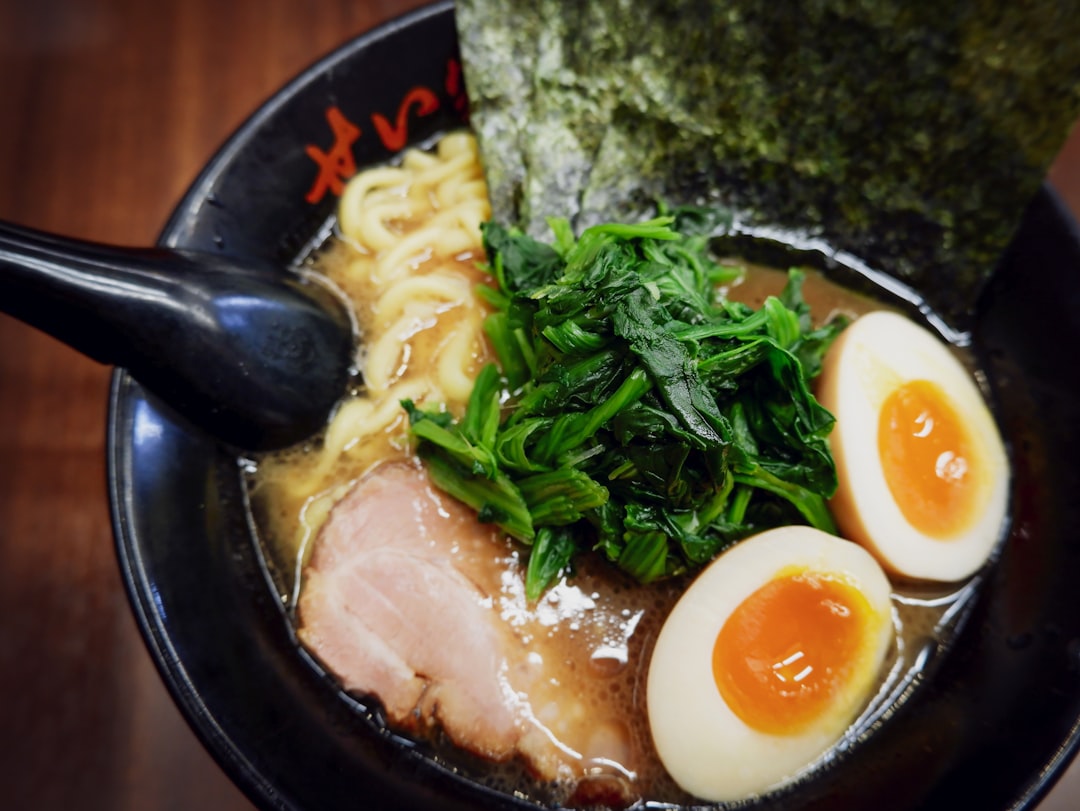
There is no single “Japanese ramen.” Broth, seasoning, noodles and toppings change by region, shaped by climate, local ingredients and working life. Use this guide to choose a bowl, order confidently and recognize several famous styles without treating regional ramen as a rigid rulebook.
How to read a bowl of ramen
- Broth: chicken, pork bone, seafood, vegetables or a blend.
- Tare: the concentrated seasoning—commonly soy sauce, miso or salt—that defines the final flavor.
- Noodles: thin or thick, straight or curly, firm or soft.
- Aroma oil: chicken fat, lard, sesame oil or flavored oil that carries scent.
- Toppings: chashu, bamboo shoots, seaweed, egg, scallions and local additions.
Five regional styles to know
Sapporo miso ramen
Often rich and warming, with miso seasoning, curly noodles and toppings such as corn, butter or stir-fried vegetables. Individual shops vary widely.
Hakata tonkotsu ramen
A pale, concentrated pork-bone broth with very thin straight noodles. Many shops offer kaedama, an extra serving of noodles for the remaining soup.
Kitakata ramen
Associated with broad, chewy, wavy noodles and a clear soy-forward soup, often built from pork, chicken or dried fish.
Tokyo shoyu ramen
A classic soy-seasoned style frequently paired with chicken and seafood notes, curly noodles, chashu, bamboo shoots and scallions.
Wakayama ramen
Often called chūka soba locally, with soy-pork combinations ranging from clear and savory to thick and rich.
How to order at a ticket-machine shop
- Check photos or an English label before inserting cash or selecting electronic payment.
- Choose the standard bowl first; “special” often means extra toppings, not a different soup.
- Hand the ticket to staff and answer noodle-firmness or topping questions.
- Wait for the indicated seat. Keep luggage out of the aisle.
- When finished, return dishes only if the shop requests it and leave promptly if people are waiting.
Customization words
- Futsū: regular.
- Katame: firmer noodles.
- Yawarame: softer noodles.
- Ōmori: large serving.
- Kaedama: extra noodles, common at some thin-noodle tonkotsu shops.
Dietary cautions
A soup that looks clear may contain pork, chicken, fish or shellfish. Miso and soy seasoning can contain allergens, and shared pots make cross-contact difficult to avoid. Ask before purchasing a ticket. Vegetarian or halal-friendly labels should be confirmed with the shop rather than inferred from toppings.
Ramen etiquette
Slurping is acceptable but not required. Eat noodles while they are hot, keep conversations brief in a busy counter shop and do not bring outside food. Drinking every drop of soup is optional. Photography is usually fine for your own bowl, but ask before filming staff or the kitchen.
FAQ
Is ramen expensive?
Prices vary by city, shop and toppings. Check the current ticket machine or official menu rather than relying on an old average.
Can two people share one bowl?
Small shops may require each seated customer to order. Ask first, especially during busy periods.
How do I choose a first bowl?
Select the shop’s standard ramen with normal noodle firmness. It is the clearest way to understand its intended balance.
See also our Tokyo ramen neighborhood and queue guide and Japan street-food guide.