

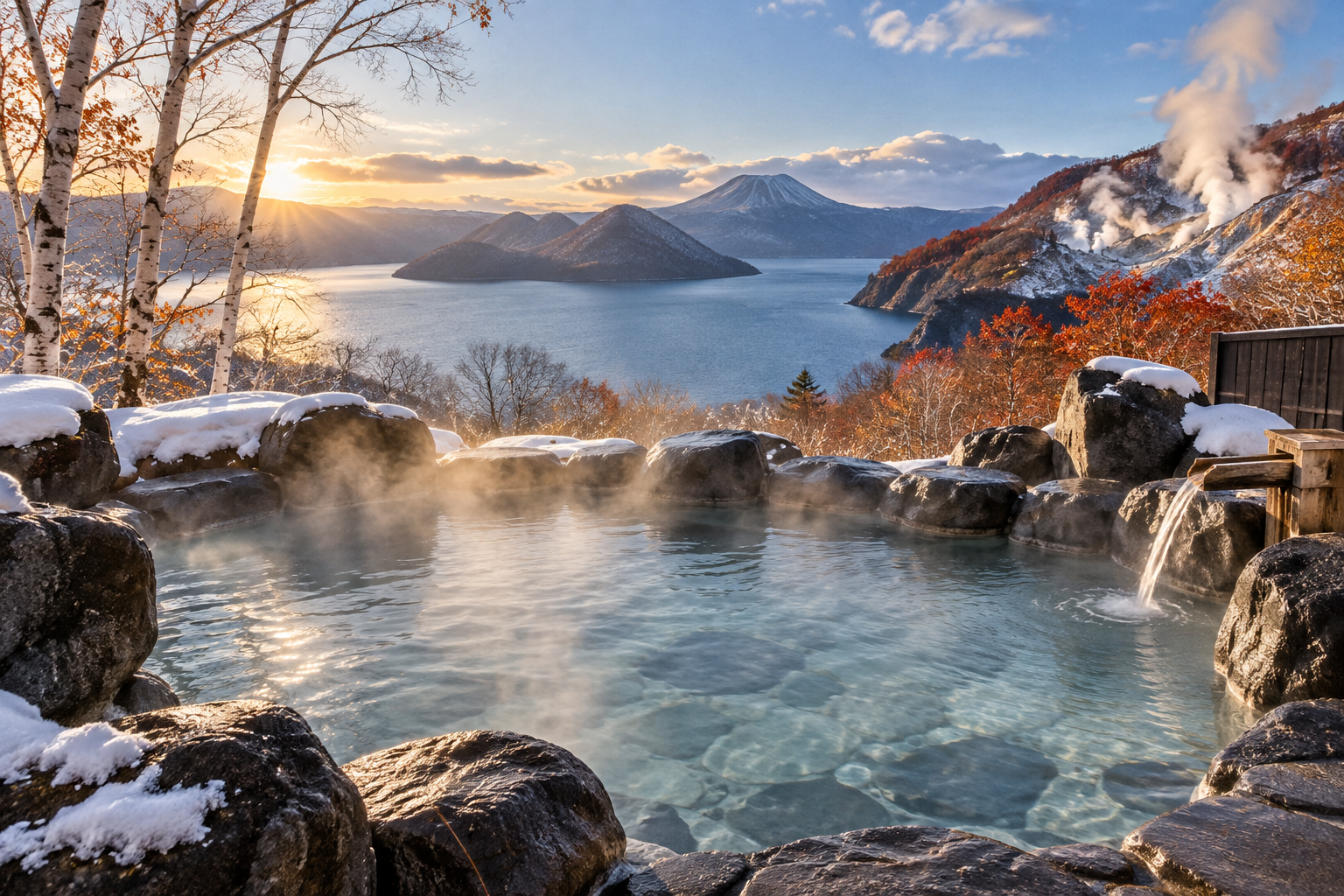
Hokkaido is one of Japan’s best regions for a hot-spring trip, but its onsen towns are spread across a very large island. The right choice depends less on a “best onsen” ranking and more on your route: volcanic scenery near Noboribetsu, an easy retreat from Sapporo in Jozankei, a lakeside stay at Toyako or Akan, or a mountain base in Sounkyo.
This guide compares six major Hokkaido onsen destinations by scenery, access and travel style. It also explains day-use bathing, winter planning and essential onsen etiquette, so you can choose a place that fits your actual itinerary.
Contents
- Hokkaido onsen comparison
- Noboribetsu and Jozankei
- Lake Toya and Sounkyo
- Lake Akan and Kawayu
- Bathing etiquette and trip planning
Which Hokkaido onsen should you choose?
| Onsen area | Best for | Main scenery | Most practical gateway |
|---|---|---|---|
| Noboribetsu | First-time visitors and varied spring types | Jigokudani volcanic valley | New Chitose Airport, Sapporo or JR Noboribetsu |
| Jozankei | A short onsen escape from Sapporo | Toyohira River gorge and seasonal foliage | Central Sapporo or Makomanai |
| Toyako | Lakeside rooms and a relaxed resort stay | Lake Toya, Mount Usu and Nakajima islands | JR Toya or New Chitose Airport |
| Sounkyo | Mountain scenery and Daisetsuzan access | Steep gorge walls and alpine landscapes | Asahikawa or Kamikawa |
| Lake Akan | Eastern Hokkaido nature and Ainu culture | Lake Akan and surrounding forest | Kushiro Airport |
| Kawayu | A quieter volcanic onsen base | Mount Io, Lake Mashu and Lake Kussharo | Mashu, Memanbetsu Airport or Kushiro |
1. Noboribetsu Onsen: dramatic volcanic scenery
Noboribetsu is Hokkaido’s best-known large onsen resort. Its signature landscape is Jigokudani, or “Hell Valley,” where steam, mineral-stained ground and a sulfurous smell reveal the volcanic system beneath the town. The official tourism association describes nine different types of onsen water in the area, although the exact water available depends on the bathing facility.
Choose Noboribetsu if you want a classic ryokan stay, several day-use bathing options and a clear sightseeing focus beyond the bath itself. The town is about 8 kilometres from JR Noboribetsu Station; buses connect the station and onsen area. Direct or connecting bus options also operate from New Chitose Airport and Sapporo, but schedules and reservation requirements must be checked.
Good to know: Jigokudani is a walking area, not a place where visitors enter the geothermal water. Stay on marked paths and heed closures during bad weather.
2. Jozankei Onsen: the easiest onsen from Sapporo
Jozankei lies in a gorge within Sapporo’s municipal area. Its combination of river scenery, foot baths, hotels and day-use facilities makes it a practical choice for travelers who do not want to move their base far from the city. The official tourism site describes clear sodium-chloride spring water and a resort history dating back to 1866.
The reservation-only Kappa Liner bus takes about 60 minutes from Sapporo Station under the timetable introduced in December 2025. Another route uses the subway to Makomanai followed by a local bus. Bus stops around Sapporo Station can change during redevelopment, so confirm the boarding point rather than relying on an old blog map.
Best seasons: autumn for gorge foliage and winter for a snowy bath, though peak weekends can be busy.
3. Toyako Onsen: a lake and volcano panorama
Toyako Onsen sits on the southern shore of Lake Toya in Shikotsu-Toya National Park. Many accommodations face the lake, while Mount Usu and Showa-shinzan add a volcanic dimension to the landscape. It works especially well for travelers combining New Chitose Airport, Noboribetsu and Hakodate.
Access usually involves JR Toya Station followed by a local bus or hotel transfer. Lake-facing does not always mean that every room or bath has an unobstructed view, so check the room category and bath photographs before booking.
Planning tip: Seasonal events and lake cruises have their own operating periods. Treat them as optional additions, not guaranteed parts of every stay.
4. Sounkyo Onsen: a mountain gateway
Sounkyo is located in a narrow gorge in Daisetsuzan National Park. It is a useful base for the Kurodake Ropeway and mountain scenery, with dramatic cliffs close to the onsen town. Fall colors arrive earlier here than in lowland cities, while winter brings snow, ice and much colder conditions.
Public transport commonly runs through Kamikawa from Asahikawa. Mountain weather can affect roads, ropeway operations and walking routes, so check transport and attraction notices on the day. This is a better choice for scenery-focused travelers than for those seeking a large shopping district.
5. Lake Akan Onsen: eastern Hokkaido nature and culture
Lake Akan Onsen is a lakeside resort in Akan-Mashu National Park. It offers forest and lake scenery together with access to Akanko Ainu Kotan, where visitors can learn about Ainu arts, performance and craft traditions. Engage respectfully: cultural spaces are living communities, not simply decorative attractions.
Kushiro Airport is the most practical air gateway. The Lake Akan official guide lists direct bus journeys of roughly 65 minutes, but the number of services varies by season. Travelers starting in Sapporo face a much longer journey and should consider flying to Kushiro or building Lake Akan into a wider eastern Hokkaido itinerary.
6. Kawayu Onsen: volcanic water near Lake Mashu
Kawayu is a smaller onsen area between Lake Mashu and Lake Kussharo, close to the steaming slopes of Mount Io. It suits travelers who prefer a quieter base and are already exploring eastern Hokkaido. Strongly acidic water is a defining feature at many facilities, but water chemistry and bathing rules differ by bath.
Transport is less frequent than around Sapporo or Noboribetsu. Check train and bus connections carefully, especially in winter, and avoid building a tight same-day transfer around the last service.
Onsen etiquette for first-time visitors
- Remove shoes where indicated and place valuables in a locker.
- Undress in the changing room. Swimsuits are normally not worn in a traditional public bath.
- Wash and rinse thoroughly before entering the bath.
- Keep the small towel out of the bathwater; place it beside the bath or on your head.
- Do not swim, splash, take photographs or speak loudly.
- Dry yourself lightly before returning to the changing-room floor.
Tattoo rules are facility-specific. Some baths accept tattoos, some offer cover stickers, and others restrict entry. Private baths or in-room baths can be useful alternatives, but they must be booked in advance at many properties.
How to plan a Hokkaido onsen trip
Do not underestimate distance
Hokkaido is large. Jozankei can fit into a Sapporo stay, while Lake Akan and Kawayu belong more naturally to an eastern Hokkaido route. Combining all six destinations in one short trip would create more transit than relaxation.
Check winter transport twice
Snow and wind can delay roads, trains and flights. Keep buffer time before a flight and avoid relying on the final bus of the day when a missed connection would leave no alternative.
Day use is not guaranteed
A ryokan may pause day-use bathing for cleaning, maintenance, private bookings or high occupancy. Confirm reception hours, towel rental, payment method and final admission directly with the facility.
Avoid unsupported health claims
Official descriptions may list legally recognized indications for particular spring types, but an onsen is not a substitute for medical care. Travelers who are pregnant, have cardiovascular conditions or feel unwell should seek appropriate medical guidance and avoid overly hot or prolonged bathing.
Sample routes
- Easy 2-night trip: Sapporo → Jozankei overnight → return to Sapporo.
- Central Hokkaido 3-night trip: New Chitose Airport → Noboribetsu → Lake Toya → Sapporo or Hakodate.
- Eastern Hokkaido 3–4-night trip: Kushiro Airport → Lake Akan → Kawayu, Lake Mashu and Lake Kussharo → Memanbetsu Airport or Kushiro.
- Mountain-focused trip: Asahikawa → Sounkyo → Daisetsuzan area, with weather-dependent flexibility.
Frequently asked questions
Which Hokkaido onsen is best without a car?
Jozankei is straightforward from Sapporo, while Noboribetsu has rail-and-bus and intercity-bus options. Lake Akan is possible by direct airport bus when schedules align. Always check the last connection.
Can children use an onsen?
Many facilities welcome children, but age rules, mixed-gender bathing limits and diaper policies vary. Ask the property before booking.
Can I visit only for the day?
Yes, at selected facilities. Hours and prices change, and some ryokan accept day visitors only during limited periods.
What should I bring?
A small bag for clothes, basic toiletries if they are not provided, and cash or a payment method accepted by the facility. Towels may be included, rented or sold.
Official sources and fact-check date
Information checked on October 6, 2026 using the Hokkaido Official Tourism Site onsen directory, the Noboribetsu tourism association’s spring guide and access guide, the Jozankei Tourist Association and its current access notice, and the Lake Akan official access guide. Facility hours, fares and transport timetables should be rechecked shortly before travel.
The featured image is an editorial composite illustrating Hokkaido onsen scenery; it does not depict one specific bath or hotel.