

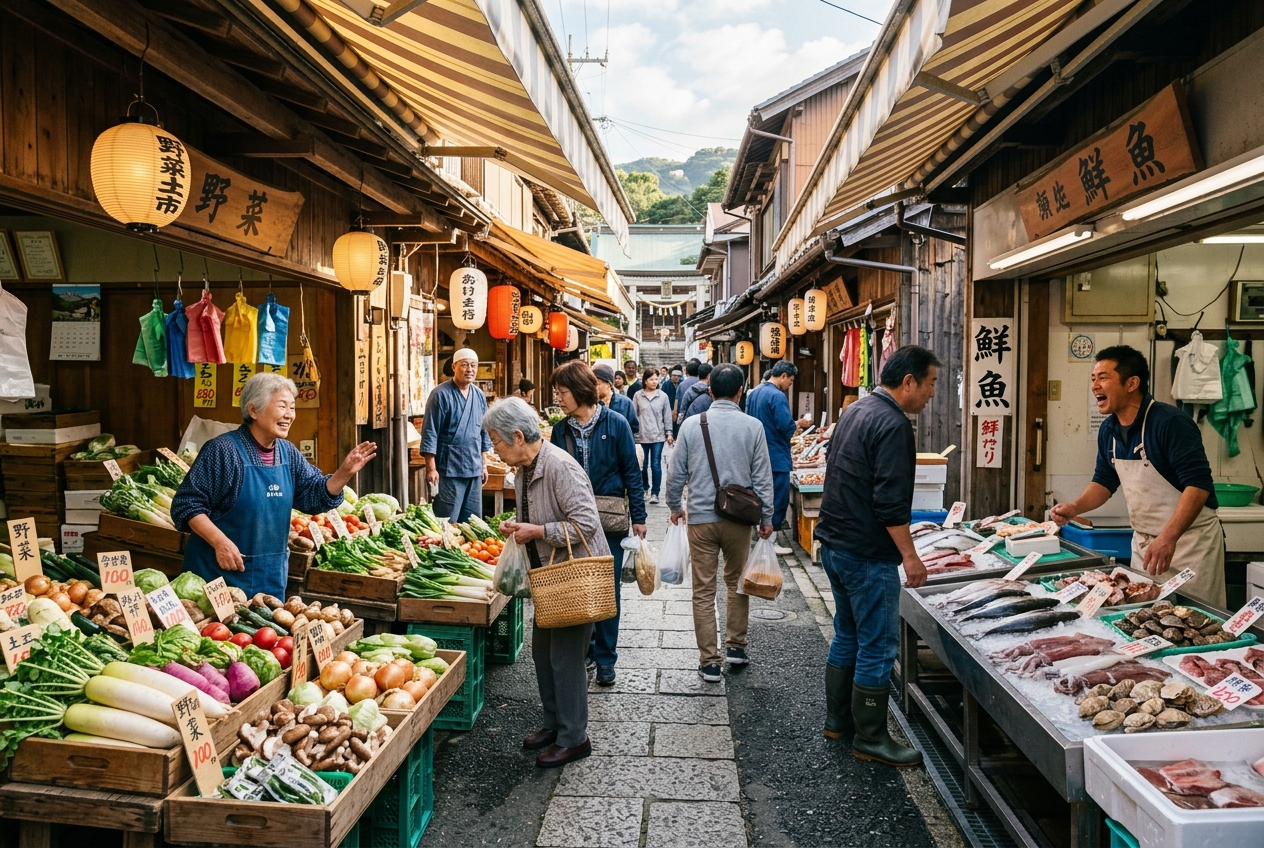
Japan’s morning markets range from permanent seafood halls beside major stations to small streets where the number of vendors changes with weather and season. They can be excellent places for breakfast and regional food, but “morning market” does not guarantee identical hours, low prices or permission to eat anywhere. This guide shows how to plan a respectful, food-safe visit.
Information checked: August 30, 2026. Confirm the market’s official calendar on the day of your visit because individual vendors may keep different hours.
Three useful market types
- Tourist-friendly food market: restaurants, packaged souvenirs and multiple payment methods may be available.
- Local street market: vendor count and product selection can change daily; cash is often useful.
- Working wholesale or fish market: public access may be limited to marked viewing areas or specific times.
Do not enter work zones simply because a gate is open. Follow signs and staff directions, especially near forklifts, wet floors, knives and auction areas.
When should you arrive?
Arriving early improves selection, but the best time depends on the market. Hakodate’s official tourism information lists earlier summer opening than winter opening and notes that hours vary by store. Yobuko’s official tourism listing gives a morning operating window but also says individual vendors differ. Use those patterns as reminders to verify—not as universal rules.
A simple first-visit plan
- Check the official website for the date, closure day and weather notice.
- Bring a small bag, cash and a backup payment method.
- Walk through once before buying so you understand the layout and choices.
- Ask the price and portion before ordering; confirm whether food is ready to eat.
- Eat only in the vendor’s designated space or another permitted area.
- Dispose of packaging where instructed instead of using an unrelated shop’s bin.
Buying seafood and produce safely
If you will not eat a perishable purchase immediately, ask how it should be stored and how long it can travel. The Katsuura City Tourism Association specifically asks summer visitors to bring an insulated bag and ice packs because heat and humidity can spoil food. Japan’s Ministry of Health, Labour and Welfare emphasizes preventing contamination, limiting bacterial growth and cooking food adequately.
Fresh appearance does not make raw seafood risk-free. People who are pregnant, immunocompromised, elderly or managing a medical condition should seek appropriate medical guidance before eating raw or undercooked food.
Sampling, touching and bargaining
- Do not touch unpackaged food unless the seller invites you.
- Accept a sample only when you intend to consider the product; dispose of sticks or cups as directed.
- Do not assume bargaining is expected. Pay the displayed price unless the seller clearly offers a discount.
- Use simple phrases such as Kore wa ikura desu ka? (“How much is this?”) and Arigatō gozaimasu.
Photography etiquette
Ask before photographing a vendor, close-up merchandise or a working auction. A wide street scene may still include identifiable people, so avoid blocking customers and never lean into a food-preparation area. If a sign prohibits photography, put the camera away.
Examples that require different planning
Hakodate Morning Market, Hokkaido
This large market is about a minute on foot from Hakodate Station and includes seafood, produce, sweets and restaurants. Official hours vary by season and shop, making it convenient but not uniform.
Yobuko Morning Market, Saga
Yobuko is a street-market experience known for seafood and local products. The official tourism page says it generally operates daily except New Year’s Day, while each vendor may open differently.
Katsuura Morning Market, Chiba
This market publishes current vendor and closure information through the city tourism association. Check the dated update rather than relying on a static travel article.
Frequently asked questions
Are morning markets always cheaper than supermarkets?
No. You may be paying for seasonality, preparation, convenience or a specialty product. Compare value and quality rather than assuming a bargain.
Do I need cash?
Some larger markets accept cards or QR payments, but small vendors may be cash-only. Carry small yen denominations.
Can I eat while walking?
Follow the market’s rules. Use a designated eating area when provided and avoid spilling food near other stalls.
Can the market ship purchases overseas?
Ask the seller, but customs and quarantine rules depend on your destination. Do not assume seafood, meat, fruit or plants can enter your country.
Official sources
- Travel Hakodate: Hakodate Morning Market
- Karatsu Tourism Association: Yobuko Morning Market
- Katsuura City Tourism Association: current market notices
- Ministry of Health, Labour and Welfare: food poisoning prevention
Takeaway
Check the dated calendar, arrive with flexible expectations, ask before photographing or touching, and keep perishable food cold. A morning market is most rewarding when treated as a working local food space rather than a staged attraction.