

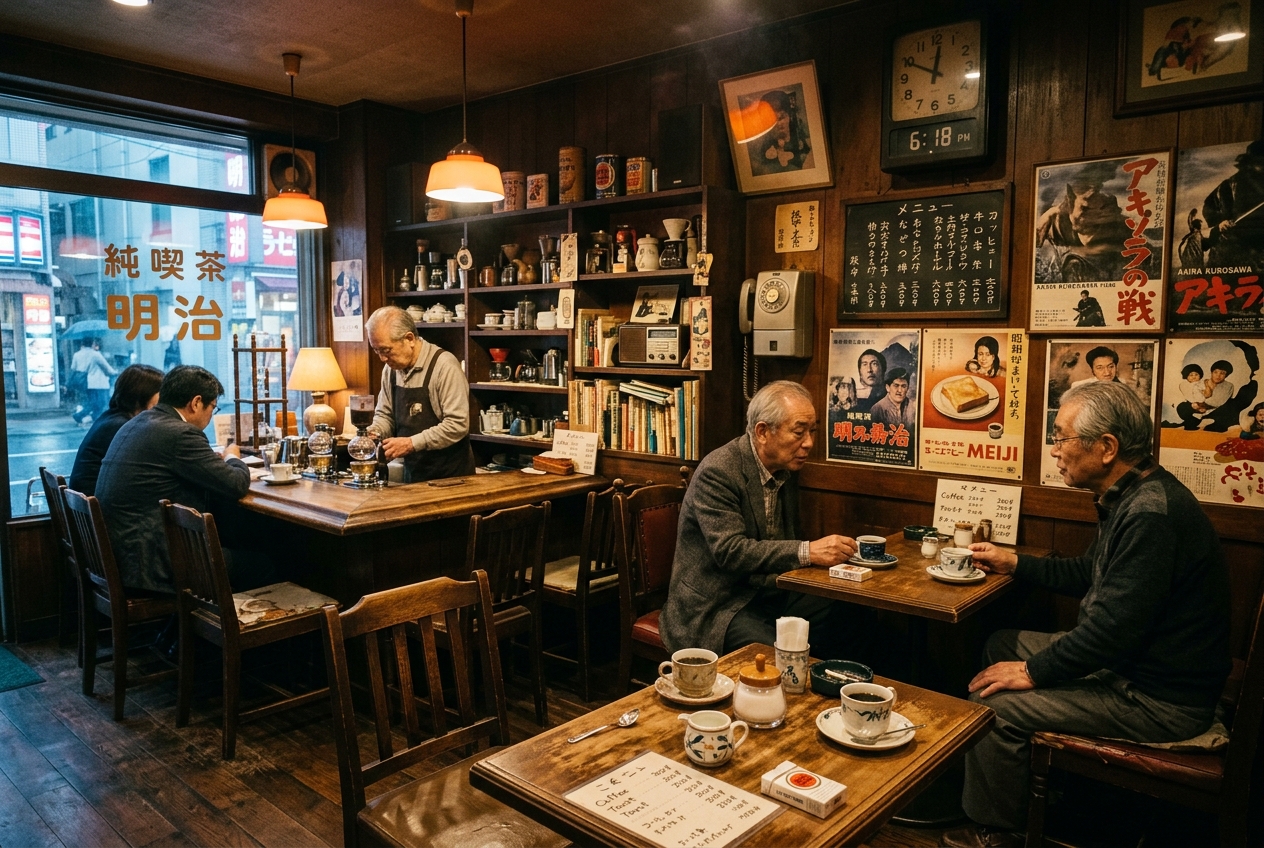
A kissaten is more than an old-fashioned coffee shop. It is a quiet, individually run space where hand-brewed coffee, toast, cream soda and carefully chosen music create a slower rhythm than a chain cafe. This guide helps first-time visitors read the menu, understand common charges and enjoy the atmosphere without disturbing regulars.
Kissaten, cafe or pure kissaten?
Names are not strict quality labels. A kissaten often emphasizes coffee and a nostalgic interior; jun-kissa (“pure” coffee shop) historically suggested a venue focused on non-alcoholic drinks. Modern businesses use these terms in different ways, so judge each shop by its posted menu and rules.
Classic menu items
- Blend coffee: the shop’s house roast, often brewed to order.
- Morning set: coffee with toast, egg or salad during stated morning hours.
- Napolitan: ketchup-seasoned spaghetti with onions, peppers and sausage.
- Pizza toast: thick toast with sauce, cheese and toppings.
- Cream soda: colorful soda topped with vanilla ice cream.
- Pudding: a firm custard with caramel, sometimes topped with cream or fruit.
How to order
- Check for a smoking notice before entering; policies vary by shop and seating area.
- Wait to be seated unless a sign clearly says to choose a seat.
- Look for a one-drink minimum, table charge or time limit on the menu.
- Order one item per person when requested. Some morning sets are available only with a drink.
- Keep the bill slip on the table and pay where staff indicate—at the register or at your seat.
Useful menu Japanese
- Mōningu sābisu wa nanji made desu ka? — Until what time is the morning service?
- Osusume no kōhī wa nan desu ka? — Which coffee do you recommend?
- Kinen-seki wa arimasu ka? — Is non-smoking seating available?
- Okaikei onegai shimasu. — The bill, please.
Etiquette in a small shop
Speak softly, silence phone calls and ask before photographing the interior or staff. A kissaten may be the owner’s workplace and the regulars’ everyday refuge, not a photo studio. Avoid moving objects for a composition, and do not occupy a table for hours after buying one inexpensive drink when people are waiting.
Accessibility and practical checks
Older shops may have steps, narrow aisles, low lighting or compact toilets. If step-free access matters, contact the shop before visiting. Cash is still useful, though payment methods vary. Opening hours and closed days can change, so verify them on an official channel on the day.
FAQ
Can I work on a laptop?
Only if the shop permits it. Limited outlets, small tables and a quiet atmosphere may make laptop use inappropriate.
Is coffee always dark and strong?
No. Many nostalgic shops favor darker roasts, but specialty beans and lighter styles also appear. Ask for the house recommendation.
Do I tip?
Tipping is generally not customary. Pay the stated amount and thank the staff.
Continue with our Japanese breakfast guide or Japanese supermarket guide.