

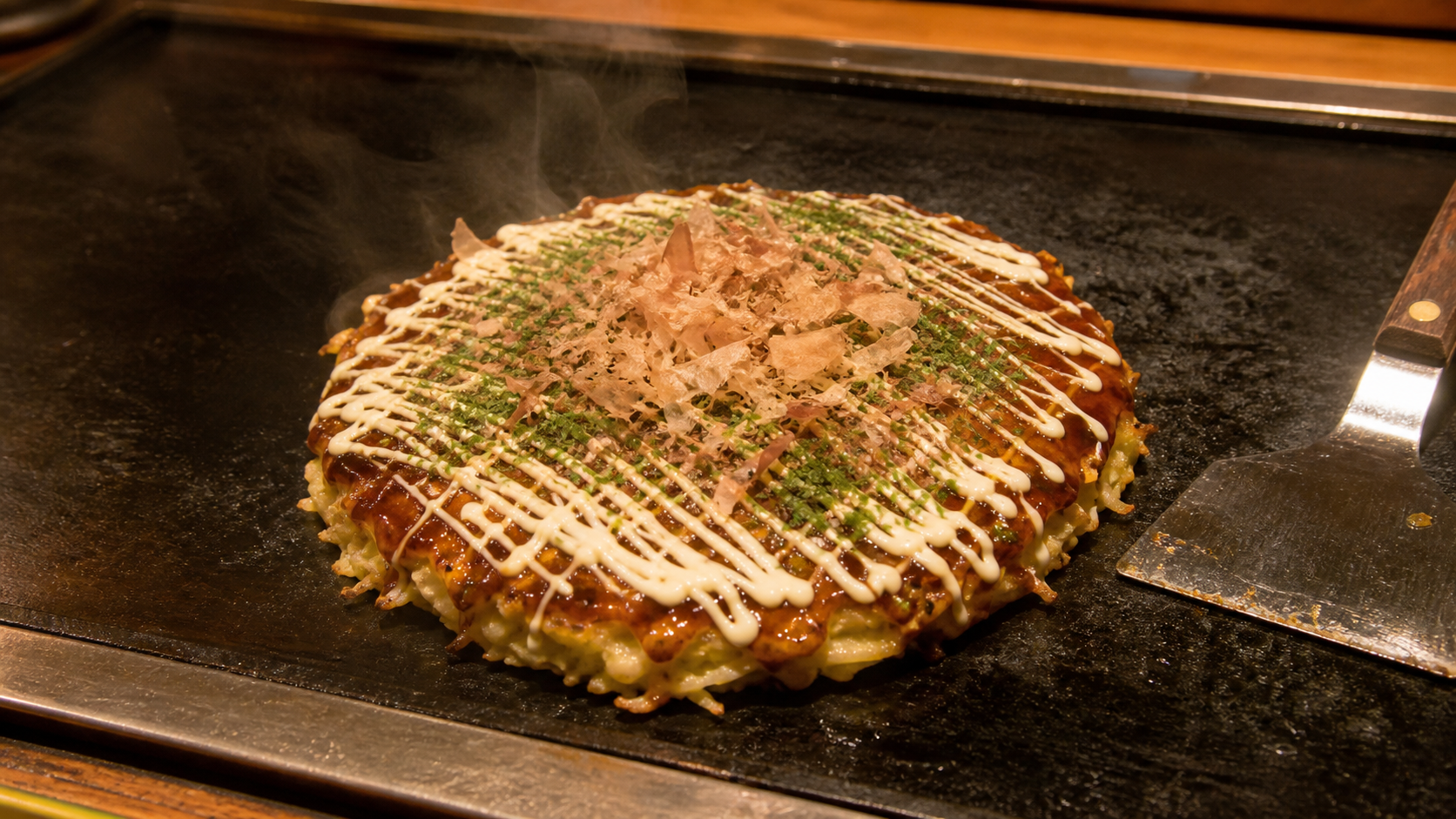
Okonomiyaki is a savory griddle dish built around flour-based batter, cabbage and toppings chosen by the diner. Osaka and Hiroshima versions use many similar ingredients, but their structure, texture and ordering vocabulary are different. This guide helps first-time visitors choose a style, understand who cooks it, and check common allergens before ordering.
Osaka vs. Hiroshima style at a glance
| Point | Osaka style | Hiroshima style |
|---|---|---|
| Construction | Cabbage and fillings are mixed into the batter | Thin batter, vegetables, pork, noodles and egg are cooked in layers |
| Noodles | Usually absent; modan-yaki adds noodles | Soba or udon is a standard choice |
| Texture | Fluffy, cohesive pancake | Distinct layers with steamed cabbage and noodles |
| Useful order | Buta-tama, or pork and egg | Niku-tama-soba, or pork, egg and soba |
Osaka’s official tourism guide describes flour mixed with dashi, cabbage and popular toppings such as pork, while Hiroshima’s official guide explains the thin base, layered vegetables and noodles. Individual shops have their own recipes, so the comparison is a practical pattern rather than a strict nationwide rule.
How each style is cooked
Osaka style
- Batter, chopped cabbage and the selected fillings are mixed.
- The mixture is shaped into a thick round on the griddle.
- It is cooked on both sides, then finished with sauce, mayonnaise, aonori and often bonito flakes.
Hiroshima style
- A thin circle of batter is spread on the griddle.
- Cabbage, bean sprouts, pork and other ingredients are stacked and steamed.
- Soba or udon is cooked separately and combined with the stack.
- An egg layer is added before the dish is turned and finished with sauce and aonori.
At a counter seat, keep bags and sleeves away from the hot teppan. Steam, oil and metal spatulas can all cause burns.
Who cooks the okonomiyaki?
There is no universal rule. Many specialist restaurants cook it completely for the guest, while some table-griddle restaurants provide batter and ingredients for self-cooking. Do not start mixing, flipping or cutting until staff explain the system. If staff cook it, avoid pressing the pancake with the spatula because that can disturb its texture.
- Kore wa jibun de yakimasu ka? — Do I cook this myself?
- Yaki-agari wa itsu desu ka? — When is it ready?
- Osusume no tabekata wa arimasu ka? — Is there a recommended way to eat it?
How to order
- Choose Osaka or Hiroshima style if the restaurant serves both.
- Select the main filling: pork, squid, shrimp, mixed seafood, cheese or another option.
- For Hiroshima style, choose soba or udon. Some shops also offer double noodles.
- Confirm optional toppings such as green onion, mochi or cheese and whether mayonnaise is added automatically.
- If sharing, check whether each guest must order one main dish.
For a first order, pork-and-egg is a straightforward Osaka choice. In Hiroshima, niku-tama-soba is a useful standard phrase. “Modern-yaki” generally refers to an Osaka-style dish combined with noodles, but shop usage can vary.
Eating from the griddle
When the restaurant permits it, divide the finished okonomiyaki with a small metal spatula and move one portion at a time to your plate. The griddle keeps the dish warm, but sauce and mayonnaise can scorch if left too long. Never put a spatula that has touched your mouth back onto a shared dish.
Allergies and dietary restrictions
Common ingredients include wheat, egg and soy. Mayonnaise contains egg, dashi or sauce may contain fish or other ingredients, and seafood versions may include shrimp, squid or other shellfish. Meat-free toppings do not guarantee a vegetarian dish because batter, dashi, sauce and the shared griddle may still contain animal ingredients.
Japan’s Consumer Affairs Agency notes that restaurant meals can involve unintended cross-contact and do not use the same standardized allergen labeling as packaged foods. Travelers with serious allergies should contact the restaurant in advance and use the agency’s multilingual food-allergy communication sheet. Asking staff to remove a visible topping does not remove an allergen already mixed into batter or sauce.
Osaka and Hiroshima dining tips
- Osaka: Many restaurants cook the dish for you even when a table has its own griddle. Follow the shop’s instructions.
- Hiroshima: Counter seats offer a clear view of the layered cooking process. Soba and udon are common choices.
- Timing: Popular restaurants can have queues. Opening hours and holidays can change, so check the official restaurant page on the day.
- Language: A menu photo helps, but verify noodles, toppings and allergens rather than assuming the picture shows every ingredient.
Frequently asked questions
Which style is more filling?
Hiroshima style can feel substantial because noodles are standard, but actual size depends on the shop, noodle quantity and toppings.
Can I order without mayonnaise?
Usually, but ask before the dish is finished: Mayonēzu nashi de onegai shimasu. Sauce and batter still need separate allergen checks.
Is “Hiroshima-yaki” the best term?
“Hiroshima okonomiyaki” or simply “okonomiyaki” is clearer and aligns with Hiroshima’s official tourism wording.
For another regional Japanese food comparison, see our guide to unaju, unadon and hitsumabushi.
Official sources and fact-check date
Checked on September 29, 2026 using the official Osaka tourism guide to okonomiyaki, the official Hiroshima okonomiyaki guide, and Japan’s Consumer Affairs Agency information on food allergies in restaurant and prepared meals. Ingredients, cooking systems, hours and holidays vary by restaurant; confirm current details with the shop.