
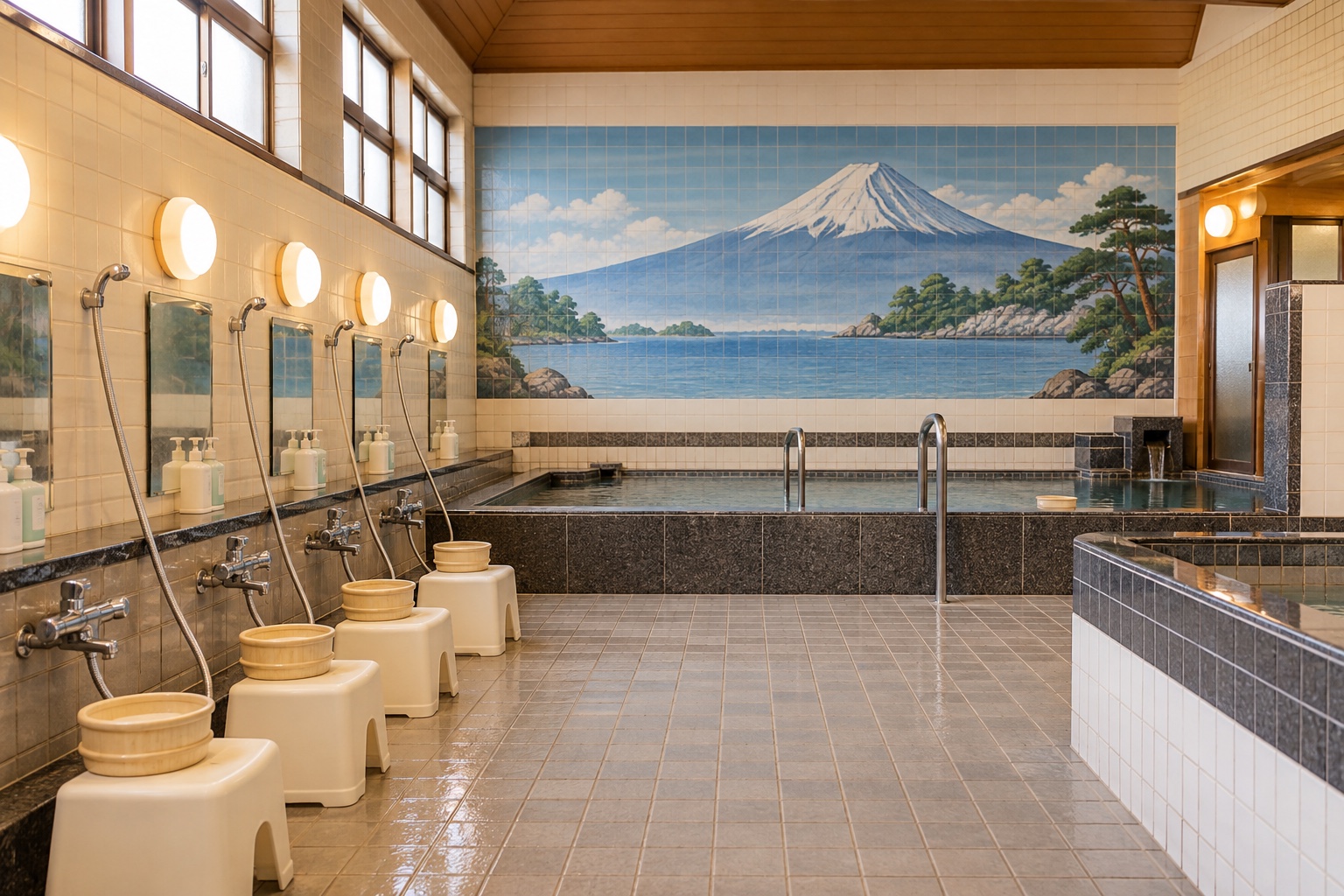
A sento is a neighborhood public bath supplied with ordinary heated water; an onsen is defined by its hot-spring water. For a traveler, the first visit can feel unfamiliar, but the routine is straightforward: remove shoes, pay, undress, wash, soak and dry before returning to the changing room.
Information checked: September 24, 2026. Fees, tattoo policies, amenities, age rules and opening hours vary by prefecture and facility.
Sento, onsen and super sento: what is the difference?
- Sento: a community public bath, usually focused on everyday bathing.
- Onsen: a bath using water that meets Japan’s hot-spring definition; often found at inns or resort towns.
- Super sento: a larger leisure facility that may include restaurants, saunas and several bath types, usually at a higher price.
Rules can overlap, but do not assume that a policy at one type applies everywhere.
What to bring
- A small washing towel and a larger drying towel
- Soap and shampoo if the facility does not provide them
- Cash or the payment method shown by the bathhouse
- A hair tie for long hair
- Minimal valuables
The Tokyo Sento Association notes that many baths sell basic toiletries and towels, while some provide shampoo and body soap. Check the individual listing instead of assuming supplies are included.
Step-by-step: from entrance to exit
- Remove shoes: place them in the entrance shoe locker.
- Pay: use the front desk or ticket machine and ask about towel rental if needed.
- Choose the correct changing room: 男 means men and 女 means women. Curtains or room assignments can change.
- Undress completely: ordinary public baths are used without swimwear.
- Wash first: sit at a washing station, use soap and rinse yourself and the area thoroughly.
- Soak: enter slowly, keep your towel and hair out of the bath, and speak quietly.
- Dry before the changing room: wipe off excess water with the small towel so the floor stays dry.
Bathing etiquette that matters most
- Do not wear a swimsuit or underwear unless the facility explicitly operates a special clothed bath.
- Do not put towels, soap or hair into the shared water.
- Do not swim, splash or occupy a bath edge with belongings.
- Keep phones and cameras out of changing and bathing areas.
- Return the stool and bucket neatly after washing.
- Follow sauna-specific rules, including any separate fee or mat requirement.
Tattoos: check the individual bath
Tattoo rules are not uniform. JNTO advises checking each facility in advance; some local sento are more accepting than private onsen or leisure complexes, but that is not a guarantee. Do not hide a tattoo against a stated rule. Ask directly, use an approved cover only when permitted, or choose a private bath.
Heat and health safety
Bathwater can be hotter than visitors expect. Enter gradually, take breaks and leave immediately if you feel dizzy, nauseated or unwell. Avoid bathing after heavy alcohol consumption. Anyone with a cardiovascular condition, pregnancy or another health concern should seek appropriate medical advice rather than relying on general travel guidance.
Families and gender-separated baths
Most sento separate baths by gender, and local rules determine the age up to which a child may accompany a parent into another gender’s bath. The Tokyo association states that regional limits differ. Families should check the specific bathhouse before arriving and consider a private bath when the arrangement is unclear.
Electric baths and unfamiliar equipment
Some sento have an electric bath (denki-buro), cold bath, jet bath or very hot tub. Read the label and do not enter equipment you do not understand. People with implanted medical devices or health conditions should avoid electric baths unless a qualified medical professional says otherwise.
Frequently asked questions
Can I keep a small towel around my body?
You may use it for modesty while walking, but it must not enter the bathwater.
Do I shower again after soaking?
Practices vary, especially at mineral hot springs. At a sento, follow posted instructions and rinse the washing station after use.
Can I talk?
Quiet conversation may be normal, but keep your voice low and avoid calls or recorded audio.
What if I am uncomfortable bathing nude?
Choose a reservable private bath or an accommodation with an en-suite bath. Do not wear swimwear in a standard sento.
Official resources
- Tokyo Sento Association: How to Enjoy Sento
- JNTO: How to Best Enjoy Japan’s Onsen
- JNTO: Japanese manners and bathing etiquette
Takeaway
Wash before soaking, keep towels and hair out of the water, leave phones outside and verify tattoos, amenities and family rules before visiting. With those basics, a neighborhood sento can be one of the most accessible everyday cultural experiences in Japan.