

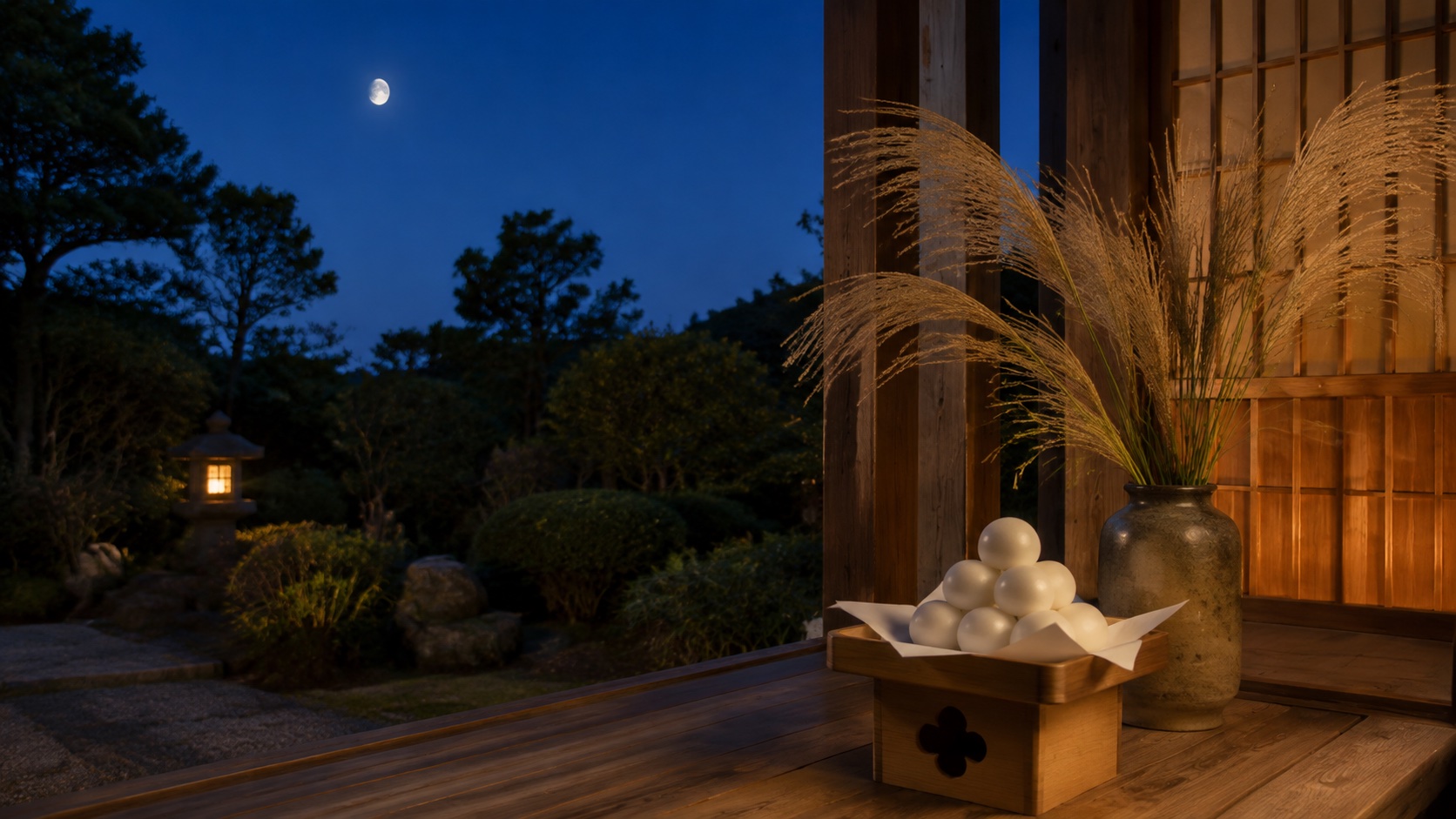
Checked September 4, 2026. Japan’s 2026 harvest moon, known as Chushu no Meigetsu or the Mid-Autumn Moon, falls on September 25. It is not the astronomical full moon: the National Astronomical Observatory of Japan (NAOJ) calculates the full moon for September 27 at 1:49 a.m. Japan time. That two-day gap is unusual, but it is not a mistake.
This guide explains what tsukimi means, what visitors may see in shops and homes, and how to enjoy the evening without depending on a ticketed event.
2026 dates at a glance
| Occasion | Date in Japan | Meaning |
|---|---|---|
| Chushu no Meigetsu / Jugoya | September 25, 2026 | The 15th night of the eighth month in the traditional lunisolar calendar |
| Astronomical full moon | September 27, 2026, 1:49 a.m. | The instant when the Moon is opposite the Sun as seen from Earth |
| Jusanya | October 23, 2026 | Japan’s later “13th-night” moon-viewing custom, also called the chestnut or bean moon |
The Mid-Autumn Moon is set by the traditional calendar, while “full moon” is an astronomical moment. The two often fall on different dates. NAOJ notes that a two-day separation last occurred in 2017 and will next occur in 2043.
What tsukimi celebrates
Tsukimi literally means “moon viewing.” The custom came to Japan from China more than a thousand years ago and developed connections with autumn harvest gratitude. The 15th-night moon is also called imo meigetsu, or potato moon, while the later 13th-night observance is associated with chestnuts and beans.
Modern participation is flexible. A household may place offerings by a window, a restaurant may serve a seasonal dish, or a garden may schedule an evening opening. You do not need to perform a religious ritual or attend a formal event to appreciate the custom respectfully.
Symbols you may see
- Tsukimi dango: round rice dumplings symbolizing the moon. Displays often use 15 pieces for Jugoya, though regional arrangements differ.
- Susuki: Japanese pampas grass, displayed as a symbol of the harvest.
- Seasonal produce: taro, edamame, chestnuts and pumpkins may appear as offerings or menu ingredients.
- Rabbit imagery: Japanese folklore sees a rabbit pounding rice cakes in the markings of the moon.
- “Tsukimi” menu names: restaurants often use the word for dishes topped with a raw or softly cooked egg whose yolk resembles the moon. These are seasonal interpretations, not ceremonial offerings.
A simple visitor-friendly plan
- Check the weather late in the day. Cloud cover matters more than finding a famous location.
- Choose an ordinary public viewpoint. A riverside promenade, open park or hotel window can work; confirm closing hours and nighttime access.
- Buy a seasonal sweet before shops close. Ask for tsukimi dango, but note that availability and presentation vary by region.
- Arrive before dark. Identify steps, barriers and the route back while visibility is good.
- Keep the viewing quiet and short. Residential streets, shrine approaches and temple grounds are not automatically open for late-night photography.
Etiquette and safety
- Do not enter a closed garden, temple or private field simply because the moon is visible from it.
- A tripod can obstruct paths and may be prohibited. Follow venue signs and staff instructions.
- Avoid flash around worship areas, wildlife and other visitors.
- Take all packaging home. Do not leave dango or other food outdoors as an “offering.”
- Late September can still be warm and mosquitoes remain active in much of Japan. Bring water and consider repellent in leafy areas.
- For ticketed moon-viewing events, verify the organizer, reservation rules, cancellation policy and last transport before paying.
If the sky is cloudy
Tsukimi is a seasonal cultural practice, not a guarantee of a clear sky. A cloudy evening can still be used to try wagashi, notice pampas-grass displays, or learn why the calendar date differs from the full moon. If astronomy is your priority, check again on September 26 and around the early hours of September 27, subject to local weather and safe access.
Useful Japanese
| Japanese | Meaning |
|---|---|
| 今年の十五夜はいつですか? | When is Jugoya this year? |
| 月見団子はありますか? | Do you have tsukimi dango? |
| 夜は何時まで入れますか? | Until what time can we enter at night? |
| 三脚は使えますか? | May I use a tripod? |
FAQ
Is the 2026 harvest moon on September 25 or 27?
The cultural observance is September 25. The astronomical full moon occurs at 1:49 a.m. on September 27 in Japan.
Is tsukimi a public holiday?
No. September 25 is not a national holiday. Venue hours and transport generally follow the normal Friday schedule unless a facility announces an event.
Do I need to reserve anything?
Not for informal moon viewing. Gardens, cruises and cultural programs may require tickets, so use only the current official event page.
Can I eat the displayed dango?
At home, dango may be eaten after viewing. At a venue, never touch a display unless staff explicitly say it is food for guests.
Summary
For 2026, remember two dates: September 25 for the traditional Mid-Autumn Moon and September 27 for the astronomical full moon. A respectful tsukimi evening can be as simple as seasonal dango, an unobstructed public view and quiet appreciation of the autumn sky.