
New Year, or shogatsu, is Japan’s most important holiday. While Christmas is a night out, New Year is a time for family, shrine visits and special food. For travelers, that means quiet streets in central business areas, packed shrines, sold-out trains and a handful of shops and services that close for several days. This guide explains what happens from December 31, 2026 to early January 2027, what is open, and how to enjoy the season respectfully.
Quick answer
- Key dates: New Year’s Eve is Thursday, December 31, 2026. January 1–3, 2027 (Friday to Sunday) are the main holiday days, called sanganichi. Most offices reopen on Monday, January 4.
- What closes: Banks, government offices and many museums, small restaurants and family-run shops. Many close from around December 29 to January 3.
- What stays open: Convenience stores, most hotels, major train lines, many chain restaurants, department stores (usually from January 2) and big shrines and temples.
- Best experiences: Temple bells on New Year’s Eve, a first shrine visit (hatsumode), lucky bags (fukubukuro) and New Year food.
- Plan ahead: Book long-distance trains and hotels early, carry some cash, and check opening days for any attraction you really want to see.
New Year’s Eve: soba, temple bells and countdowns
On December 31 (omisoka), many families clean the house, eat toshikoshi soba (“year-crossing noodles”) for a long and healthy life, and watch television at home. Soba shops are busy in the evening, and supermarkets and convenience stores sell ready-made soba sets.
Around midnight, Buddhist temples ring their great bells 108 times in a ritual called joya no kane, symbolizing the release of 108 worldly desires. Some temples let visitors strike the bell, but places are limited, and a few large temples now use numbered tickets or advance registration. Check the temple’s own website in December, dress warmly and be prepared to queue.
Large public countdown events are less common than in many countries. Crowds gather in places such as Shibuya, but local rules on drinking and crowd control can be strict, and events change from year to year. A shrine or temple visit is the more traditional way to cross into the new year.
Hatsumode: your first shrine or temple visit
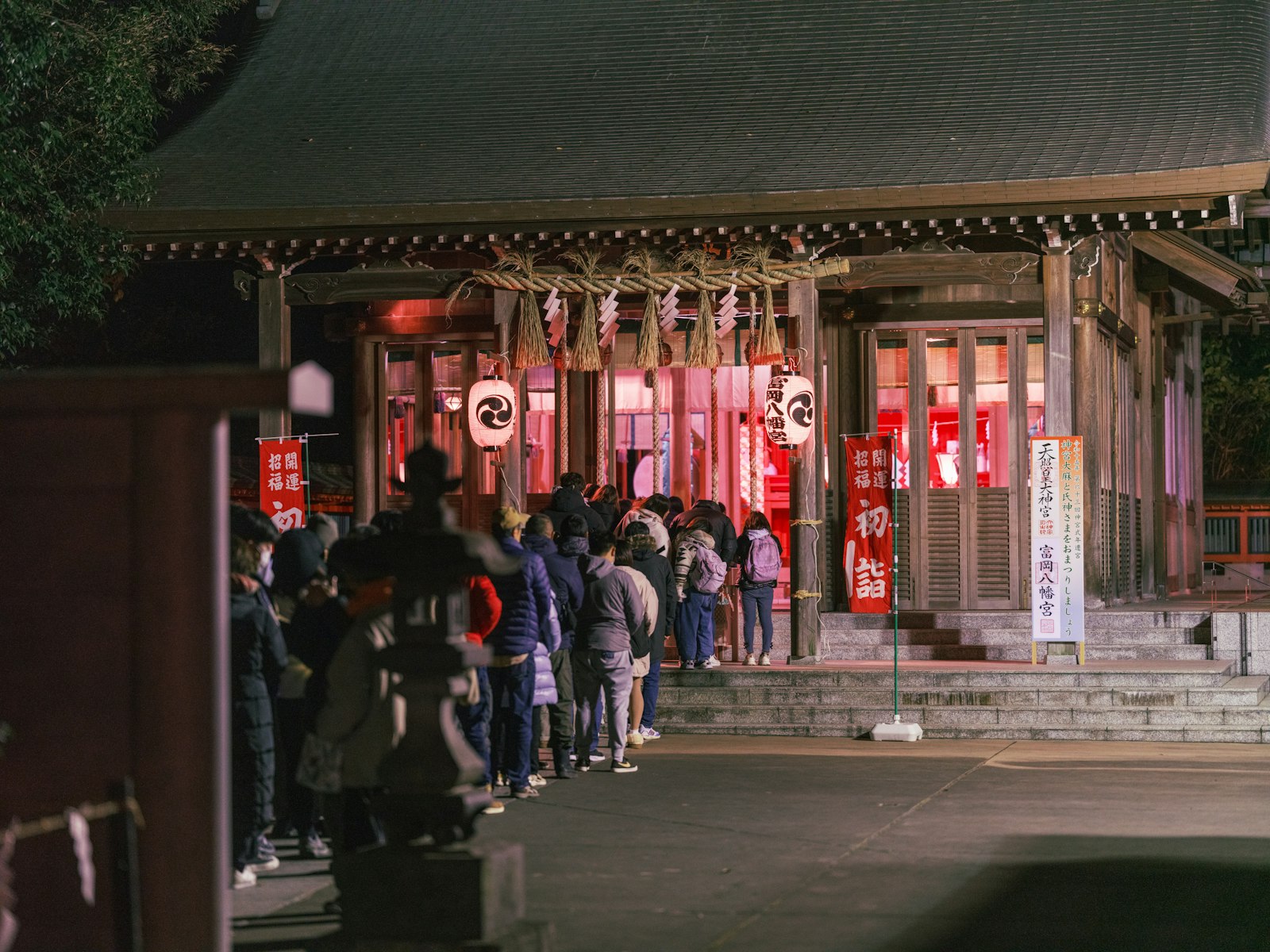
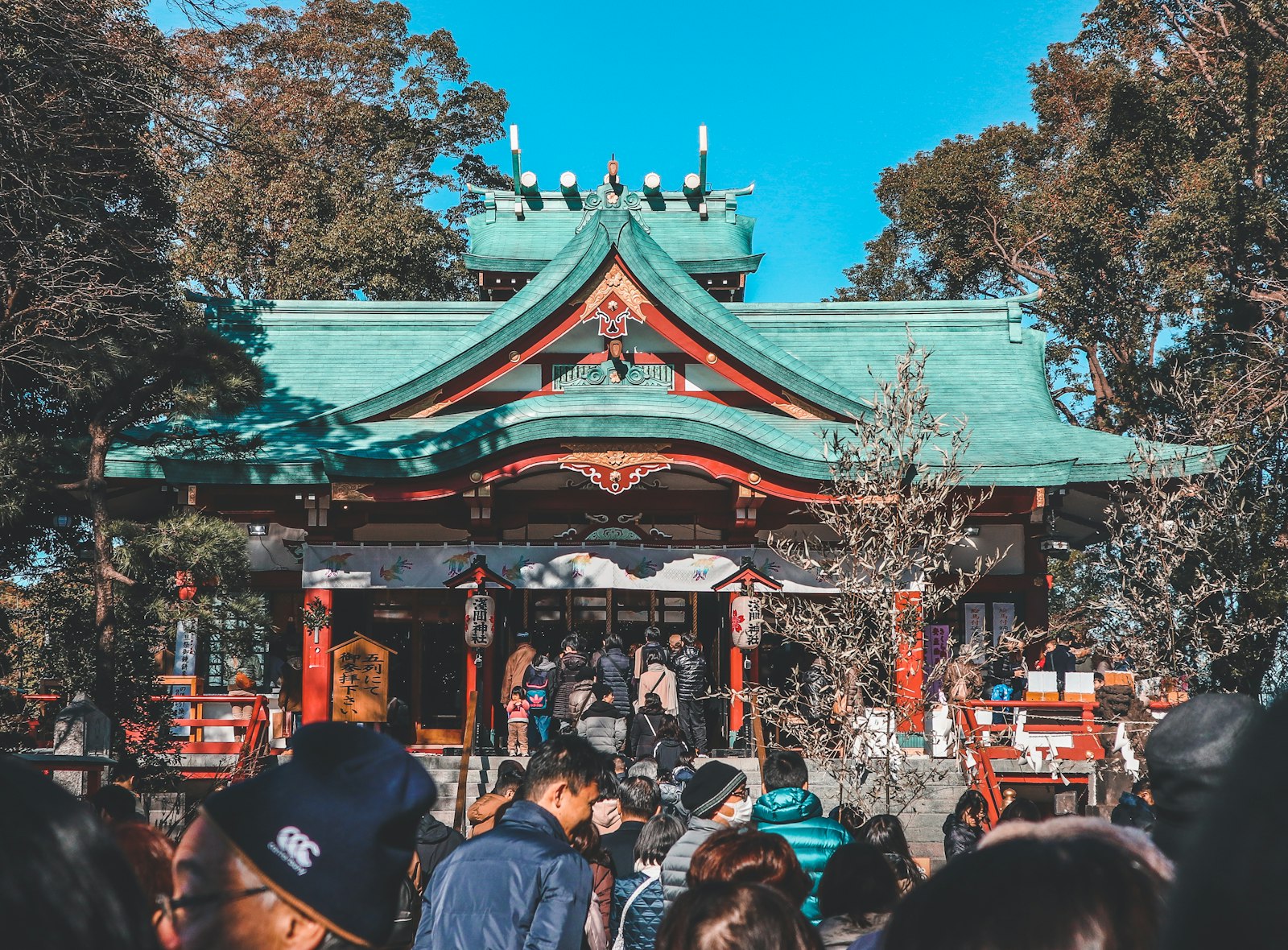
Hatsumode is the first visit of the year to a Shinto shrine or Buddhist temple to pray for health and good fortune. Most people go between January 1 and 3, although any visit in the first weeks of January counts. Famous places attract huge crowds in the first three days, including Meiji Jingu and Senso-ji in Tokyo, Kawasaki Daishi near Yokohama, Fushimi Inari Taisha in Kyoto and Sumiyoshi Taisha in Osaka.
What to do there:
- Join the queue calmly. At big shrines, police and staff manage the crowd in waves. Follow their directions and do not push forward.
- Make an offering and pray. At most shrines: bow twice, clap twice, pray silently, then bow once. At temples, do not clap; simply put your hands together. See our temple and shrine etiquette guide for the details.
- Draw an omikuji fortune. If you get a bad fortune, you can tie the paper at the place provided and leave the bad luck behind.
- Buy a charm. New Year is the season for omamori charms and hamaya arrows that protect against evil. Last year’s charms can be returned to the shrine’s collection box.
Crowd tip: The busiest times are just after midnight and from late morning to mid-afternoon on January 1–3. Early morning, or a weekday later in the first week (from January 4), is much calmer. Food stalls often line the approach to large shrines during this period.
Trains on New Year’s Eve and New Year’s Day
Some railways run trains all night on December 31 for shrine visitors, but this is decided each year and has been reduced in recent years. For example, for New Year 2025–26 in the Tokyo area, JR East ran all-night services on several central lines, including the Yamanote Line, while Tokyo Metro and Toei Subway did not run all night. The 2026–27 plans are usually announced in December, so check each railway’s website before you rely on a late train.
From about December 30 to January 3, many lines use weekend or holiday timetables. Long-distance trains and flights are at their busiest at the end of December (people going home) and around January 2–4 (people returning). Reserve shinkansen seats early, and use an IC card for local trains so you do not have to queue for tickets.
What is open and what is closed
| Service | Typical New Year situation | Traveler tip |
|---|---|---|
| Banks | Closed December 31 to January 3 | Withdraw cash before the holiday. Convenience-store ATMs usually work, but check for short maintenance breaks. |
| Government offices, city halls | Usually closed December 29 to January 3 | Plan any paperwork for before or after. |
| Convenience stores | Open as usual | Good for food, cash, simple medicine and hot drinks. |
| Department stores, malls | Many close January 1 and reopen January 2 with New Year sales | Check each store’s holiday hours. |
| Small restaurants, family shops | Often closed for several days | Chain restaurants and hotel restaurants are safer choices on January 1. |
| Museums, castles, gardens | Many close from around December 28 or 29 to January 1 or 3 | Check the official site of every attraction on your plan. |
| Hospitals and clinics | Limited holiday clinics only | In an emergency call 119. See our emergency numbers guide. |
Rules differ by company and city, so treat this table as a planning guide, not a guarantee. For public holiday dates throughout the year, see our Japan public holidays guide.
Fukubukuro: New Year lucky bags
Fukubukuro are sealed “lucky bags” sold at the first sale of the year (hatsuuri), usually from January 1 or 2. You pay a fixed price for a bag whose contents are worth more than you pay, although you may not know exactly what is inside. Popular brands sell out quickly, and some stores take online reservations or run lotteries in December. Many shops now show the contents in advance, which makes them easier for visitors.
- Expect lines before opening time at popular department stores and fashion buildings.
- Clothing sizes may be limited; check the bag description carefully.
- Tax-free shopping rules apply as usual at participating stores. From November 1, 2026, Japan uses a refund-based system, so keep your receipts and read our tax-free shopping guide before you buy.
New Year food: osechi, ozoni and mochi
Osechi is a set of colorful dishes packed in lacquered boxes, each with a meaning: black beans for health, herring roe for many children, and sweet chestnuts for wealth. Many hotels serve osechi or a New Year breakfast, and department stores sell boxes by reservation. Ozoni is a soup with mochi rice cakes whose broth and ingredients change from region to region.
Safety note: Mochi is very sticky. Every New Year, Japanese authorities warn about choking, especially for older people and children. Cut mochi into small pieces, eat slowly and have a drink nearby.
Decorations and customs you will notice
- Kadomatsu: pairs of bamboo and pine arrangements placed at entrances to welcome the New Year god.
- Shimekazari: straw rope decorations on doors and cars.
- Kagami mochi: two stacked round rice cakes with a bitter orange on top, displayed indoors.
- Nengajo: New Year postcards delivered on January 1.
- Otoshidama: money given to children in small decorated envelopes.
- Hatsuhinode: watching the first sunrise of the year from a hill, beach or tower, often with special early-morning events.
Decorations usually stay up until January 7 in the Tokyo area (until January 15 in some regions). If you visit Japan on business or stay with a family around this time, the custom of year-end gifts is explained in our gift-giving etiquette guide.
Etiquette for visitors
- Remember that hatsumode is a religious visit for many people. Keep your voice down near the main hall and do not block the queue for photos.
- Do not use drones, selfie sticks or tripods in crowded shrine grounds unless clearly allowed.
- Take your rubbish with you; there are fewer bins than you may expect.
- If a family is in mourning, they do not send New Year greetings. If someone mentions this, simply offer a quiet “thank you for this year.”
- A simple greeting goes a long way: Akemashite omedetou gozaimasu means “Happy New Year.”
Frequently asked questions
Is New Year a good time to visit Japan?
Yes, if you want to see traditional customs and do not mind some closures. Business districts are quiet and pleasant, while shrines, shopping streets and transport hubs are crowded. Prices for hotels and flights are high, so book early.
Can tourists join hatsumode?
Yes. Everyone is welcome to visit shrines and temples, regardless of religion. Follow the basic etiquette and staff directions, and you will be fine.
Will I be able to find food on January 1?
Yes. Convenience stores, many fast-food and chain restaurants, and hotel restaurants stay open. Independent restaurants are more likely to be closed, so check before you go.
Plan the rest of your winter
Before New Year, Tokyo’s streets light up for the season; see our Tokyo winter illuminations guide and our guide to Christmas in Japan. If you are heading north for snow, read the Hokkaido winter travel guide and our tips for winter hotel rooms.
Official references
- JNTO: Winter in Japan
- Meiji Jingu (official site)
- Senso-ji (official site)
- JR East: service information
Information checked October 30, 2026. Train services, opening days and event rules for New Year 2026–27 are set by each operator and may change; always check official sources shortly before your trip. Photos: Unsplash (see captions).