

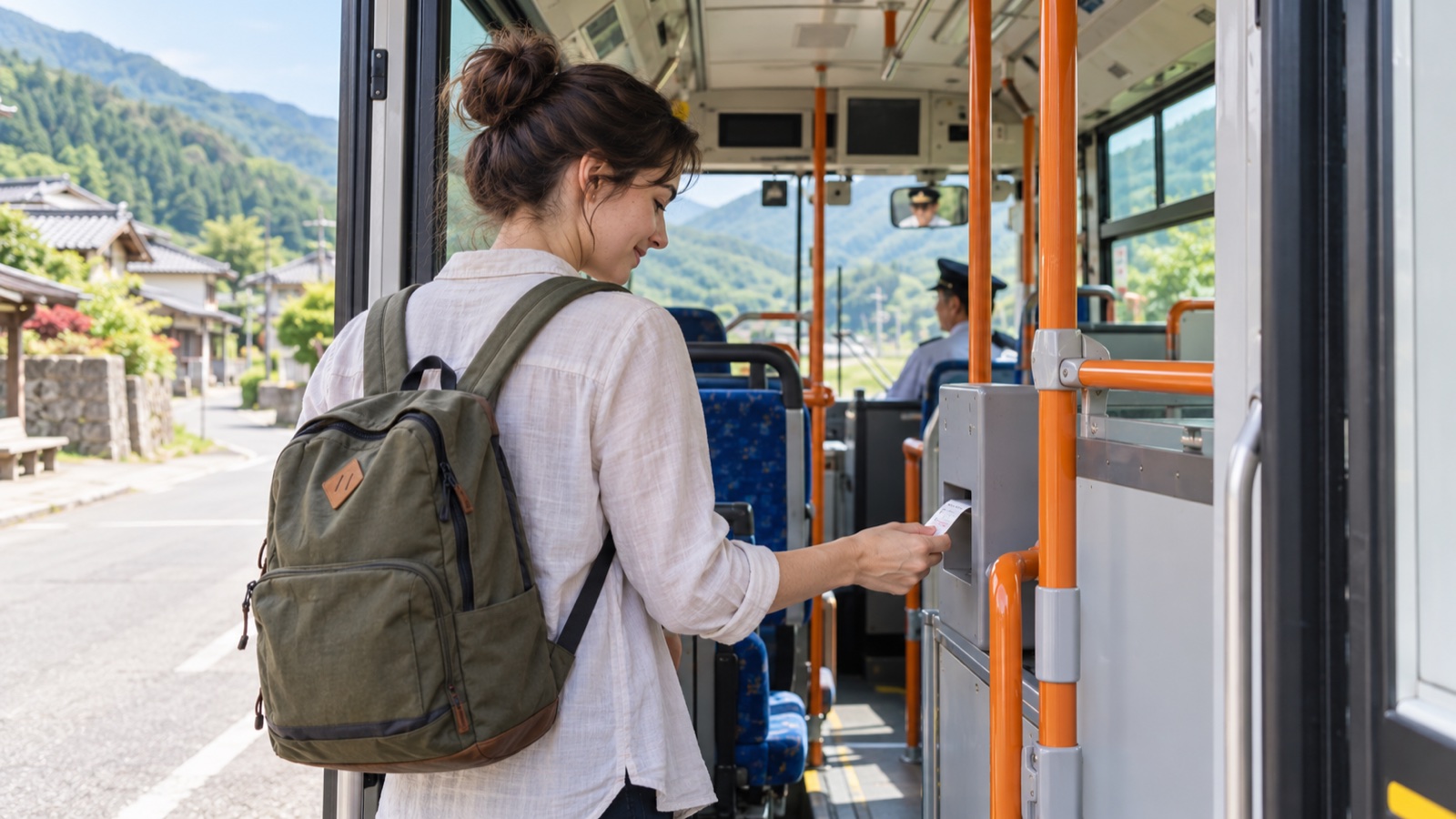
Local buses unlock mountain villages, trailheads and hot-spring towns that trains do not reach—but the boarding and payment system is not identical everywhere. Before you step on, check the destination, door signs and payment instructions. The method below is common on distance-based rural routes, not a rule for every bus in Japan.
Before leaving your hotel
- Save the operator’s timetable and the Japanese name of your stop.
- Check the return trip, not only the outbound bus; rural gaps can be several hours.
- Confirm weekday, weekend and seasonal schedules.
- Carry coins and a 1,000-yen note even if a route finder shows an IC-card icon.
- Download an offline map and note the stop before your destination.
Online journey planners are useful, but the operator’s current timetable and service alerts take priority. Weather, road closures and school-holiday schedules can change rural services.
Step 1: confirm the correct bus
At the stop, compare the route number and final destination with your plan. Multiple operators may use nearby stops with similar names. If unsure, show the driver the destination and ask Kono basu wa ___ ni ikimasu ka? (Does this bus go to ___?). Do this while the bus is stopped, not after it starts moving.
Step 2: board and record where you entered
Many distance-based buses use the rear or center door for boarding and the front door for exit. When paying cash, take one numbered ticket (seiriken) per passenger. The number records the fare zone where you boarded. If the bus accepts your IC card, tap the boarding reader instead. Never take a ticket and tap as well unless staff instructs you to do so.
Some buses use front-door boarding, a flat fare, prepaid tickets or reservation-only seating. Follow the signs on that vehicle.
Step 3: watch the next-stop display
Stop names may appear in English, but small routes can have Japanese-only announcements. Follow the route on an offline map and keep the Japanese stop name ready. Press a stop button after your destination is announced. Pressing it does not usually open the door; it tells the driver someone wants to get off.
Step 4: calculate and pay the fare
On a numbered-ticket system, match the number on your ticket with the fare shown on the display near the front. Put the ticket and exact cash into the fare box when leaving. A change machine may exchange a 1,000-yen note or coins, but it is separate from the fare slot: make change first, then pay. Large notes and cards may not work.
With an accepted IC card, tap the exit reader. If the balance is insufficient, tell the driver before repeatedly tapping. Passes and digital tickets may need to be shown or activated according to the operator’s rules.
Reservations, passes and the JR Pass
Ordinary local buses are often first-come, first-served, while highway buses and some tourist routes require or recommend reservations. A rail pass does not automatically cover local buses. JNTO notes that the Japan Rail Pass is accepted on certain JR local bus lines but not JR express bus routes; verify the exact operator and service.
Luggage and accessibility
Keep aisles, doors and priority seats clear. Rural buses may have little luggage space, so check in advance if carrying a suitcase, bicycle or large hiking pack. Wheelchair access and low-floor vehicles vary by departure; contact the operator when assistance or a specific vehicle type is essential.
If the bus does not arrive
- Check that you are on the correct side of the road and at the correct stop.
- Look for a revised timetable or suspension notice.
- Allow for traffic or weather delay.
- Check the operator’s service page or ask a nearby tourist office.
- Do not hitchhike or walk along a road without a safe footpath; use a licensed taxi or revise the trip.
Bus etiquette
Queue without blocking pedestrians, let passengers exit first, keep calls and audio quiet, and remain seated or hold a rail while moving. Prepare payment before your stop, but do not walk to the fare box while the bus is in motion. Give priority seats to passengers who need them.
Useful phrases
- ___ wa doko de orimasu ka? — Where should I get off for ___?
- IC kādo wa tsukaemasu ka? — Can I use an IC card?
- Ryōgae dekimasu ka? — Can I make change?
- Saishū basu wa nanji desu ka? — What time is the last bus?
FAQ
Do all rural buses require a numbered ticket?
No. It is common on distance-based routes, but flat-fare, front-boarding and reservation systems also exist. Follow the individual bus.
Can I trust the IC-card logo in a route app?
Use it as a clue, then confirm with the operator. Acceptance can vary by route, vehicle, card or reader availability.
What if I lose the numbered ticket?
Tell the driver before paying. Do not guess a lower fare; the operator will explain the correct procedure.
Information checked October 31, 2026. Official references: JNTO bus travel guide and Japan Tourism Agency public-transport guidance. Always verify the individual operator’s current timetable and rules.