

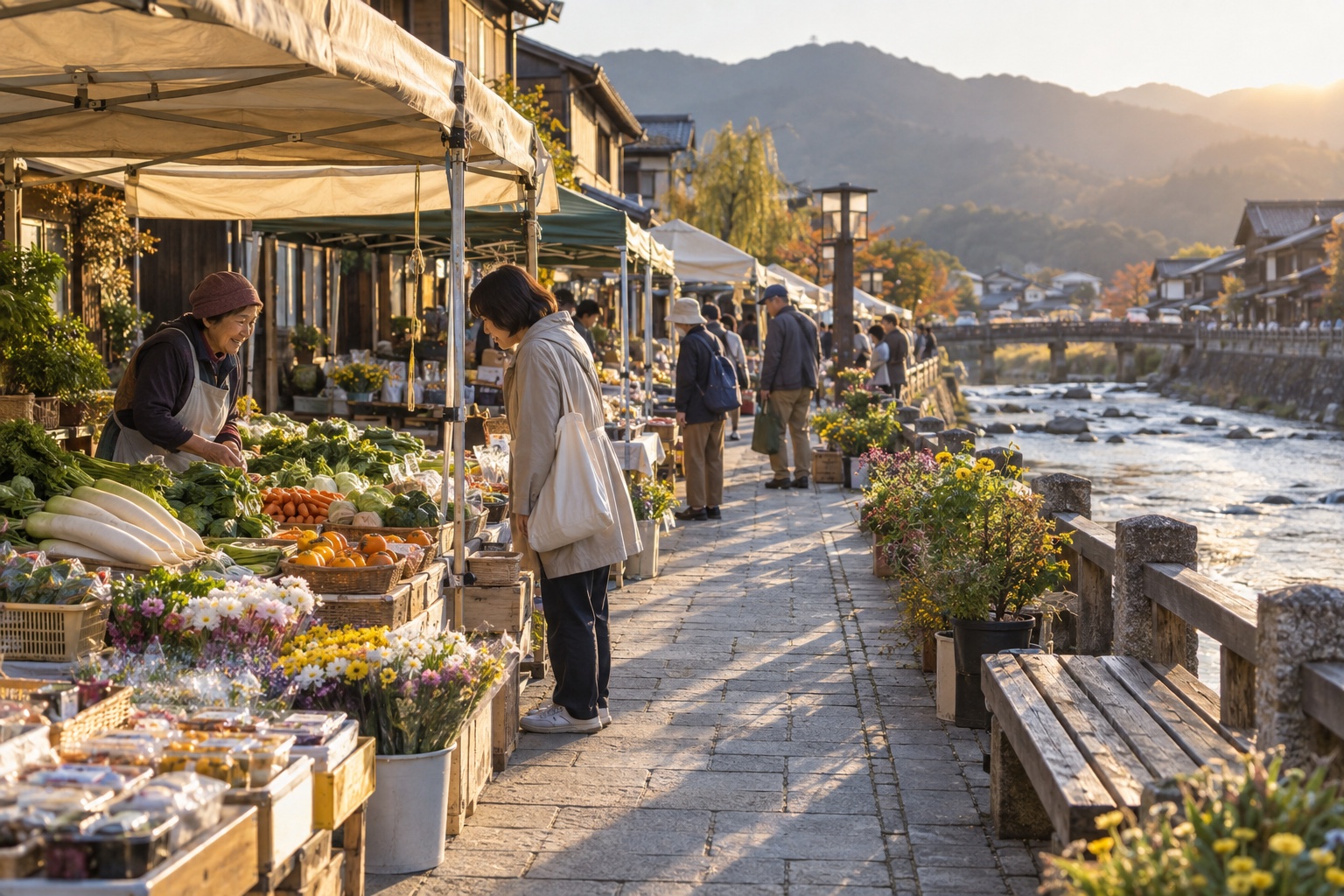
Morning markets in regional Japan often bring together farmers, fishers, prepared-food sellers and craft stalls. They are not simply tourist attractions: local residents use them to buy seasonal produce, breakfast ingredients and everyday goods. The best visit begins by checking the actual market day and respecting both vendors and regular shoppers.
Quick answer: Arrive early, walk the market once before buying, ask before touching fresh food or photographing people, carry small cash and a reusable bag, and consider refrigeration before purchasing seafood, dairy or prepared dishes.
Information checked: September 25, 2026. Days, hours, closures and stall numbers can change with season, weather and local events; confirm the market or tourism office’s official notice before traveling.
Morning market or wholesale market?
A local asaichi usually serves ordinary customers with vegetables, fruit, pickles, flowers, snacks and crafts. A wholesale market may contain working zones, vehicle routes and reserved viewing areas. JNTO’s local-market directory is a useful starting point.
Check four things before leaving
- Whether the market operates that day, including rain and holiday policies
- Whether it is daily, weekly, seasonal or event-only
- Transport and the return timetable
- Toilets, luggage storage and designated eating space
Map-app hours may miss temporary closures. Use the organizer, municipality or local tourism office as the final source.
What time should you arrive?
Earlier visits often offer the widest selection, but not every market starts before sunrise. For a first visit, arriving shortly after opening usually provides a good balance: stalls are ready, produce is available and vendors are not still setting up.
What can you buy?
- Seasonal vegetables, fruit, edible mountain plants and flowers
- Pickles, miso, dried goods, jam and regional seasonings
- Seafood, seaweed and prepared fish products where locally appropriate
- Rice balls, dumplings, grilled foods, soup and other simple snacks
- Woodwork, textiles, pottery and small regional crafts
JNTO’s Miyagawa Morning Market guide highlights produce, pickles and local crafts, while the actual selection changes by season and vendor.
Buying and payment etiquette
- Read the price sign before asking.
- Do not squeeze fruit or rearrange packages without permission.
- Carry coins and small notes; small stalls may accept cash only.
- Step aside before organizing your wallet or bags.
- Pay the marked price unless bargaining is clearly invited.
Samples, photos and conversation
Take a sample only when a vendor offers it. Ask before a close photograph of a vendor, shopper or display. Even with permission, avoid flash, moving products or blocking paying customers.
Eating ready-to-eat food
Use the designated eating area rather than walking with skewers or hot liquids. Follow local instructions for returning dishes and sorting waste; take rubbish away when no bin is provided. Travelers with allergies should verify ingredients and cross-contact risk.
Cold food and the rest of your day
Fresh fish, dairy, prepared meals and some sweets need temperature control. If you face a long train ride or hot weather, choose shelf-stable goods or carry an insulated bag and ice pack. Ask how long an item can safely be carried before paying.
Rain, luggage and safety
Outdoor-market surfaces can become slippery, while umbrellas can hit people and displays. Use compact rainwear where practical and leave large luggage at your accommodation or station. Do not stop for photos in loading areas or narrow vehicle routes.
A simple 30-minute first visit
- Walk the full market and note prices, eating zones and your exit.
- Choose one breakfast item that can be eaten safely on site.
- Buy one or two shelf-stable regional foods or small crafts.
- Pack rubbish, change and purchases before continuing sightseeing.
Frequently asked questions
Do prices drop near closing?
Not necessarily. Vendors may sell out or keep the original price, so do not plan around a discount.
Can I pay by card?
Some stalls accept cards or mobile payments, but small cash remains the safest backup.
Are morning markets held every day?
No. Some are daily, while others operate only on weekends, selected dates or in certain seasons.
Takeaway
A regional morning market is most rewarding when you observe local life without interrupting it. Check the official schedule, travel light, ask before touching or photographing, and plan food storage before you buy.