

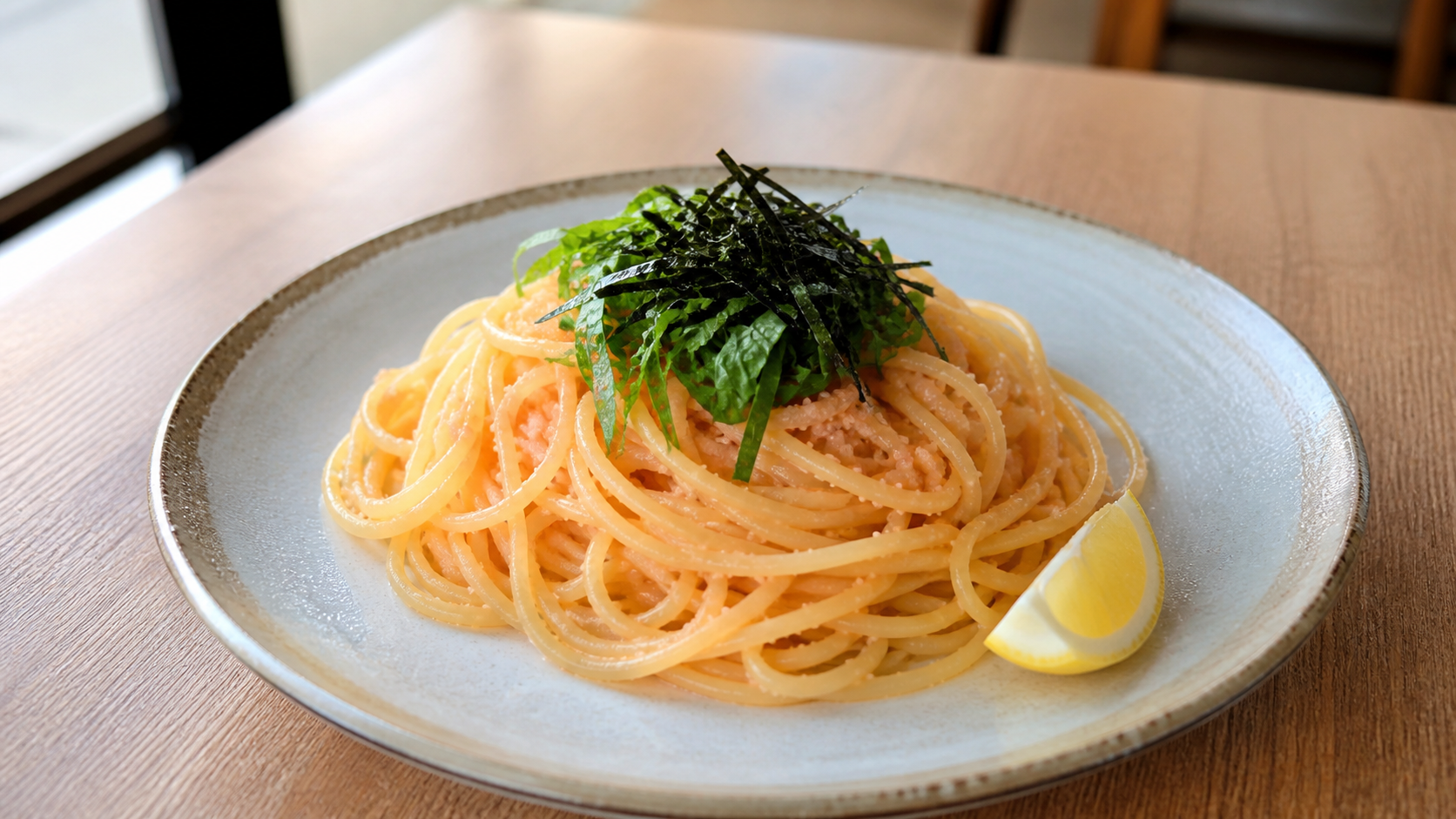
Wafu pasta combines spaghetti with Japanese flavors such as mentaiko, soy sauce, mushrooms, shiso, nori and dashi. It is not one fixed recipe: the term simply means “Japanese-style.” This guide explains six common dishes, useful menu words, ordering choices, and allergy or vegetarian checks for eating wafu pasta in Japan.
What is wafu pasta?
Wafu pasta is part of Japan’s broader tradition of adapting Western food to local tastes. Soy-butter, mentaiko, mushrooms, ume-shiso and natto are all common combinations. A dish labeled wafu is not automatically vegetarian: fish-based dashi, butter or cheese may be used.
Six common pasta dishes to try
- Mentaiko pasta: chili-seasoned pollock roe with butter or cream, often topped with nori and shiso.
- Tarako pasta: salt-cured pollock roe, usually milder than mentaiko.
- Mushroom soy-butter: shimeji, maitake or shiitake mushrooms with soy sauce and butter.
- Ume-shiso: tart pickled plum and aromatic shiso for a lighter flavor.
- Natto pasta: fermented soybeans with green onion, nori or egg.
- Napolitan: Japanese yoshoku pasta with sausage, onion, green pepper and ketchup-like tomato seasoning.
Mentaiko vs. tarako
Both are pollock roe. Tarako is primarily salt-cured, while mentaiko is generally seasoned with chili. Heat levels vary by product and restaurant, so ask before ordering if you avoid spicy food. Japan’s Ministry of Agriculture, Forestry and Fisheries also describes mentaiko as a versatile ingredient used with rice, bread and pasta.
Useful words on the menu
| Japanese | Meaning |
|---|---|
| 和風 | Japanese-style |
| 明太子 | Chili-seasoned pollock roe |
| たらこ | Salt-cured pollock roe |
| 大葉 | Shiso leaf |
| きのこ | Mushrooms |
| 大盛り | Larger portion |
| クリーム系 | Cream-based |
What to confirm before ordering
- Sauce: ask whether butter, cream or soy sauce is the main seasoning.
- Spice: mentaiko dishes are not equally hot.
- Portion: check whether omori is available and costs extra.
- Toppings: egg, cheese and extra roe may be optional paid additions.
Allergy and vegetarian checks
Pasta may contain wheat and egg; sauces can add roe, dairy, soy or fish-based dashi. Mushroom and ume-shiso dishes may still contain fish stock or butter. If you have a severe allergy, ask about ingredients and shared equipment before ordering. Japan’s Consumer Affairs Agency notes that restaurant allergy information is not provided uniformly and unintended cross-contact may occur.
Is Napolitan a wafu pasta?
Napolitan is different from soy- or dashi-centered wafu pasta, but it is a Japanese-developed yoshoku pasta. The Government of Japan describes Yokohama-born Spaghetti Napolitan as a staple that spread through cafes and restaurants. Menus often list it separately from the wafu category.
FAQ
Does wafu pasta always contain soy sauce?
No. Butter, salt, dashi, mentaiko or ume may provide the main flavor.
Is mushroom pasta vegetarian?
Not necessarily. Confirm whether the sauce contains fish-based dashi, butter or cheese.
Official references and fact-check date
Checked on September 27, 2026 against the Ministry of Agriculture, Forestry and Fisheries resource on mentaiko food culture, the Government of Japan feature on Yokohama-born Spaghetti Napolitan, and the Consumer Affairs Agency’s food-allergy guidance. Ingredients vary by restaurant, so confirm them when ordering.