

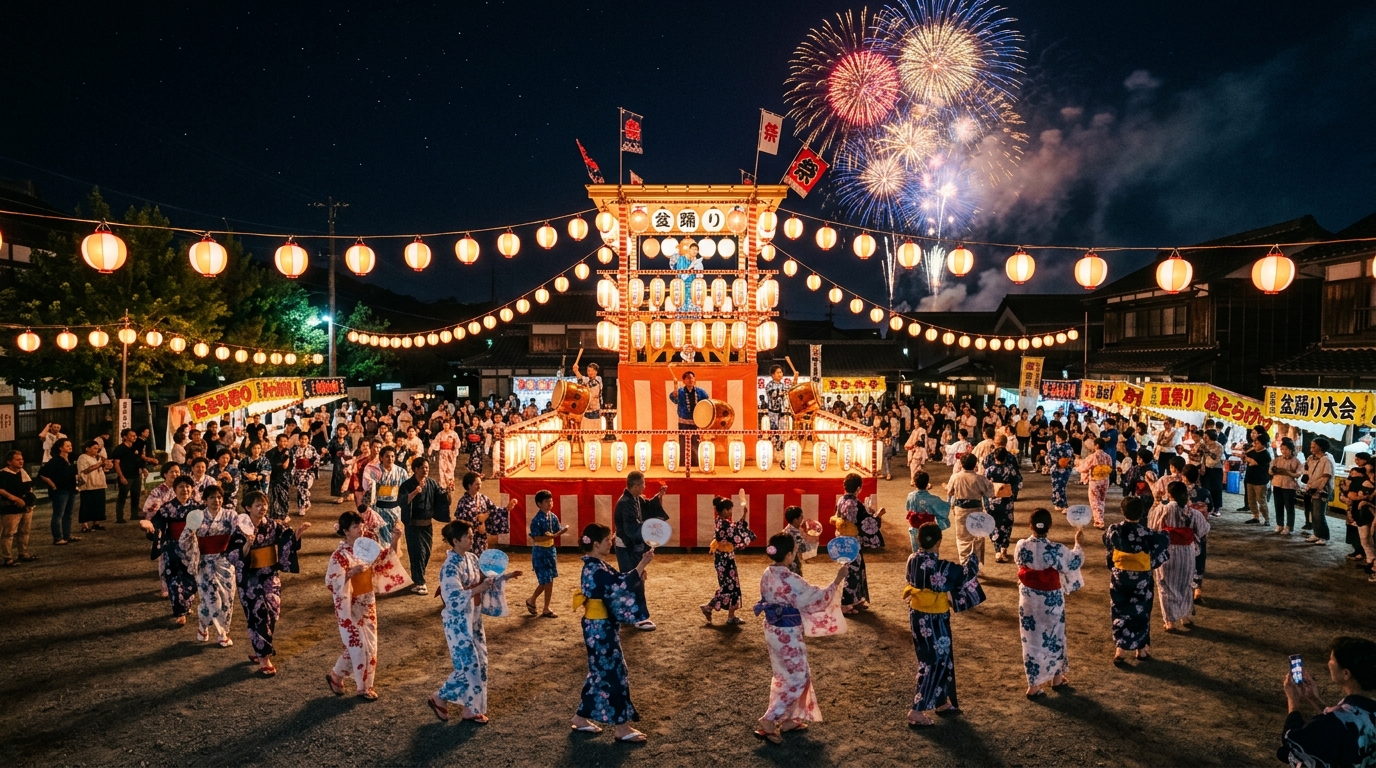
Bon Odori is one of the easiest Japanese summer traditions for visitors to join: watch the circle, copy the dancers in front of you, and move at the group’s pace. The dance has roots in Obon customs for welcoming and sending off ancestral spirits, while today it also brings neighborhoods together through music, lanterns and food stalls.
Quick answer: You normally do not need a ticket, a yukata or dance experience for a small local Bon Odori. Check the organizer’s rules, wait for an open joining period, enter at the edge of the circle, and follow rather than pushing toward the center.
What Bon Odori is
Bon Odori varies by region. The music, hand movements and direction of the circle may change, but repetition makes the basic steps approachable. JNTO’s summer traditions guide explains the connection with Obon and notes that everyone can join by watching the dancers first.
Before you go: confirm the event
Dates, rain policies, entry rules and food-stall hours can change. Use the municipality, shrine, temple or shopping-street organizer as the final source. JNTO’s festival directory is useful for discovering major events, but a local event page is better for same-day notices.
What to wear and bring
- Breathable clothes and shoes you can stand in for a long time
- Water, a small towel and sun protection for the trip to the venue
- Small cash, because some stalls may not accept cards
- A compact bag that stays close to your body in a crowd
A yukata is optional. If you rent one, check the return time and choose footwear you can walk in safely.
How to join the dance
1. Watch one full cycle
Stand outside the circle and identify the repeated hand movements, turns and pauses.
2. Enter from the edge
Use a visible gap and keep the same direction and spacing as nearby dancers. Do not cross through the center or block musicians and staff.
3. Follow the person ahead
Precision is less important than staying aware of the group. If you lose the rhythm, step out, watch again and rejoin later.
Food stalls, photos and local etiquette
Buy only what you can comfortably carry, return reusable dishes where instructed, and use designated bins. Ask before taking a close portrait, especially of children. Avoid flash near performers and do not stop in the dance lane for a photo. Some grounds prohibit alcohol, smoking or eating in particular areas.
Heat, crowds and rain
Summer evenings can remain hot and humid. Drink before you feel thirsty, take breaks away from the crowd, and leave the dance if you feel dizzy or unwell. Festivals may pause or cancel for heavy rain, lightning or extreme heat; confirm the organizer’s latest notice before traveling.
Not every festival is a Bon Odori
Awa Odori, Gujo Odori and Nishimonai Bon Odori each have distinctive histories and performance styles. JNTO’s festival music guide is a useful introduction. At large ticketed or parade-style events, follow the event-specific spectator and participation rules rather than assuming the local neighborhood format.
Five-minute checklist
- Official date, venue and weather notice checked
- Comfortable shoes, water and small cash packed
- Last train or bus time saved
- Photo and rubbish rules understood
- Emergency meeting point agreed with companions
Frequently asked questions
Can beginners join?
Usually yes at community dances, but watch first and follow staff instructions. Performance zones or organized groups may be restricted.
Do I need a yukata?
No. Clean, light everyday clothes are acceptable unless the organizer states otherwise.
Is the event free?
Many neighborhood dances are free, while major festivals may require tickets or reserved seating. Confirm on the official event page.
Information checked: September 20, 2026. Schedules and participation rules can change, so use the organizer’s current notice before departure.