

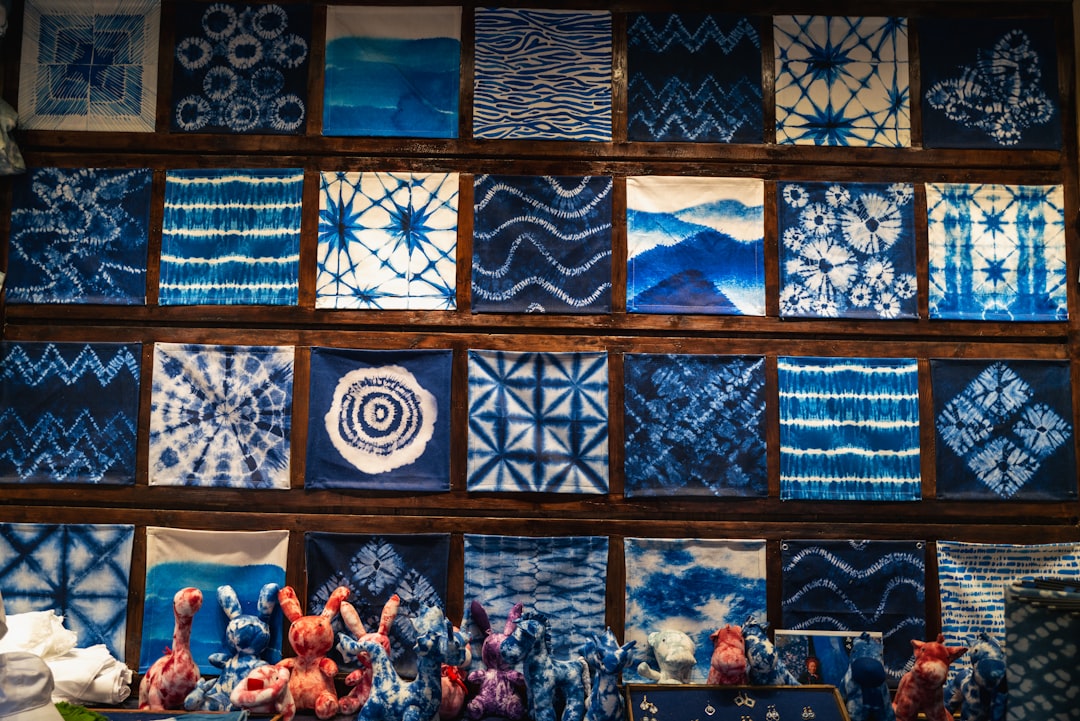
Japanese indigo dyeing and yuzen are often grouped together as traditional textile crafts, but they create color in very different ways. Aizome builds layers of blue through dipping and oxidation, often combined with resist techniques. Yuzen uses paste-resist outlines and carefully applied colors to produce detailed, pictorial patterns. This guide explains the differences, what to expect at a workshop, how to shop, and how to care for what you bring home.
Aizome vs. yuzen: the quick comparison
| Point | Aizome (indigo dyeing) | Yuzen dyeing |
|---|---|---|
| Main appeal | Layers of blue, organic variation and resist patterns | Fine outlines, many colors and pictorial designs |
| Typical process | Repeated dipping and oxidation; may use shibori or katazome | Paste-resist boundaries followed by controlled coloring |
| Well-known traditions | Awa indigo in Tokushima, among others | Kyo-yuzen and Kaga-yuzen |
| Common visitor projects | Handkerchiefs, pouches or T-shirts | Stencil-dyed or hand-painted small textiles |
Aizome: more than dyeing cloth dark blue
Traditional Japanese indigo dyeing often uses sukumo, composted leaves of Japanese indigo. Cloth develops blue as it comes out of the vat and meets the air. Repeating the dip-and-oxidize cycle deepens the color. Slight differences in shade and hand-worked texture are therefore not automatically defects.
Shibori, katazome and solid dyeing
- Shibori: tying, stitching or folding blocks dye and leaves irregular pale patterns.
- Katazome: a stencil and resist paste create more repeatable motifs.
- Solid dyeing: the focus is the depth of blue, weave and change through use.
Yuzen: how detailed multicolor patterns stay crisp
Yuzen uses resist paste to separate areas of a design so neighboring colors do not easily bleed together. The craft developed during the Edo period. Kyo-yuzen is widely associated with richly colored decoration, while Kaga-yuzen is known for refined depictions of nature. Color alone cannot prove origin, so check the maker, production area and process description.
How to choose a dyeing workshop
- Confirm the item: handkerchiefs and pouches pack easily; T-shirt sessions may require advance sizing.
- Ask about collection: washing, drying or finishing may mean the work cannot go home immediately.
- Wear practical clothes: aprons and gloves do not fully protect cuffs and shoes.
- Check photography rules: formulas, certain processes and other guests may not be photographed.
Four checks before buying
- Handmade or printed? A yuzen- or indigo-style appearance does not mean every stage was done by hand.
- Where was it made? Ask for the production area, workshop and technique rather than relying on a “traditional style” label.
- How is it cleaned? Confirm whether it can be washed and whether separate washing is required.
- Can color transfer? New indigo may rub onto white clothing or pale bags.
Care after you return home
Follow the product label and maker’s instructions first. For washable everyday indigo goods, separate them from pale items, avoid prolonged soaking and dry in a shaded, ventilated place. Do not wash delicate yuzen kimono or pieces with metallic leaf or embroidery at home; consult a cleaner experienced with kimono. Store textiles away from heat, humidity and strong light.
FAQ
Does “Japan Blue” mean one standardized dyeing method?
No. Japanese indigo practices vary in raw materials, vat management and resist methods. Read the specific process information when choosing a piece.
Is Kyo-yuzen better than Kaga-yuzen?
Neither is inherently superior. They have different regional histories, visual traditions and production processes. Choose by use, maker, documented technique and personal taste.
Official references and fact-check date
Checked on September 26, 2026 against the Kyoto National Museum’s yuzen resource and Government of Japan features on indigo dyeing, Kyo-yuzen and Kaga-yuzen. Workshop dates, projects and booking terms change, so check the operator’s official website before visiting.