
Japanese trains are efficient partly because passengers follow a set of simple shared habits. You do not need to memorize a complicated rulebook: let people leave before you board, keep doorways clear, control your luggage and avoid creating noise or safety hazards.
The 10 rules travelers need most
- Queue at the platform markings and wait behind the safety line.
- Let passengers leave before boarding.
- Move away from the doors when space is available.
- Set your phone to silent and avoid voice calls.
- Keep conversations and media volume low.
- Hold backpacks in front or place them on the rack when crowded.
- Keep large luggage away from doorways and aisles.
- Offer priority seating to someone who needs it.
- Do not walk while looking at your phone, and do not run for a train.
- Never enter the tracks; call station staff if you drop something.
On the platform: queue and board safely
Platform markings show where doors will open. Join the line, leave a path for arriving passengers and board only after they have exited. Rushing into closing doors is dangerous and can delay the train.
Stay behind the yellow tactile paving or other safety line. Do not use selfie sticks, tripods or large camera equipment near the platform edge. JR West warns that a selfie stick can contact a train or overhead electrical equipment. If an item falls onto the tracks, alert staff instead of trying to retrieve it.
Inside the train: doors, aisles and movement
When the carriage is busy, move further inside instead of stopping immediately beside the door. If you are standing at the door and people need to leave, step onto the platform briefly and re-enter after they pass. Tokyo Metro specifically recommends this behavior.
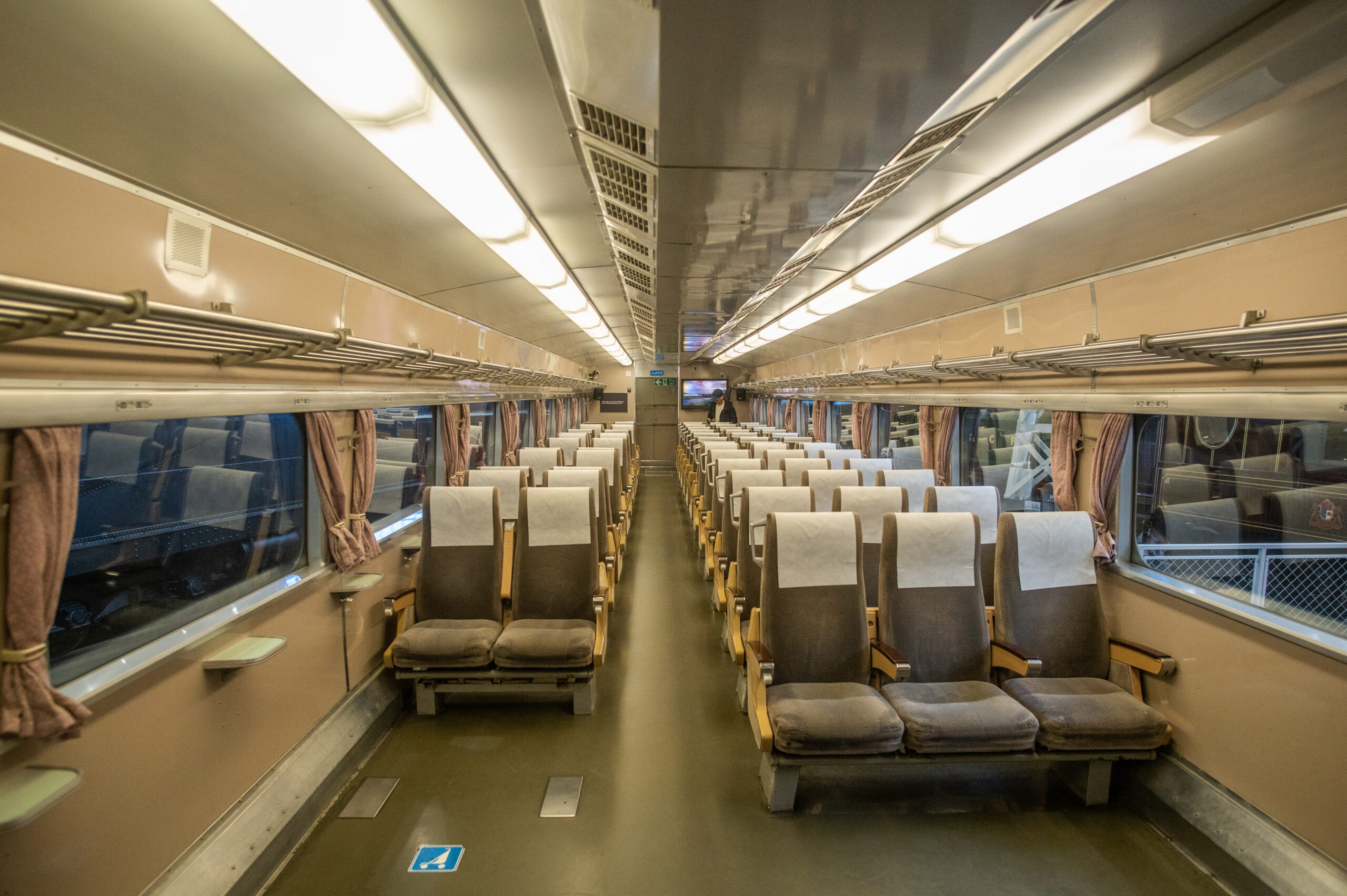
Keep aisles clear and avoid sitting on the floor. If you are unfamiliar with the route, check the display above the doors without blocking movement. Missing a stop is safer than pushing through a packed carriage at the last second.
Phones, calls and conversation
Set your phone to silent mode and avoid voice or video calls on ordinary commuter trains. Use headphones at a volume that cannot be heard by others, and keep conversations quiet. Typing and reading are normal, but walking through a station while focused on a screen creates collision and fall risks.
Operator announcements may ask passengers to turn devices off near priority seats during crowded periods. Follow the local announcement rather than relying on an old online rule.
Luggage and backpacks
- In a crowded car, remove a backpack from your back and hold it in front or use an overhead rack.
- Do not leave a suitcase where it blocks a door, aisle or priority-seat area.
- Keep wheels locked and maintain control of the handle.
- Use luggage delivery or station storage when a large suitcase would make a rush-hour trip difficult.
Large luggage has additional rules on some Shinkansen services, including reservation requirements for oversized baggage spaces. Check the operator’s train-specific rules when booking.
Priority seats and invisible needs
Priority seats are intended for elderly passengers, people with disabilities or injuries, pregnant passengers and adults traveling with infants, among others. Not every need is visible. If someone appears to need your seat, offer it without demanding an explanation.
Priority seating is not a license to ignore people who need help elsewhere in the carriage. Any ordinary seat can be offered.
Eating and drinking: commuter train versus Shinkansen
On urban commuter trains and subways, avoid meals with strong smells or food that can spill. A closed drink is generally less disruptive, but local conditions matter. On Shinkansen and many long-distance limited express trains with forward-facing seats and tray tables, eating an ekiben is normal.
Take all packaging with you and use a proper receptacle. Do not leave cups or food waste in the seat pocket.
Photography in stations and trains
Photography is not automatically prohibited, but safety and privacy come first. Do not lean over platform gates, cross the safety line, use flash toward a driver, set up a tripod in a passage or photograph another passenger closely without permission. Tokyo Metro asks visitors to avoid stepladders, monopods and selfie sticks when they obstruct or endanger others.
Women-only cars
Some operators designate women-only cars during specific rush-hour periods. The applicable time, direction and exceptions are shown on platform and car signs. These arrangements may also allow young children and passengers who require assistance together with a caregiver. Read the local sign instead of assuming the same schedule applies across Japan.
Escalators and moving through stations
Do not block ticket gates, stairs or escalator landings while checking a map. Move to the side first. Regional habits about standing on one side of an escalator are not a safety rule; follow operator signs, stand securely and avoid walking when instructed.
If you need an elevator, allow extra time. Large stations can require a detour to reach a step-free route.
When something goes wrong
- Dropped item on tracks: contact staff; never climb down.
- Illness or danger: use the emergency call button or tell staff. Use it for a genuine emergency, not a routine question.
- Lost property: note the line, car number, direction, time and where you were seated.
- Service disruption: follow platform announcements and staff directions; crowd-control routes may change.
Frequently asked questions
Is talking on the train forbidden?
Quiet conversation is common, but voice calls and loud talking are generally discouraged on commuter trains. Long-distance train environments are more relaxed, yet consideration for nearby passengers still applies.
Can I eat on a Japanese train?
A full meal is normal on many Shinkansen and long-distance limited express trains. On a city subway or commuter train, avoid messy or strong-smelling food.
What should I do with a backpack?
When crowded, remove it from your back and hold it in front or use a rack. This prevents accidental contact and frees space.
Must I give up a priority seat?
Priority seats should be made available to passengers who need them. If you use one temporarily, stay alert and offer it promptly.
Official information
- JR West: Train and Station Manners
- Tokyo Metro: Good manners when using subways
- Tokyo Metro: Things to consider when riding
- JR East Guide
Information checked: October 8, 2026.