
- 中文
- English
2026年7月28日,日本熊本县发生强烈地震。据熊本市官方公布的信息,当地时间16时27分左右,熊本县熊本地区发生推定规模为M7.1的地震,震源深度约16公里。宇城市和冰川町观测到日本气象厅震度等级中的最高级别“震度7”;熊本市南区为震度6强,中央区、东区、西区和北区为震度5强。
截至7月30日的情况
根据熊本市7月30日16时公布的第6次灾害对策本部会议资料,熊本市确认死亡及失踪人数均为0,重伤1人、中等程度伤46人、轻伤8人;南区确认4栋住宅全毁,另有约35栋住宅从部分损坏到半毁不等。市内停电已经恢复,燃气也已恢复,但部分地区仍有断水、水压下降或浑水问题。当时共有180处避难所开放,约1,006人正在避难。
灾后数据可能继续更新。身处熊本及周边地区时,请以日本气象厅、当地政府和公共广播发布的最新信息为准,并警惕余震、受损建筑、道路裂缝、落石以及高温天气带来的二次风险。
地震发生时的紧急避难守则
1. 正在摇晃时:先保护生命
- 趴下、掩护、抓牢:降低身体重心,躲到坚固桌子下面,抓住桌脚,并用包、坐垫或手臂保护头颈。
- 远离窗户、玻璃、书柜、吊灯和可能掉落或倾倒的物品。
- 不要在强烈摇晃中慌忙跑到室外,也不要使用电梯。
- 如果在室外,远离建筑外墙、招牌、玻璃、自动售货机和砖墙,前往开阔处。
- 如果正在开车,缓慢减速并靠左停车,不要急刹车;留意紧急车辆和道路损坏。
2. 摇晃停止后:判断是否需要撤离
- 穿上鞋,防止被碎玻璃割伤;确认自己和身边的人是否受伤。
- 在安全的情况下关闭火源、燃气总阀和电闸。闻到燃气味时不要点火或操作电器开关。
- 不要进入明显倾斜、出现大裂缝或有掉落危险的建筑。
- 使用楼梯撤离,携带手机、证件、药品、水和最基本的应急用品。
- 按照当地政府、警察、消防人员和设施工作人员的指示行动,不要依据社交媒体上的未确认消息作决定。
3. 海边、河口或陡坡附近
如果在海岸附近感到强烈或持续较久的摇晃,应立即向高地或指定的津波避难建筑移动,不要等待警报,也不要前往海边查看情况。在山坡、悬崖和挡土墙附近,要警惕落石和山体滑坡,选择远离斜坡的安全路线。
4. 到达避难场所后
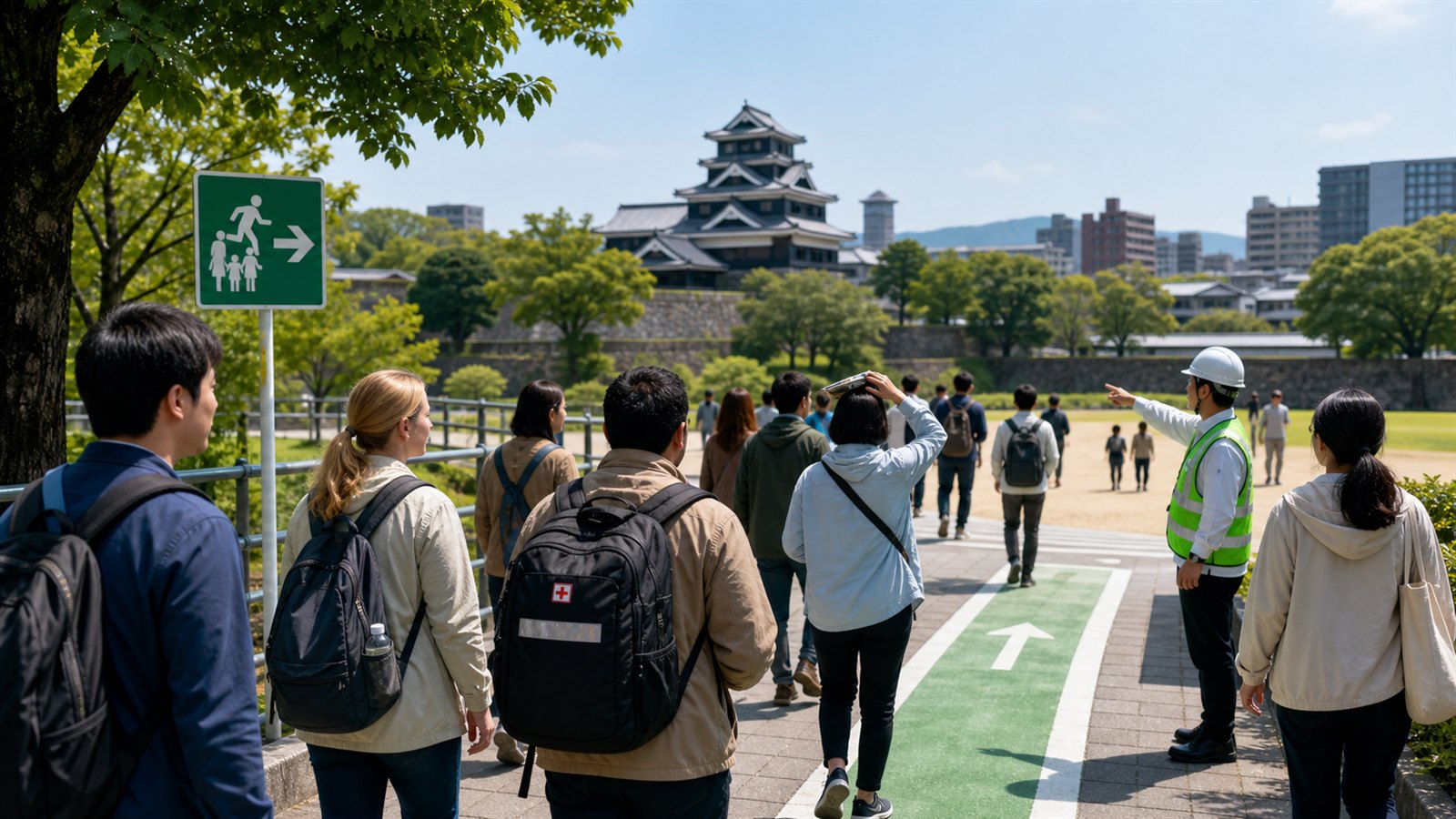
- 确认避难地点适用于当前灾害类型。“指定紧急避难场所”用于立即躲避危险,“指定避难所”则用于灾后临时生活。
- 留意余震,不要未经许可返回受损建筑。
- 节省手机电量,优先使用文字消息确认平安。
- 照顾儿童、老人、残障人士、孕妇、游客和不熟悉日语的人。
- 日本紧急电话:警察110;火灾、救护车和救援119。
A powerful earthquake struck Kumamoto Prefecture on July 28, 2026. According to official information from Kumamoto City, the earthquake occurred at around 4:27 p.m. local time in the Kumamoto region of Kumamoto Prefecture. It had an estimated magnitude of 7.1 and a depth of approximately 16 kilometers. The maximum JMA seismic intensity of 7 was recorded in Uki City and Hikawa Town. Kumamoto City’s Minami Ward recorded upper 6, while Chuo, Higashi, Nishi and Kita wards recorded upper 5.
Situation as of July 30
According to materials released by Kumamoto City’s disaster response headquarters at 4:00 p.m. on July 30, the city had confirmed no deaths or missing persons. One person was seriously injured, 46 sustained moderate injuries and eight sustained minor injuries. Four homes in Minami Ward were confirmed destroyed, with approximately 35 more homes ranging from partially damaged to half-destroyed.
Electricity and gas service in the city had been restored, but water outages, low water pressure and cloudy tap water continued in some areas. At that time, 180 shelters remained open with approximately 1,006 evacuees.
Disaster figures may continue to change. If you are in Kumamoto or a nearby area, follow the latest information from the Japan Meteorological Agency, local authorities and public broadcasters. Remain alert for aftershocks, damaged buildings, cracked roads, falling rocks and heat-related risks.
Emergency evacuation rules during an earthquake
1. During the shaking: protect your life first
- Drop, cover and hold on: get low, shelter beneath a sturdy table, hold a table leg and protect your head and neck with a bag, cushion or your arms.
- Stay away from windows, glass, bookcases, hanging lights and objects that may fall or topple.
- Do not rush outside during strong shaking and never use an elevator.
- Outdoors, move away from exterior walls, signs, glass, vending machines and concrete-block walls. Move to an open area.
- If driving, slow down gradually and stop on the left without braking suddenly. Watch for emergency vehicles and road damage.
2. After the shaking stops: decide whether to evacuate
- Put on shoes to avoid broken glass and check yourself and others for injuries.
- If it is safe, turn off flames, the main gas valve and the electrical breaker. If you smell gas, do not use flames or electrical switches.
- Do not enter buildings that are leaning, seriously cracked or at risk of falling debris.
- Use stairs and take only essentials such as your phone, identification, medicine, water and a small emergency kit.
- Follow instructions from local authorities, police, firefighters and facility staff. Do not make safety decisions based on unverified social-media posts.
3. Near the coast, a river mouth or a steep slope
If you feel strong or prolonged shaking near the coast, immediately move to higher ground or a designated tsunami evacuation building. Do not wait for a warning and never go to the shore to look. Near hillsides, cliffs and retaining walls, watch for landslides and falling rocks and choose a route away from slopes.
4. At an evacuation site
- Confirm that the site is designated for the type of hazard you face. An emergency evacuation site is for immediate protection from danger; an evacuation shelter is for a temporary stay after a disaster.
- Expect aftershocks and do not return to a damaged building until authorities say it is safe.
- Conserve phone power and use text messages when possible to report that you are safe.
- Assist children, older people, people with disabilities, pregnant people, tourists and anyone who may not understand Japanese.
- Emergency numbers in Japan: 110 for police; 119 for fire, ambulance and rescue.
Sources / 信息来源
- Yahoo! Japan News report
- Kumamoto City Disaster Response Headquarters / 熊本市灾害对策本部
- Prime Minister’s Office of Japan / 日本首相官邸
- Cabinet Office Disaster Management guidance / 日本内阁府防灾指南
- Designated evacuation sites and shelters / 指定紧急避难场所与避难所
Information updated on July 31, 2026. Emergency conditions can change quickly; always follow current official instructions.