

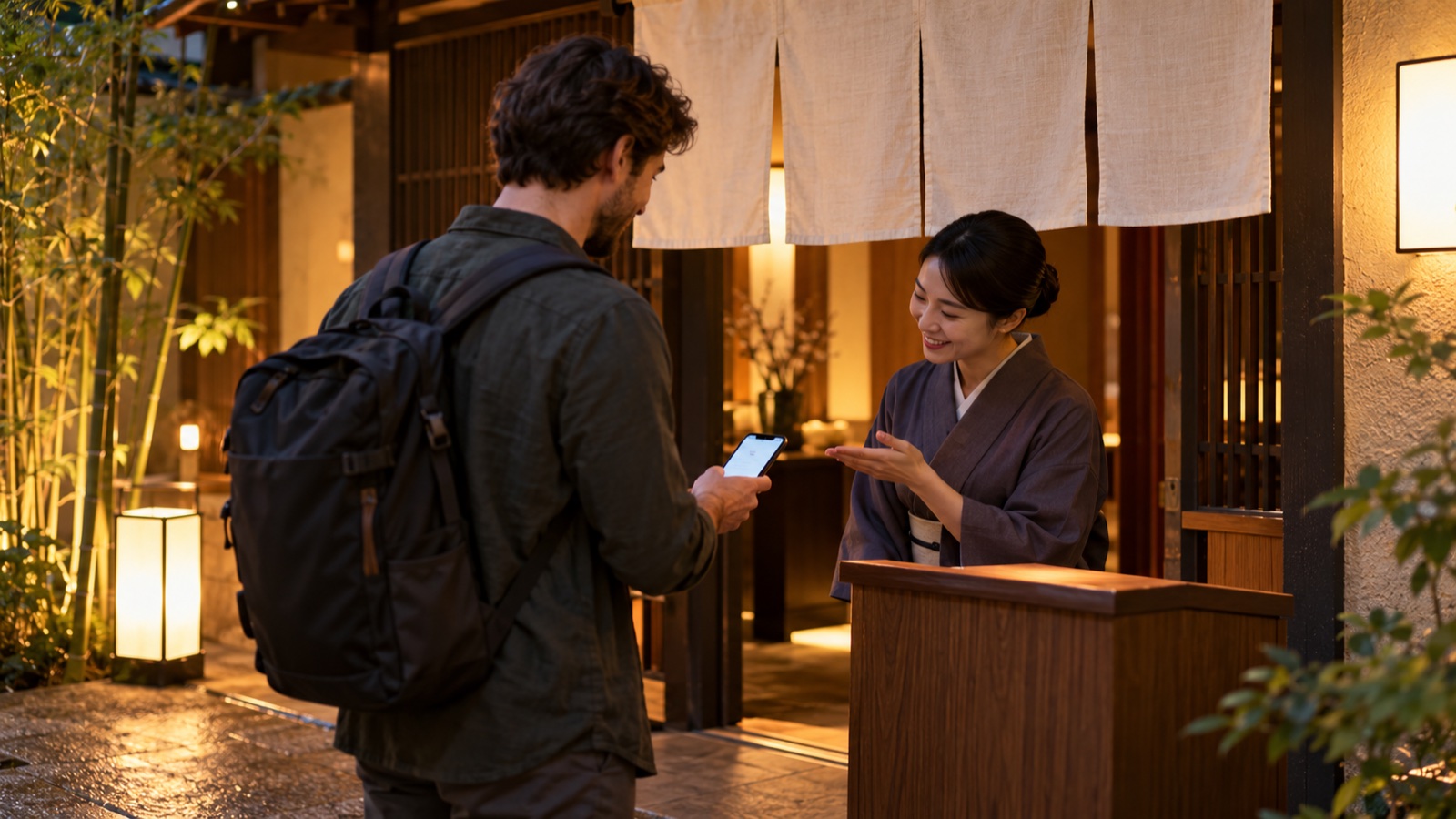
Booking a restaurant in Japan can be simple, but the small print matters. A credit card may secure the table rather than prepay the meal, a course may have a strict start time, and a late arrival can affect every guest at a small counter restaurant. This guide explains how to reserve, what to confirm, and how to change plans without an expensive misunderstanding.
Quick answer: what should you confirm before booking?
- Date, time and party size: write them in Japan time and include children, even if they will not order a full course.
- Menu: seat only, set course, tasting menu or prepaid plan.
- Final price: check tax, service charge, table charge, drinks and any minimum order.
- Cancellation rule: note the deadline and the charge for reducing the party size, arriving late or not showing.
- Food restrictions: ask before paying; do not assume a kitchen can remove dashi, soy sauce or cross-contact.
- Arrival details: save the Japanese restaurant name, map pin, building floor and reservation confirmation offline.
Which restaurants need a reservation?
Reserve early for small sushi counters, kaiseki, popular yakiniku, restaurants with fixed courses, and venues with limited seatings. Many ramen shops, casual diners and family restaurants do not accept bookings; they use a physical or digital waiting list instead. JNTO specifically advises checking each restaurant’s policy rather than assuming every venue can be reserved.
A useful rule is to book when missing that restaurant would disrupt your trip. For flexible casual meals, keep two nearby alternatives and visit outside the busiest lunch and dinner periods.
How to book a restaurant in Japan
1. Start with the restaurant’s official website
Use the booking link published by the restaurant. It is the best place to confirm current menus, closed days, child policies, dress rules and accepted payment. A map listing or old blog may not reflect the latest conditions.
2. Use a reputable reservation platform
Platforms can provide English forms and instant confirmation, but read whether the booking is confirmed immediately or only requested. On some services, a card is held for cancellation protection and the meal is still paid at the restaurant. TableCheck’s official diner help explains that the card requirement does not necessarily mean prepayment.
3. Ask your hotel when phone booking is required
A concierge may help, but the reservation remains your responsibility. Give one exact date, a realistic arrival time, every diner’s age, dietary needs and a reachable phone number. Ask how you will receive proof of confirmation.
Understand card holds, prepayment and cancellation fees
These are different arrangements:
- Card guarantee: the card secures the booking and may be charged only under the stated cancellation policy.
- Pre-authorization: a temporary amount may appear and later disappear; it is not always the meal payment.
- Prepaid course: the listed course is paid when booking, but drinks or extra items may still be due on the day.
Take a screenshot of the cancellation deadline in Japan time. If one person cannot attend, do not simply arrive with a smaller group: some restaurants charge by reserved seat because ingredients were prepared in advance.
How to communicate allergies and dietary restrictions
Contact the restaurant before booking and describe the ingredient, severity and cross-contact concern. “No meat” may not exclude fish stock; “no fish” may not exclude bonito dashi. If the restaurant says it cannot safely accommodate the request, choose another venue rather than negotiating at the counter.
Useful wording:
- Yoyaku o shitai desu. — I would like to make a reservation.
- Shichiji ni futari desu. — Two people at 7:00.
- Arerugī ga arimasu. — I have an allergy.
- Yoyaku no namae wa ___ desu. — The reservation name is ___.
- Osokuremasu. — I will be late.
Arrival-day checklist
- Recheck the address, branch and building floor; restaurants with similar names may be nearby.
- Aim to arrive 5–10 minutes early, but not so early that the previous seating is still underway.
- Show the confirmation email and state the reservation name.
- If delayed, contact the venue immediately. JNTO notes that punctuality matters, especially where dishes are synchronized for one seating.
- Confirm table time limits before settling in. Do not assume the table is yours for the whole evening.
If you need to cancel or change the booking
Use the cancellation link in the confirmation first. If it is closed, call or message the restaurant through the channel it provides. Keep the cancellation confirmation. Never make two reservations for the same meal while deciding; double-booking harms small businesses and can create two cancellation charges.
Common mistakes to avoid
- Booking the wrong branch or date because your device is in another time zone.
- Entering a nickname that does not match the name you give at the door.
- Assuming a card guarantee includes the meal.
- Adding children or dietary restrictions only after arrival.
- Wearing strong fragrance at a sushi or tasting counter where aroma is part of the experience.
- Expecting tipping; it is generally not customary in Japan.
Frequently asked questions
How far ahead should I book?
There is no universal window. Some venues open reservations on a fixed date; others accept only a few weeks ahead. Check the restaurant’s official booking page and avoid relying on an old article.
Can I walk in if online reservations are full?
Sometimes, but not always. “No online availability” may mean the book is full or that some seats are managed by phone. Ask politely and keep an alternative nearby.
What if my train is delayed?
Contact the restaurant as soon as possible. A delay does not automatically waive its cancellation policy, but early notice gives staff the best chance to help.
Do I need a Japanese phone number?
Some forms do; others accept international numbers or email. A hotel may assist with a phone-only booking, but confirm who the restaurant should contact if plans change.
Related guides
- Izakaya in Japan: ordering, pricing and etiquette
- Japanese breakfast and teishoku guide
- Japan travel apps for navigation, translation and booking
Sources checked October 31, 2026: JNTO reservation guidance, JNTO customs and dining etiquette, and TableCheck’s official card-guarantee explanation. Restaurant policies change; always follow the terms shown on your own booking.