

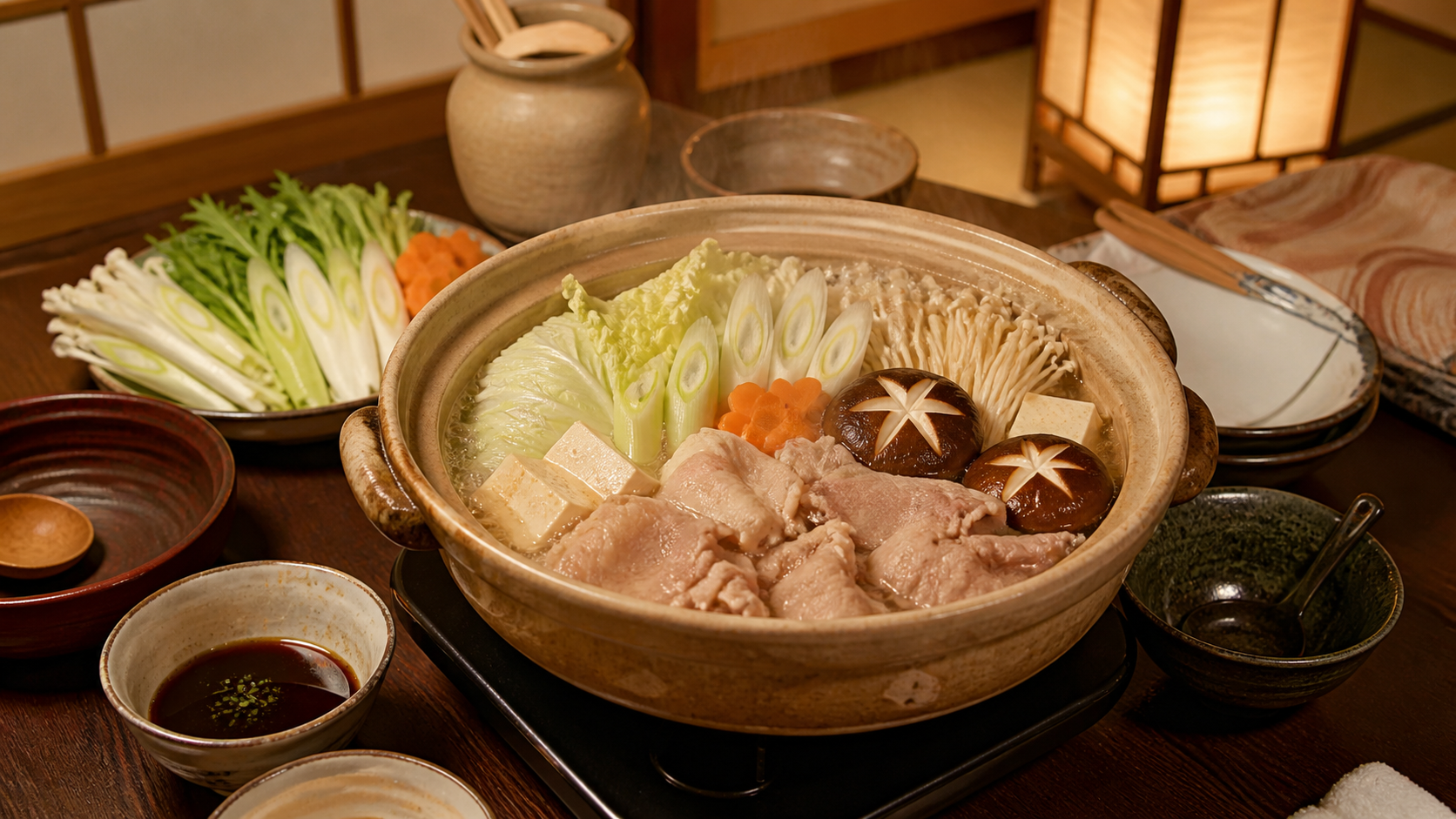
Japanese nabe is more than one kind of winter hot pot. It includes sukiyaki, shabu-shabu, chanko nabe, Fukuoka-style motsunabe and many regional dishes. This practical guide explains what to order, how to cook safely at the table and how to finish the meal.
Which nabe should you choose?
- Sukiyaki: thin beef, vegetables and tofu cooked in a sweet-savory soy-based sauce, often served with raw egg for dipping.
- Shabu-shabu: thin meat briefly swished in broth, then eaten with ponzu or sesame sauce.
- Chanko nabe: a broad category of hearty hot pots associated with sumo wrestlers; recipes vary.
- Motsunabe: a rich Fukuoka specialty with offal, cabbage, garlic and chives.
- Yosenabe: a mixed hot pot combining seafood or meat with tofu and vegetables.
Nabe types at a glance
| Type | Broth or seasoning | Main ingredients | How it is eaten |
|---|---|---|---|
| Sukiyaki | Sweet-savory soy seasoning | Thin beef, leek, tofu, shirataki | Often dipped in raw egg |
| Shabu-shabu | Relatively light broth | Thin meat and vegetables | Cook pieces briefly; dip in ponzu or sesame sauce |
| Chanko nabe | Soy, salt or miso styles | Meat, fish, vegetables and tofu | A hearty hot pot associated with sumo food culture |
| Motsunabe | Soy or miso styles | Offal, cabbage, chives and garlic | Known as a Fukuoka specialty |
Before ordering
- Check whether the listed price is per person or per pot and whether a two-person minimum applies.
- Confirm whether it is a set, à la carte or time-limited all-you-can-eat plan.
- Ask what the broth contains; removing a visible ingredient does not remove fish, meat or allergens already in the stock.
- Choose the shime finishing course—usually udon, ramen-style noodles or rice porridge—and check whether it costs extra.
How to share the pot
- Add firm vegetables, mushrooms and tofu first.
- Cook meat and seafood in small batches until fully done.
- Keep utensils that touched raw meat separate from eating chopsticks. MAFF likewise advises using dedicated tongs or chopsticks for raw meat during shabu-shabu and similar meals.
- Use serving chopsticks or the shared ladle, and never return bitten food to the pot.
- Add noodles or rice only after the main ingredients are finished.
Allergies, vegetarian diets and raw egg
Japan’s Consumer Affairs Agency warns that restaurant food may involve accidental cross-contact and that restaurant allergen information is not standardized like packaged-food labels. Travelers with serious allergies should contact the restaurant in advance and carry the agency’s multilingual food-allergy communication sheet. Vegetarian diners should ask whether the broth contains dried fish, chicken or meat. Raw egg with sukiyaki is optional; anyone who avoids raw egg can simply decline it.
Useful Japanese
- Kore wa ichinin-mae no nedan desu ka? — Is this price per person?
- Yoku hi o toshite kudasai. — Please cook it thoroughly.
- Nama tamago wa irimasen. — I do not need raw egg.
- Dashi ni sakana ya niku o tsukatte imasu ka? — Does the broth contain fish or meat?
FAQ
Can I eat nabe alone?
Yes. Search for hitori nabe or one-person shabu-shabu, but check the restaurant’s minimum order.
Do I need a reservation?
Not always, but reservations are wise for winter evenings, weekends and groups. Discuss allergy or vegetarian needs when booking.
Takeaway
Choose by broth, main ingredient and finishing course. Add ingredients gradually, separate raw-meat utensils and cook meat fully. For another shared-dining option, see our Japanese izakaya guide.
Official references and fact-check date
Checked on September 28, 2026 against MAFF resources on sukiyaki, chanko nabe and raw-meat utensil safety, plus Consumer Affairs Agency allergy guidance. Menus, prices and minimum orders change, so check the restaurant’s official information.