

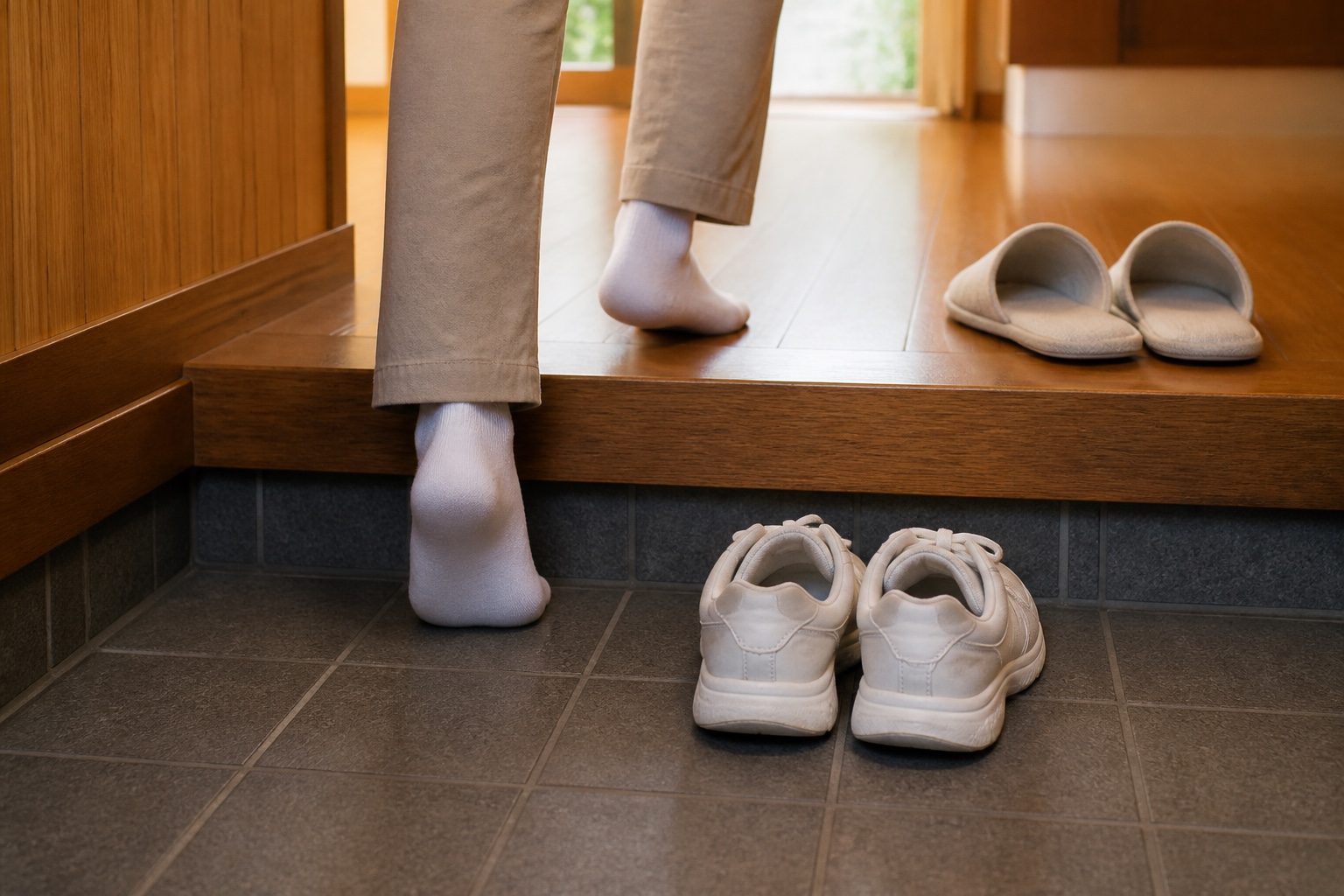
The Japanese custom of removing shoes before entering a home, certain restaurants, and traditional accommodations is rooted in centuries of cultural practice. Understanding when and where to remove your shoes is essential for every visitor to Japan.👟 Japanese Shoe Etiquette: A Complete Guide 1.
The Genkan Entryway Every Japanese home, and many traditional establishments, have a genkan (enkopg) — a sunken entry area where you remove outdoor shoes. Step up onto the raised floor only after removing shoes. 2. Face Shoes Toward the Door When removing shoes, face toward the door. Arrange them neatly facing outward so they’re easy to put on when leaving. Some genkans have shoe cabinets. 3.
Slipper System Once inside, wear the house slippers usually provided. Never wear slippers on tatami mats (straw flooring) — go barefoot or wear socks. Separate bathroom slippers await by the toilet door. 4. The Bathroom Slipper Rule When entering a Japanese toilet, switch to the special toilet slippers. This is very important — wearing toilet slippers outside the bathroom is a major faux pas.
Don’t forget to switch back! 5. Socks Matter Your socks should be clean and hole-free. Many occasions require removing shoes (ryokan, temples, traditional restaurants). Hole-free, presentable socks are a must. 6. Temples and Shrines Some temple buildings require shoe removal. Look for shoe racks (getabako) at the entrance. You’ll usually receive a plastic bag to carry your shoes or leave them in provided lockers. 7.
Traditional Restaurants Higher-end traditional restaurants (ryotei) and izakaya tatami seating areas require shoe removal. The staff will guide you. Casual restaurants typically don’t require it. 8. Ryokan and Traditional Accommodations When staying at a ryokan, remove shoes at the entrance. Indoor slippers are provided but are often replaced by different slippers for different areas. Never wear slippers on tatami. 9. Schools and Some Workplaces Most Japanese schools require students