
🎨 Japanese Dyeing and Weaving Craftsmanship: The Color Magic of Aizen and Yuzen Japan’s dyeing and weaving craftsmanship is recognized as the world’s top traditional handicraft, with a history of more than 1,000 years.Among them, the two most representative techniques are “Aizen (あいぞめ)” and “Yuzen dyeing (ゆうぜんぞめ)”, each with its own unique charm and historical background.
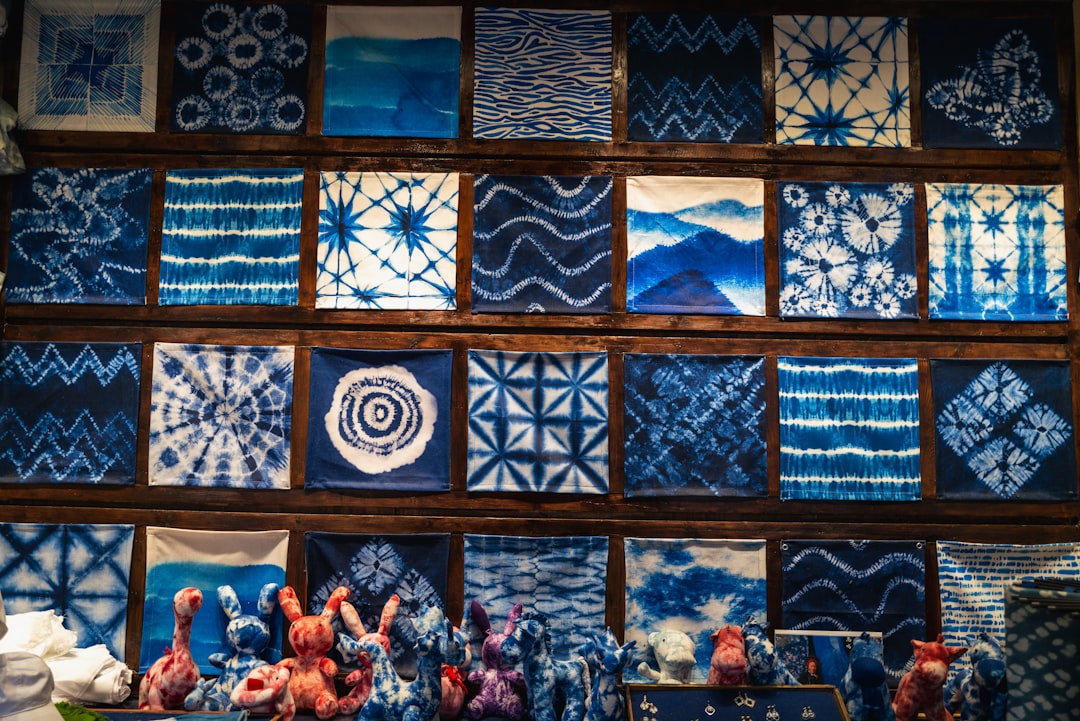
💙 Aizen: The profound beauty of Japanese blue Aizen is one of the oldest dyeing techniques in Japan.
It is dyed using “すくも” dye made by fermenting the leaves of Polygonum indica.It is characterized by a deep blue – Japanese blue (ジャパンブルー), which becomes softer as the number of washes increases.Tokushima Prefecture’s “Awa indigo” is Japan’s most famous indigo dye production area.In Tokushima and Kyoto, there are many workshops where you can experience indigo dyeing.
It takes about an hour to make handkerchiefs and T-shirts, and the price starts at 1,500 yen.
🌸 Yuzen dyeing: the gorgeous colors of Kyoto Yuzen hair dyeing originated in Kyoto and is the most gorgeous dyeing technique in Japan.The process is to use dye-resistant paste to draw the outline of the pattern on white cloth, and then fill in the color by hand.It takes several months to a year to complete a kimono.At the Yuzen dyeing experience workshop in Kyoto, visitors can draw their own original patterns on handkerchiefs or reusable bags, which is a very popular experience for foreign travelers.The price is about 2,000 yen to 3,500 yen.
📍 Experience recommendation There are also dyeing and weaving experience classes in Asakusa, Tokyo, which are suitable for tourists with limited time.Most experience workshops in Kyoto provide English services, and it is recommended to make an appointment online in advance.In addition, there are traditional craft shops near Nihonbashi in Tokyo, where you can buy high-quality indigo and yuzen dyeing products as souvenirs.A handkerchief-sized piece of dyed fabric starts at about 1,000 yen and is a very popular souvenir.