

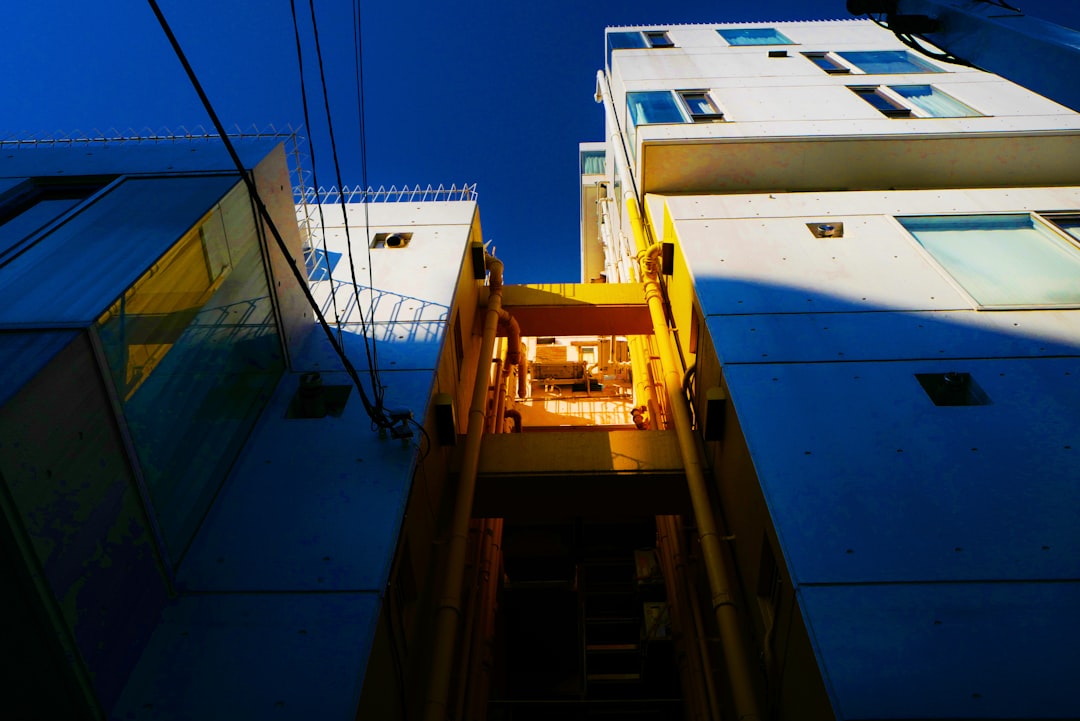
Omotesando is one of Tokyo’s best streets for seeing how architecture, fashion and public space interact. Flagship stores by internationally known architects stand beside postwar apartments, narrow lanes and a museum garden. The buildings are not gathered inside a single district attraction, so the best way to understand the area is to walk it as a sequence.
This self-guided route begins near Harajuku, follows Omotesando Avenue toward Aoyama and finishes at the Nezu Museum. It takes about two hours without entering museums or shopping, and roughly half a day if you stop for exhibitions, cafés and interiors.
Route overview
| Stop | What to notice | Typical time |
|---|---|---|
| Harajuku Station and Jingumae | Transition from youth culture to the formal avenue | 15–20 minutes |
| Omotesando Hills | Ando Tadao’s sloping interior circulation and low roofline | 20–40 minutes |
| Flagship architecture | Façades, structural ideas and brand identity | 30–45 minutes |
| Backstreets around Aoyama | Small galleries, residences and changing street scale | 20–30 minutes |
| Nezu Museum | Kengo Kuma’s approach, galleries and garden | 60–120 minutes with admission |
Start: Harajuku to Omotesando
Begin at Harajuku Station or Meiji-jingumae Station and walk south toward the broad, tree-lined avenue. This starting point makes the contrast easy to read: crowded side streets and brightly branded shops give way to a more formal boulevard planned as an approach to Meiji Jingu.
Look at the entire street section, not only individual façades. Zelkova trees, wide sidewalks, underground railway entrances and steady vehicle traffic all shape how the buildings are seen. In summer the trees soften the avenue; after the leaves fall, upper façades become easier to study.
Omotesando Hills: architecture built around a slope
Designed by Tadao Ando, Omotesando Hills follows the gradient of the avenue instead of hiding it. Inside the main building, a continuous ramp spirals around the central atrium. The roofline remains comparatively low along the street, responding to the scale of the former Dojunkai Aoyama Apartments that once stood here.
You can understand the circulation from the public shopping areas without buying anything. Move slowly, stay out of shop entrances and avoid photographing customers at close range. Individual stores may prohibit photography even when the common space allows it.
The official facility page lists shop hours separately from café and restaurant hours, and notes that some tenants differ. Check the current schedule if a particular interior is essential to your visit.
Read the flagship façades as design experiments
Continue toward Aoyama and compare how each flagship building turns a brand into architecture. Some use transparent glass to reveal movement; others use patterned skins, structural grids or sculptural entrances to separate themselves from the street.
- Prada Aoyama: notice the diamond-shaped glass envelope and how the building changes with reflections and viewing angle.
- GYRE: stacked volumes create terraces and shifted layers rather than a single flat façade.
- Tod’s Omotesando: the branching concrete pattern refers to the avenue’s trees while also contributing to the structure.
- Dior Omotesando: translucent layers make the building appear different by day and after dark.
These are active commercial buildings, not open architectural museums. View façades from public sidewalks, obey staff instructions and do not block queues or entrances. Store interiors and opening hours can change independently of the building itself.
Take one detour into the backstreets
The smaller lanes behind the avenue are essential to understanding Omotesando. Lot sizes shrink, streets become quieter and architecture responds to residences, cafés and small galleries rather than a metropolitan boulevard. The contrast helps explain why the district supports both monumental façades and intimate spaces.
These lanes also contain homes and offices. Keep voices low, do not sit on private steps and avoid photographing through windows. If a building appears closed, admire it from the public street rather than testing doors.
Finish at the Nezu Museum
The Nezu Museum provides a strong conclusion because architecture, collection and landscape are designed as one experience. Kengo Kuma’s long tiled roof and bamboo-lined approach slow the transition from city street to museum. Inside, the galleries open toward a garden of paths, ponds and tea houses.
According to the museum’s official visitor information, standard hours are 10:00 to 17:00, with last entry at 16:30. It is normally closed on Mondays, during exhibition changes and over the New Year period; holiday Mondays may shift the closure to Tuesday. Admission varies by exhibition, and online timed-entry tickets are cheaper than same-day tickets for the listed exhibitions.
The museum is about an eight-minute walk from Omotesando Station Exit A5; Exit B3 is the elevator route listed by the museum and takes about ten minutes. Admission is required to use the garden, museum shop and café. Gallery photography and phone calls are restricted, and the garden has slopes, steps and a pond.
Best time and photography conditions
- Morning: quieter sidewalks and cleaner façade views, but many shops open later.
- Midday: best for visiting interiors, cafés and the museum; reflections can be harsh on glass.
- Late afternoon: softer light and illuminated interiors beginning to appear.
- Rain: interesting reflections on stone and glass, though pavements and the museum garden can be slippery.
A compact camera or phone is enough. A very wide lens can exaggerate façades, while stepping back is often impossible because of traffic and trees. Photograph details, junctions and reflections instead of trying to capture every building in one frame.
Accessibility and practical planning
Omotesando Avenue has broad sidewalks, but the route includes gradients, busy crossings and crowded sections. Backstreets may be narrower. The Nezu Museum states that elevators serve each floor, while its garden is hilly and includes steps; visitors using a wheelchair or walker are advised to bring an attendant for the garden.
Large luggage makes the route uncomfortable and can obstruct shop interiors. Store it before walking. See our Japan luggage storage and delivery guide for lockers, counters and hotel forwarding.
Common mistakes
- Trying to cover Harajuku, every flagship store and a full museum visit in one hour.
- Assuming every commercial interior permits photography.
- Ignoring the backstreets and seeing only the famous façades.
- Arriving at the Nezu Museum near last admission without checking an exhibition-change closure.
- Standing in cycle paths, doorways or the middle of the sidewalk for photographs.
Frequently asked questions
Is the architecture walk free?
Viewing buildings from public streets and entering ordinary shopping areas is generally free. Museum admission, exhibitions, cafés and purchases cost extra.
Do I need an architecture guide?
No. The route works as a self-guided walk if you save the stops in advance. A specialist guide can add detail about structure, planning history and buildings that are easy to overlook.
Can I do this route at night?
The avenue is attractive after dark, but museums and some interiors will be closed. Daylight is better for materials, backstreets and the Nezu Museum garden.
Where should I start?
Start in Harajuku if you want the route to unfold from youth-oriented streets toward Aoyama and the museum. Reverse it if a timed Nezu Museum ticket determines your schedule.
Official information
- Omotesando Hills: current opening hours
- Nezu Museum: hours, admission and access
- GO TOKYO: Harajuku and Omotesando
Information checked: October 6, 2026. Store hours, museum exhibitions, admission and photography rules can change. Confirm official pages and on-site signs before visiting.
Takeaway
Omotesando is most rewarding when treated as a connected urban landscape. Compare the avenue with its backstreets, look beyond decorative façades to circulation and structure, and finish where architecture frames art and garden at the Nezu Museum.