

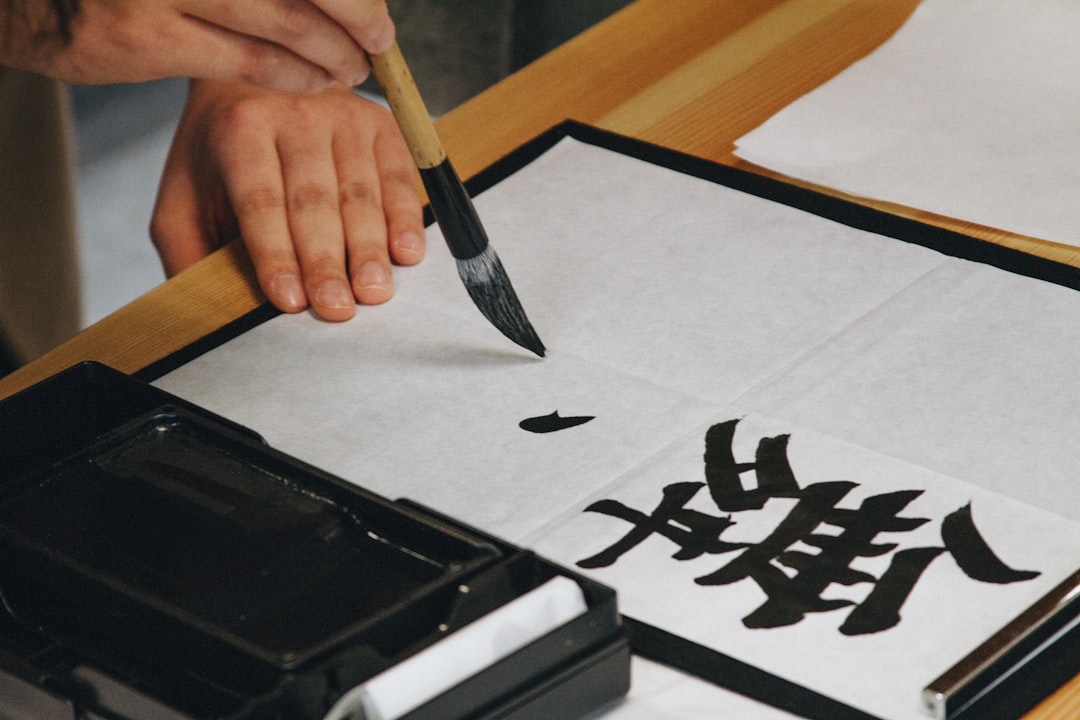
Information checked: August 29, 2026. A Japanese calligraphy workshop is not simply a chance to copy an attractive kanji. A good class teaches how posture, brush angle, ink, rhythm and empty space work together. Beginners do not need to read Japanese, but they should choose a class that explains the meaning of the character and the use of the finished work.
What is shodo?
Shodo (書道), “the way of writing,” is the art of writing characters with brush and ink. JNTO notes that block, semi-cursive and cursive styles create different effects, while changes in ink and negative space contribute to the composition.
A workshop is an introduction rather than mastery. The value is learning to control one deliberate stroke and understanding why a model character is balanced.
What happens in a beginner workshop?
- The instructor explains the tools and demonstrates posture and brush grip.
- You select a character or short word with a meaning you understand.
- You practice basic strokes and stroke order on inexpensive paper.
- The instructor corrects pressure, speed, spacing and ink amount.
- You make a final version on paper, a square shikishi board or sometimes a fan.
- The work may be finished with your name or a small seal.
Some traditional classes let participants grind an ink stick with water on an inkstone; others use prepared liquid ink to allow more writing time. Confirm what the advertised session includes.
How to choose a character
Choose meaning before appearance. Common beginner options include 和 (harmony), 夢 (dream), 旅 (journey) and 心 (heart), but meanings and nuance depend on context. Ask the instructor rather than trusting an online “Japanese name generator.”
Phonetic substitutions that assign kanji to a foreign name can produce unnatural or comic meanings. Writing your name in katakana is linguistically honest and can still be visually rewarding. If you plan to use the work as a tattoo, logo or commercial design, obtain professional language and rights advice separately.
Booking checks
- Language: confirm whether English instruction is available on your date.
- Minimum participants: some classes require two or more people.
- Duration: allow time for explanation, practice, final work and drying.
- Finished item: check its size and whether protective packaging is included.
- Accessibility: ask about stairs, floor seating and adapted tools.
- Cancellation: small classes may have strict policies.
GO TOKYO’s current workshop listings also remind visitors to verify opening hours, closing days, prices and availability with the facility itself.
Clothing and ink safety
Black ink can permanently stain clothing. Wear dark or washable clothes, roll up loose sleeves and use the provided apron. Keep bags away from the table and do not touch the brush to walls, tatami or another participant’s work.
Sumi ink is an art material, not food or face paint. Wash hands after the session and supervise children around inkstones and brushes.
Workshop etiquette
Arrive on time because demonstrations are difficult to repeat for one late participant. Watch before moving the brush, follow the instructor’s method and ask before photographing. Do not assume the teacher wants to appear in a video or that filming the full lesson is permitted.
Tools may be carefully maintained. Place brushes where directed, avoid pressing the tip hard into the inkstone and help keep the shared workspace clean.
Taking the work home
Fresh ink can smear. Let the instructor decide when the piece is dry enough to pack. Keep it flat inside the provided folder and protect it from rain. A rigid document case is useful if the final work must survive a long flight.
If the work includes a personal seal or the instructor’s original design, ask what reproduction is allowed. A souvenir for private display does not automatically grant commercial-use rights.
Frequently asked questions
Do I need Japanese language ability?
No, provided the class offers suitable language support. Stroke demonstrations are visual, but explanation helps you understand the character.
Is calligraphy a Zen practice?
Some teachers connect brushwork with concentration or Buddhist practice, but not every calligraphy class is a Zen activity. Avoid presenting that connection as universal.
Can left-handed visitors participate?
Usually yes. Tell the instructor in advance so they can adjust positioning and demonstrations.
Can children join?
Many workshops welcome children, but age limits and supervision rules vary. Check before booking.
Summary
Choose a workshop with clear language support, understand the character you write, wear clothes that can tolerate ink and respect the instructor’s tools and photography rules. The best souvenir is not a “perfect” character but a work whose strokes and meaning you can explain.