

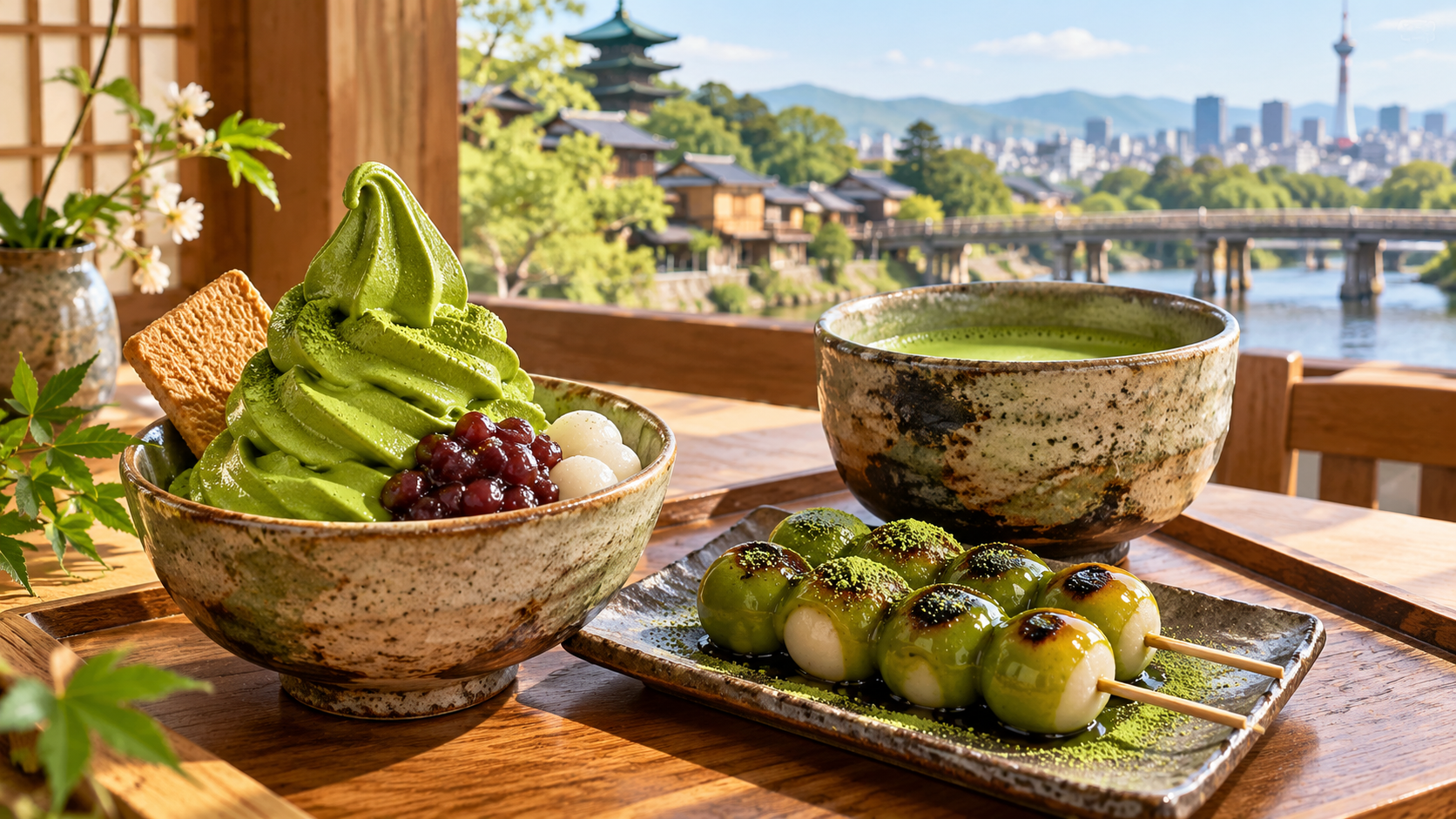
Kyoto and Tokyo both offer matcha desserts, but a bright green color or a long queue does not tell you whether you will enjoy one. This short guide offers a simple way to compare tea flavor, sweetness and texture on your trip. For a fuller list of tea rooms, routes and practical details, see our Tokyo and Kyoto matcha sweets guide.
Know what “matcha” means on a menu
Matcha is powdered tea made from tencha. The Kyoto Prefectural Tea Industry Chamber’s tea guide distinguishes it from sencha and gyokuro. A dessert may contain matcha alongside sugar, dairy, bean paste or other ingredients, so the overall taste can be quite different from drinking plain tea. Do not judge tea quality from color alone.
“Uji tea” is also a regional designation with a specific industry definition, not necessarily a claim that every leaf grew within Uji city limits. The tea industry’s Q&A explains the production area and Kyoto finishing requirements. If origin matters to you, ask the shop which tea it uses rather than assuming that every Kyoto dessert is made with Uji-grown leaves.
Try a three-part tasting comparison
- Start with a plain matcha drink if the shop offers one. Notice aroma, bitterness and the savory, rounded taste often called umami.
- Choose one simple sweet such as matcha dango or a small wagashi. Compare how sweetness changes your perception of the tea.
- Try a richer dessert such as a parfait or soft-serve if you still want more. Milk, cream and toppings can soften bitterness; that is a style choice, not automatically a sign of better or worse matcha.
You need not do all three in one sitting. A small note on aroma, sweetness, texture and value can be more useful than trying to visit the most photographed shop. If you have a dairy, egg, wheat or nut allergy, ask the shop about ingredients and shared equipment before ordering.
Where Kyoto, Uji and Tokyo fit
Uji, south of central Kyoto, is a historic tea town and a worthwhile destination if you want to connect a tasting with tea shops and the riverside setting. The Japan National Tourism Organization’s Uji guide describes its tea culture and visitor experiences. Kyoto city is convenient for a tea-room stop during sightseeing. Tokyo is practical for comparing contemporary cafe styles without adding a separate day trip. None of these choices guarantees a particular menu item, price or wait time; check the shop’s current information.
Before you order
- Read the menu for ingredients and portion size; a “matcha” label alone does not tell you how tea-forward the dessert will be.
- Check current opening hours, last orders and reservation rules directly with the shop.
- If you are sensitive to caffeine, remember that matcha desserts may still contain tea; the amount varies by recipe.
- Buy only what you can finish, and follow the shop’s rules about eating on site or taking food away.
This tasting approach gives you a way to discover your own preference while keeping room for local tea culture, rather than chasing outdated prices or an unverified “best” parfait.