

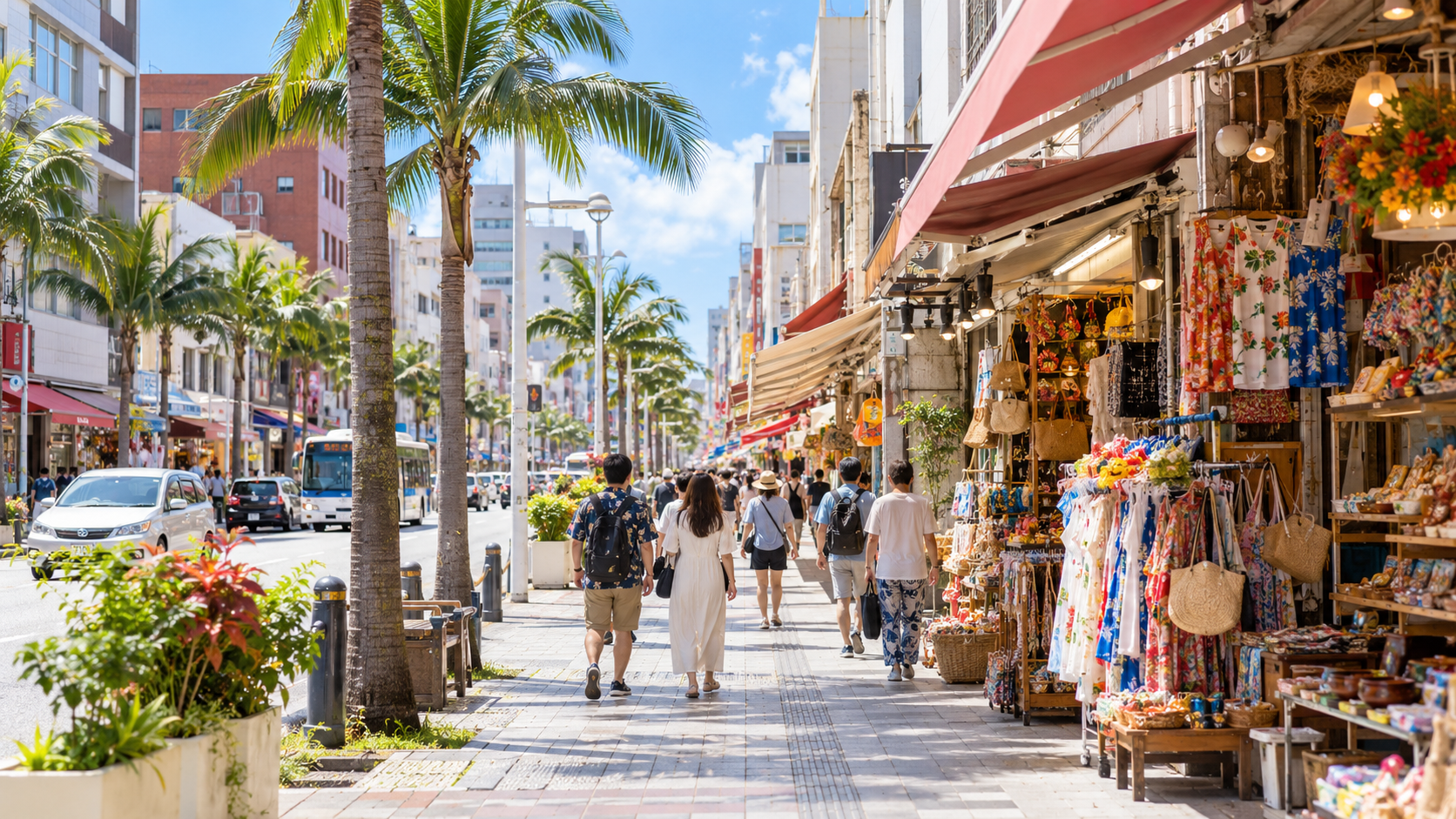
Kokusai Street (Kokusai-dori) is central Naha’s best-known shopping and dining street. The roughly 1.6-kilometre route runs from the Prefectural Office area toward Asato, making it easy to combine souvenir shopping, Okinawan food and a short city walk before or after a flight.
This guide focuses on how to use the street rather than simply listing shops. It explains where to start, which side streets are worth your time, what to eat and buy, and how to avoid hauling luggage through the busiest sections.
Where Kokusai Street is and how to get there
The western end is close to Prefectural Office (Kencho-mae) Station on the Yui Rail monorail. The eastern end is convenient to Makishi Station, with Asato Station a little farther on. For most visitors, the simplest plan is to enter at one station and leave from another instead of retracing the whole street.
- From Naha Airport: take Yui Rail to Kencho-mae for the western end or Makishi for the eastern end.
- With large luggage: leave bags at your hotel or a station locker before exploring; the pavements can become crowded.
- By rental car: use a paid car park nearby rather than expecting convenient street parking.
Choose the right walking plan
| Time available | Suggested route | Best for |
|---|---|---|
| 60–90 minutes | Kencho-mae to Makishi, staying mainly on Kokusai Street | First visit, light shopping |
| 3–4 hours | Kokusai Street plus the market arcades or Tsuboya | Food, ceramics and local atmosphere |
| Evening | Makishi/Asato side, dinner and nearby bar areas | Okinawan dishes and nightlife |
Six useful areas to explore
1. Prefectural Office and Palette Kumoji end
This is the most convenient starting point if you arrive from the airport or Naha Bus Terminal area. It also gives you a straightforward eastbound walk toward Makishi.
2. The central shopping stretch
Expect souvenir shops, pharmacies, cafés and restaurants. Compare prices before buying bulky sweets or liquor, and ask whether a shop participates in tax-free shopping before reaching the register. Our 2026 Japan tax-free shopping guide explains the rules that change on November 1, 2026.
3. Heiwa-dori and the covered arcades
Side arcades branching from Kokusai Street feel more local and provide welcome shelter from strong sun or sudden rain. They lead toward the Makishi market area, where food stalls and small shops reward slower browsing.
4. Shop Naha and the Tenbusu area
Shop Naha is an official tourist information point near the centre of the street. It is a useful stop for current maps, event information and advice about performances or craft experiences.
5. Tsuboya Yachimun Street
Tsuboya is about a five-minute walk from Makishi Station according to Naha’s official visitor guide. Go here for Okinawan pottery (yachimun), workshops and a quieter historic streetscape. Ceramics are fragile, so ask for protective packing if you will fly with them.
6. Makishi and Asato after dark
The eastern end works well for dinner. Kokusai Street Noren-gai occupies a former department-store building and contains multiple food and drink venues, but individual opening hours vary. Check the venue’s current listings rather than planning around a single fixed time.
What to eat
- Okinawa soba: wheat noodles in a light broth, usually topped with pork.
- Goya champuru: bitter melon stir-fried with tofu, egg and often pork.
- Rafute: slow-cooked pork belly with a rich, sweet-savoury flavour.
- Sata andagi: dense Okinawan fried doughnuts that travel well as a snack.
- Awamori: Okinawa’s distilled spirit; check airline and destination-country limits before packing bottles.
What to buy
Popular choices include chinsuko biscuits, beni-imo sweets, shisa ornaments, yachimun pottery, Okinawan textiles and locally made seasonings. Check expiry dates for food, avoid leaving chocolate or delicate sweets in a hot car, and confirm your home country’s rules before buying meat products, plants or fresh produce.
Sunday pedestrian zone
Naha’s official guide states that part of Kokusai Street normally becomes a transit mall on Sundays from noon to 6:00 p.m. Traffic restrictions and street activities may change because of weather, public events or administrative decisions, so check current notices if this is central to your plan.
Heat, rain and accessibility tips
- Carry water and use sun protection; Naha can remain hot and humid well beyond midsummer.
- Covered arcades are useful during showers, but typhoons and severe weather can disrupt transport and force closures.
- The main street is generally level, though crowds, shop displays and side-street surfaces can slow wheelchairs and strollers.
- Use the free Naha City Wi-Fi service where available, but avoid entering sensitive information on an unsecured public network.
Frequently asked questions
Is Kokusai Street worth visiting during a short layover?
It can be, provided you have enough airport buffer. Yui Rail makes access simple, but you should still allow time for the return ride, airline procedures and security.
Is daytime or evening better?
Daytime is better for craft shops, markets and a Tsuboya detour. Evening is better for restaurants and bar areas. A late-afternoon arrival lets you experience both.
Do I need to walk the entire street?
No. Choose a theme—shopping, food, the market or ceramics—and use Kencho-mae or Makishi Station to shorten the route.
Official information and checking date
Information checked on September 30, 2026. For current access, street events and facilities, consult the Naha City Tourism Association’s Kokusai Street guide, its official access guide, the Shop Naha listing, and the Naha City Wi-Fi page.