

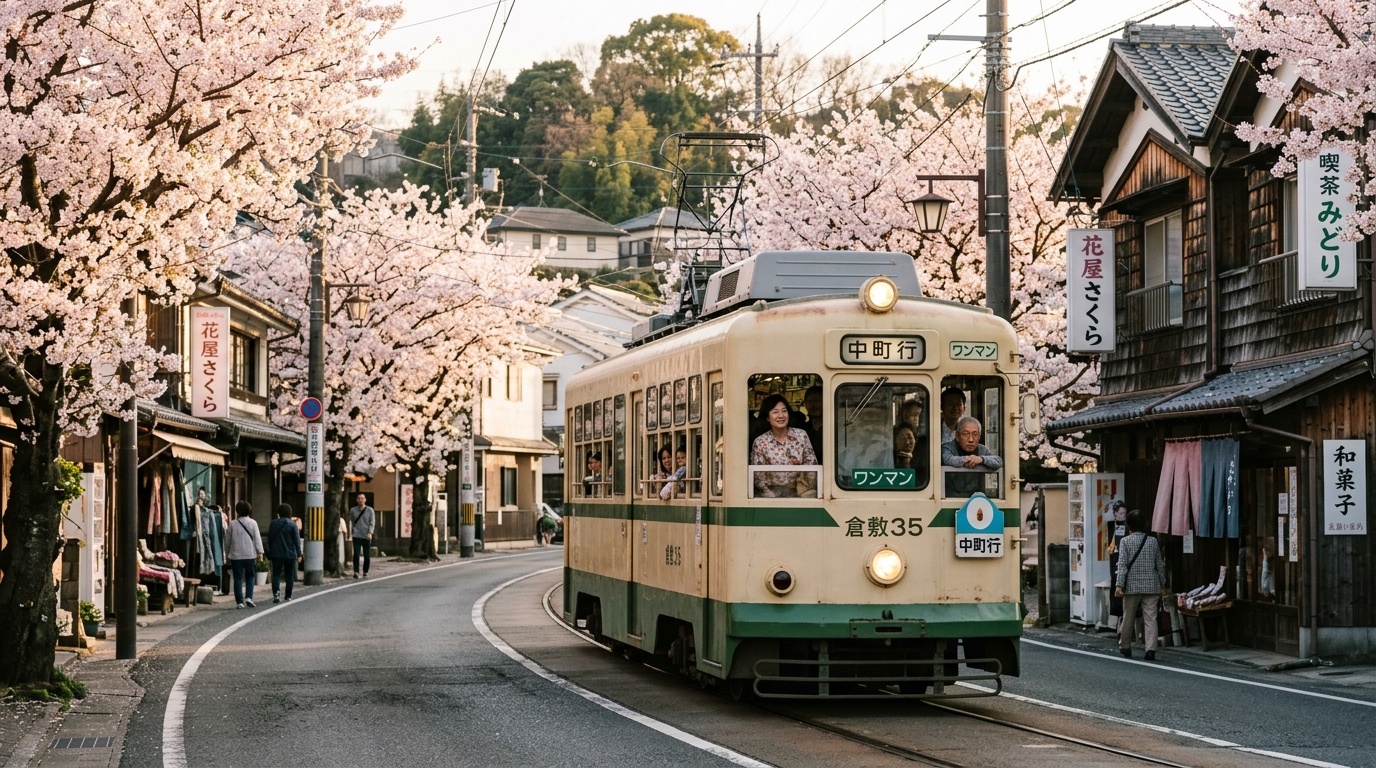
Information checked: August 28, 2026. Japan’s trams are not simply nostalgic vehicles. In cities such as Hiroshima and Toyama they are part of everyday transport, while Tokyo’s Sakura Tram offers a slower route through residential neighborhoods. For visitors, the challenge is that boarding doors, payment timing and fare systems differ by operator.
This guide explains the common patterns, the differences you must check locally, and how to ride without delaying regular passengers.
Three useful tram experiences
Hiroshima Electric Railway
Hiroden connects Hiroshima Station, central districts and the Miyajima area through a combination of street-running and railway sections. It is useful for sightseeing, but it is also a busy local network. Check the route number and destination because several services share tracks before separating.
Toyama city trams
Toyama’s network links the city center, Toyama Station and the port area of Iwase. The official operator instructs passengers to board through the middle or rear door, press the stop button after the announcement, leave from the front and pay when exiting. English announcements and nationwide transport IC cards are available on the system, but always verify the current fare and accepted payment method.
Tokyo Sakura Tram
The Toden Arakawa Line runs between Minowabashi and Waseda through neighborhoods different from central Tokyo’s subway corridors. Here passengers normally board at the front and pay when entering, then exit at the rear. Not every service necessarily continues to the final stop, so check the destination display.
Why there is no single Japan-wide boarding rule
Some trams use front boarding; others use rear or middle boarding. Payment may happen when you enter or when you leave. A flat fare may apply on one system while another requires you to take a numbered ticket or tap an IC card at both ends.
Before boarding, look for arrows and labels near the doors, watch one local passenger and follow the operator’s official instructions. Do not assume that the procedure from Tokyo applies in Hiroshima or Toyama.
A safe boarding checklist
- Confirm the route number, direction and final destination on the front or side display.
- Queue behind the marked boarding position and let exiting passengers leave first.
- Use the designated door; do not force a closing door.
- Tap your IC card where required or take a numbered ticket if the system uses one.
- Move away from the entrance so other passengers can board.
- Press the stop button after your stop is announced if required.
- Prepare payment before reaching the fare box.
IC cards, cash and change
Nationwide interoperable IC cards are accepted on many major tram systems, but not every local line or special ticket uses the same rules. Some systems require one tap, while distance-based systems may require tapping both when boarding and leaving.
When paying cash, fare boxes may not give change. Use the change machine before your stop and carry coins or a ¥1,000 note; larger banknotes are often not accepted. Never try to exchange money while blocking the exit at a busy stop.
When a one-day pass makes sense
A tram pass can be worthwhile when you plan several stops, but compare its valid area with your route. A city pass may include buses or subways, while a tram-only pass may exclude a railway section beyond the city center. Current prices and conditions change, so use the operator’s official ticket page.
Do not buy a pass solely because it is marketed to tourists. Two ordinary rides may cost less, and an IC card may be more convenient for a simple return trip.
Onboard etiquette
- Keep phone conversations off the tram and use silent mode.
- Offer priority seating to passengers who need it.
- Keep backpacks and luggage clear of doors and aisles.
- Do not lean out, obstruct the driver or photograph other passengers without permission.
- Hold a rail: street-running vehicles can brake suddenly because of road traffic.
Wheelchairs, strollers and luggage
Modern low-floor cars improve access, but older vehicles and some stops may have steps or narrow platforms. Accessible boarding can also depend on which vehicle arrives. Contact the operator in advance when step-free travel is essential.
Tokyo Sakura Tram permits strollers, though passengers may be asked to fold them when crowded, when space is already occupied or when a wheelchair user boards. Similar details vary elsewhere. Avoid rush hour with bulky luggage and never leave bags where they could roll during braking.
Photography and street safety
Photograph trams only from legal pedestrian areas. Do not step into tracks or the road, stand beyond platform markings, or block a narrow stop. A tram can approach quietly and cannot turn to avoid you.
Inside, frame the vehicle or scenery without making identifiable passengers the subject. If a small car is crowded, put the camera away and prioritize safe movement.
Building a half-day route
Choose two or three stops rather than staying onboard for the entire day. In Toyama, combine the loop with the castle or glass museum and use the northbound line for Iwase. In Hiroshima, connect central memorial sites with a neighborhood or continue toward Miyajima after checking the correct service. In Tokyo, pair the Sakura Tram with local shopping streets, gardens or seasonal flowers.
Allow extra time for missed cars, short-turn services and unfamiliar stops. Tram frequency can change by time of day, and road traffic may affect street-running sections.
Useful Japanese
- この電車は〇〇へ行きますか? — Does this tram go to ___?
- ICカードは使えますか? — Can I use an IC card?
- 運賃は先払いですか? — Do I pay when boarding?
- 次で降ります。 — I am getting off at the next stop.
Frequently asked questions
Are all Japanese trams cheap flat-fare services?
No. Fare level and structure vary. Check the operator rather than relying on a general price quoted in an old article.
Can I use Suica or another nationwide IC card?
Often, but not universally. Confirm acceptance and whether you must tap once or twice.
Do I always press the stop button?
Many systems use stop buttons, but procedures vary. Follow onboard announcements and signs.
Can I bring a suitcase?
Usually, but small vehicles have limited space. Avoid peak periods and keep luggage out of doors and aisles.
Summary
Japan’s trams are rewarding because they connect sightseeing with ordinary city life. Check the destination, boarding door, payment timing and IC-card rule for the specific operator. Then ride considerately: move inside, prepare your fare, keep the aisle clear and photograph only from safe places.