
Packing for autumn in Japan is not as simple as adding one sweater. September can still feel like summer in Tokyo, Osaka and Kyushu, while Hokkaido and high mountain areas may already require a warm outer layer. By November, mornings and evenings become chilly across much of the country. This practical guide helps you pack for the route you will actually travel. Information was checked against official Japan National Tourism Organization guidance on September 1, 2026.
The short answer: build a three-layer system
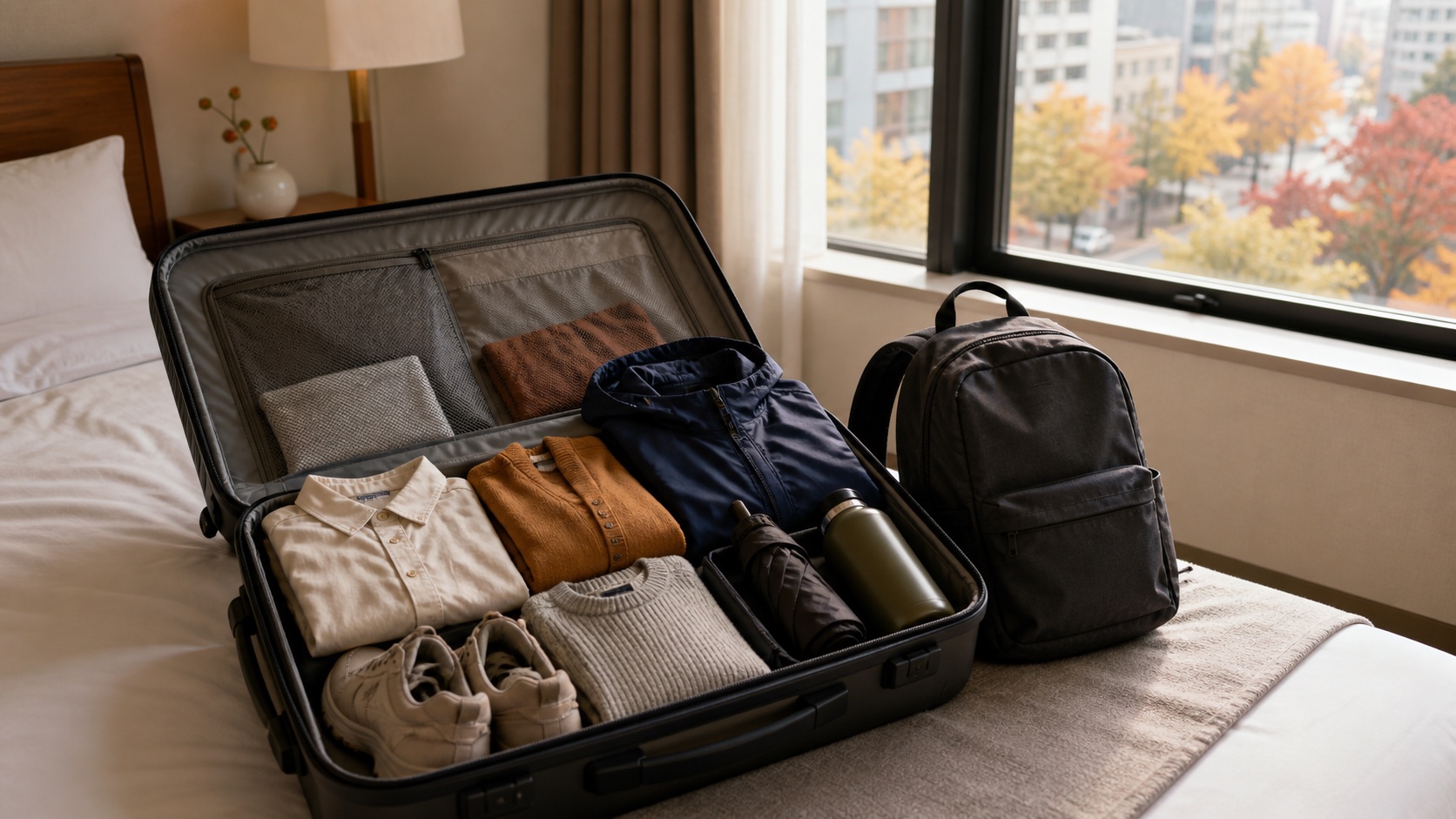
- Base: breathable short- or long-sleeve tops that dry overnight.
- Mid-layer: a cardigan, fleece or light sweater that fits in your day bag.
- Outer layer: a compact wind- and water-resistant shell.
This combination handles warm trains, cool evenings and sudden rain better than one bulky coat. Check the forecast for every destination—not only your arrival city—three days before departure and again each morning.
What to wear by month
September: summer is often not finished
In much of Honshu, Shikoku and Kyushu, September may remain hot and humid. Pack breathable shirts, quick-drying trousers or skirts, sun protection and a refillable bottle. Add one light layer for air-conditioned trains and evenings. Hokkaido and alpine destinations cool sooner. JNTO notes that typhoons are most frequent from late August through much of September, so include a compact waterproof shell and keep the itinerary flexible.
October: the widest regional contrast
October is often comfortable in Tokyo, Kyoto and Osaka, but Hokkaido, Tohoku and higher elevations can be distinctly cold. A shirt plus cardigan works for many city days; add fleece or a light insulated jacket for northern and mountain routes. Kyushu can still be warm. Do not use a Kyoto packing list for Daisetsuzan or the Tateyama area.
November: prioritize warm mornings and evenings
For most cities, pack long sleeves, a sweater and a light-to-medium jacket. Northern Hokkaido, Tohoku and mountain districts may need winter-weight outerwear, gloves and warmer footwear. JNTO advises that snow can begin in November in northern Hokkaido, Tohoku and mountainous areas. Indoor heating is common, so removable layers remain more useful than a single very heavy outfit.
Regional packing matrix
| Route | September | October | November |
|---|---|---|---|
| Tokyo, Kyoto, Osaka | Breathable summer clothes + rain shell | Light layers + thin jacket | Sweater + medium jacket |
| Hokkaido / northern Tohoku | Long sleeves + light jacket | Warm layers + insulated jacket | Winter-ready outerwear |
| Kyushu / Shikoku | Summer-weight clothing | Light layers | Long sleeves + light jacket |
| Okinawa | Hot-weather clothing + rain protection | Breathable clothing + light layer | Light layers for evenings |
| Mountain and hiking areas | Check elevation-specific weather; carry waterproof layers and avoid outdoor plans during severe weather. | ||
The table is a starting point, not a forecast. Japan stretches from subarctic Hokkaido to subtropical Okinawa, and elevation can matter as much as latitude.
Essential autumn packing checklist
- Three to five interchangeable tops, including at least one long-sleeve option
- Cardigan, fleece or packable sweater
- Water-resistant outer shell
- Comfortable walking shoes with grip; waterproof footwear for wet or mountain routes
- Compact umbrella, plus a small bag for storing it when wet
- Sun hat, sunglasses and sunscreen—UV exposure does not disappear in autumn
- Small daypack with room for a removed layer
- Reusable bottle and any personal medication in original packaging
- Portable battery and charging cable for weather and transport updates
Rain, typhoons and mountain safety
A small umbrella is useful for ordinary city rain, but it is not safe in strong wind. During typhoon warnings, follow official weather and transport information, stay indoors when instructed, and postpone hikes or coastal visits. Japan’s national park guidance recommends multiple layers and waterproof clothing even at lower elevations because conditions change quickly. Some high-altitude attractions and trails close from late autumn; confirm operating dates directly with the facility or park.
How to pack lighter
Choose a compact color-coordinated wardrobe and plan one laundry stop every four to six days. Many hotels have coin-operated machines, but availability is not guaranteed, so check before booking. Wear your bulkiest shoes and jacket in transit. Leave room for purchases, or use Japan’s luggage delivery services rather than carrying a large case through stations.
For station lockers, forwarding counters and delivery timing, see our Japan luggage storage and delivery guide. If travelling around the September holidays, also check our Japan public holidays and Silver Week guide.
Common packing mistakes
- Packing only for Tokyo: a multi-region itinerary may cross several climate zones.
- Bringing only one thick coat: crowded trains and heated interiors make adjustable layers easier.
- Assuming September is cool: late-summer heat may continue in central and southern Japan.
- Using smooth-soled shoes: wet leaves, temple paths and mountain surfaces can be slippery.
- Relying on a seasonal average: averages do not replace a current local forecast.
FAQ
Do I need a winter coat in Japan in November?
Often not for daytime sightseeing in Tokyo, Kyoto or Osaka, but it may be appropriate in Hokkaido, northern Tohoku and high-elevation areas. Check the destination forecast and your cold tolerance.
Are shorts suitable in September?
They can be comfortable in hot areas, but carry a light layer and choose respectful coverage for certain religious sites, formal restaurants or cooler evenings.
Should I bring an umbrella or buy one in Japan?
Compact umbrellas are easy to buy, but bringing a lightweight model avoids an unnecessary purchase. A waterproof jacket is more dependable in wind and for outdoor routes.
Official sources
- JNTO: Autumn in Japan
- JNTO: Weather and geography
- JNTO: Japan in September, October and November
- National Parks of Japan: seasons and climate
Summary
For autumn in Japan, pack breathable basics, one warm mid-layer and a compact waterproof shell. Adjust for latitude and elevation: September may remain hot in central and southern cities, while November can bring early winter conditions in the north and mountains. Check current forecasts and closures rather than treating any packing list as universal.