



Information checked: August 26, 2026
Japan’s public lottery, or takarakuji, ranges from seasonal Jumbo paper tickets to number-selection games and instant Scratch cards. Unlike horse or boat racing, there is no sporting result to predict: prizes depend on randomly drawn numbers or printed symbols. Buying one modest paper ticket can be a glimpse of everyday Japanese “good-luck” culture—but it is not an investment.
Issued by local governments under national law
Japanese lotteries are issued by prefectures and designated cities with national authorization under the Lottery Ticket Act. Financial institutions and sales operators handle distribution. Proceeds fund public works, community programs and regional development. This is not a chain of shops directly operated by the national government.
The main types of takarakuji
- Jumbo and standard printed lotteries: buy a pre-numbered paper ticket and compare it with the draw.
- Loto: choose numbers yourself or use Quick Pick.
- Numbers: choose three or four digits and a play type.
- Scratch: reveal symbols and learn the result immediately.
- Bingo 5 and Quick One: use their own game rules and sales channels.
Price, sales period and prize structure change by product. For example, the 2026 Summer Jumbo was ¥300 per ticket, but that does not establish a universal price. Always check the current ticket or official product page. A famous booth does not improve the mathematical probability of one ticket; high-volume booths simply sell more eventual winners as well as more losing tickets.
Paper sales and online rules are different
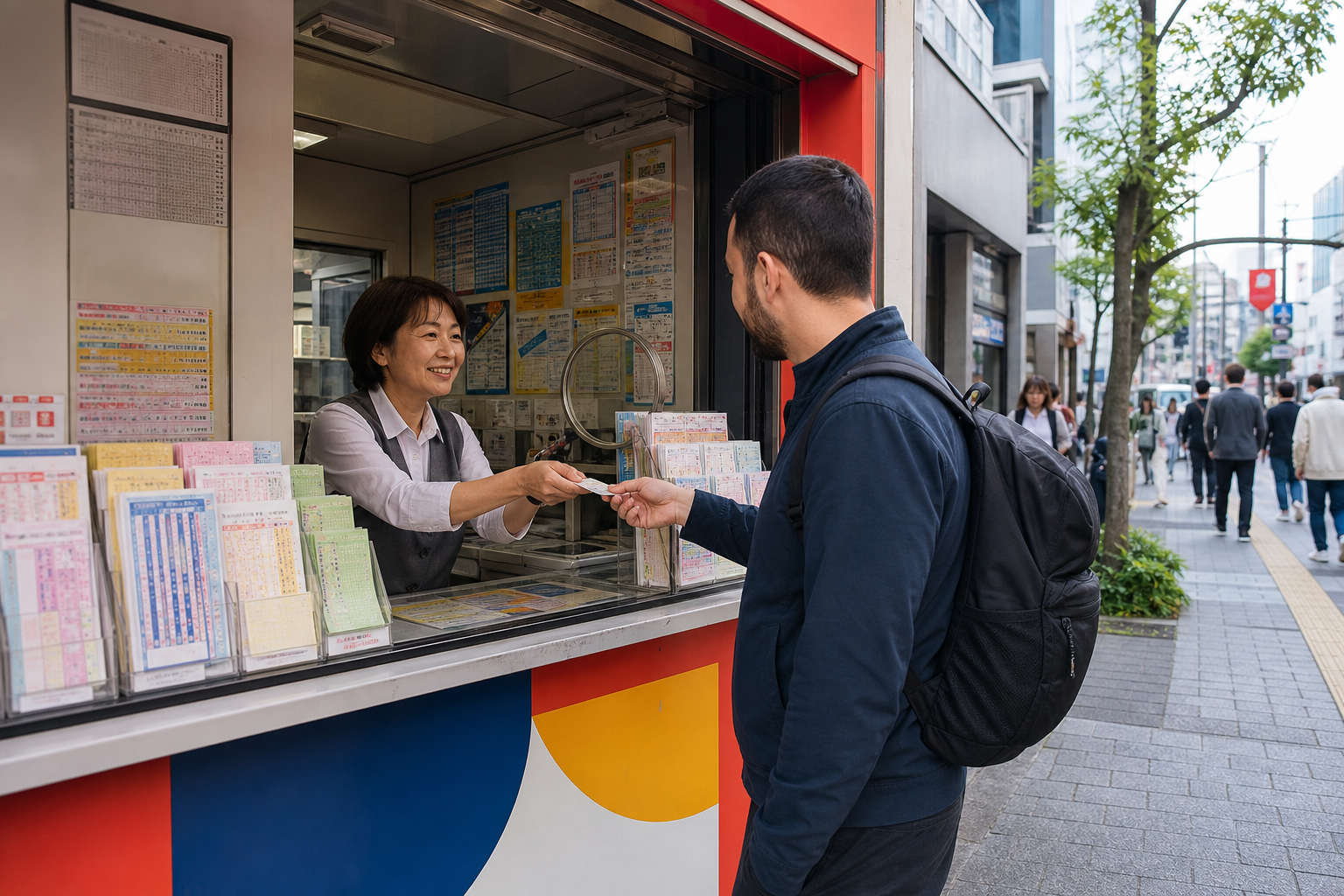
For a short-term visitor, the clearest option is an official physical sales booth in Japan. Product selection and payment methods vary, so confirm the game name, price per ticket or entry, and draw date before paying.
The official online service has stricter rules: members must be at least 20, reside in Japan, register a payment method and a prize-receiving bank account in their own name, and purchase from within Japan. Foreign residents outside Japan cannot join, and overseas online purchases are prohibited. Avoid unofficial “proxy purchase” or international-mail services.
Nishi-Ginza Chance Center: practical information
| Location | 1F Nishi-Ginza Department Store, near 4-chome Ginza, Chuo City, Tokyo |
|---|---|
| Access | Near Tokyo Metro Ginza Station Exit C4 and Sukiyabashi Crossing |
| Regular hours | 10:00–19:00. Generally 9:00–20:00 during Jumbo sales and 8:30–20:00 on the first day; crowd conditions can change admission to the queue |
| Closed | Check the current sales schedule and official notices |
| Admission | Free; ticket prices vary |
| Recommended approach | If buying a small souvenir, use a shorter window. Waiting a long time for the famous Window No. 1 does not change the odds |
Five steps for buying a paper ticket
- Use the official booth finder and check that it handles your chosen product.
- State the product and quantity. For number games, Quick Pick lets the computer choose.
- Check the draw date, ticket number and claim deadline.
- Keep the original paper dry and secure; a photograph is not a guaranteed replacement.
- Check the result officially and make the claim in person before leaving Japan whenever practical.
Claim deadline, location and tax
- Tickets bought at booths or convenience stores are generally claimable for one year from the prize-payment start date. A Scratch ticket’s printed deadline takes priority.
- Prizes of ¥50,000 or less per winning ticket/entry can usually be claimed at lottery booths or Mizuho Bank, although some booths handle only ¥10,000 or less.
- If any prize exceeds ¥50,000, the official guidance directs claimants to a Mizuho Bank branch, with limited exceptions. A seal is listed for prizes over ¥1 million, and identity documentation for prizes over ¥2 million; claims over ¥1 million may take about a week.
- Japanese lottery prizes are exempt from Japanese income tax, but transferring money to another person may create gift-tax issues.
- Non-residents should ask Mizuho Bank directly about passport identification, seals, claim procedures and remittance before buying or before departure. This guide cannot guarantee that a prize can be collected from abroad.
- A lost paper ticket generally cannot be reissued.
Frequently asked questions
Does buying in Nishi-Ginza improve my odds?
No evidence shows a higher per-ticket probability. The booth appears frequently in winner lists because it sells an exceptionally large volume.
Can a ticket photograph be used to claim?
Do not rely on it. The original paper ticket is important for a paper-ticket claim.
Can a tourist buy from the official website?
Not as a non-resident. Official online membership is restricted to people aged 20 or older who reside in Japan, and purchases cannot be made from overseas.
Official sources: Products and sales channels / Prize claims / Nishi-Ginza Chance Center