



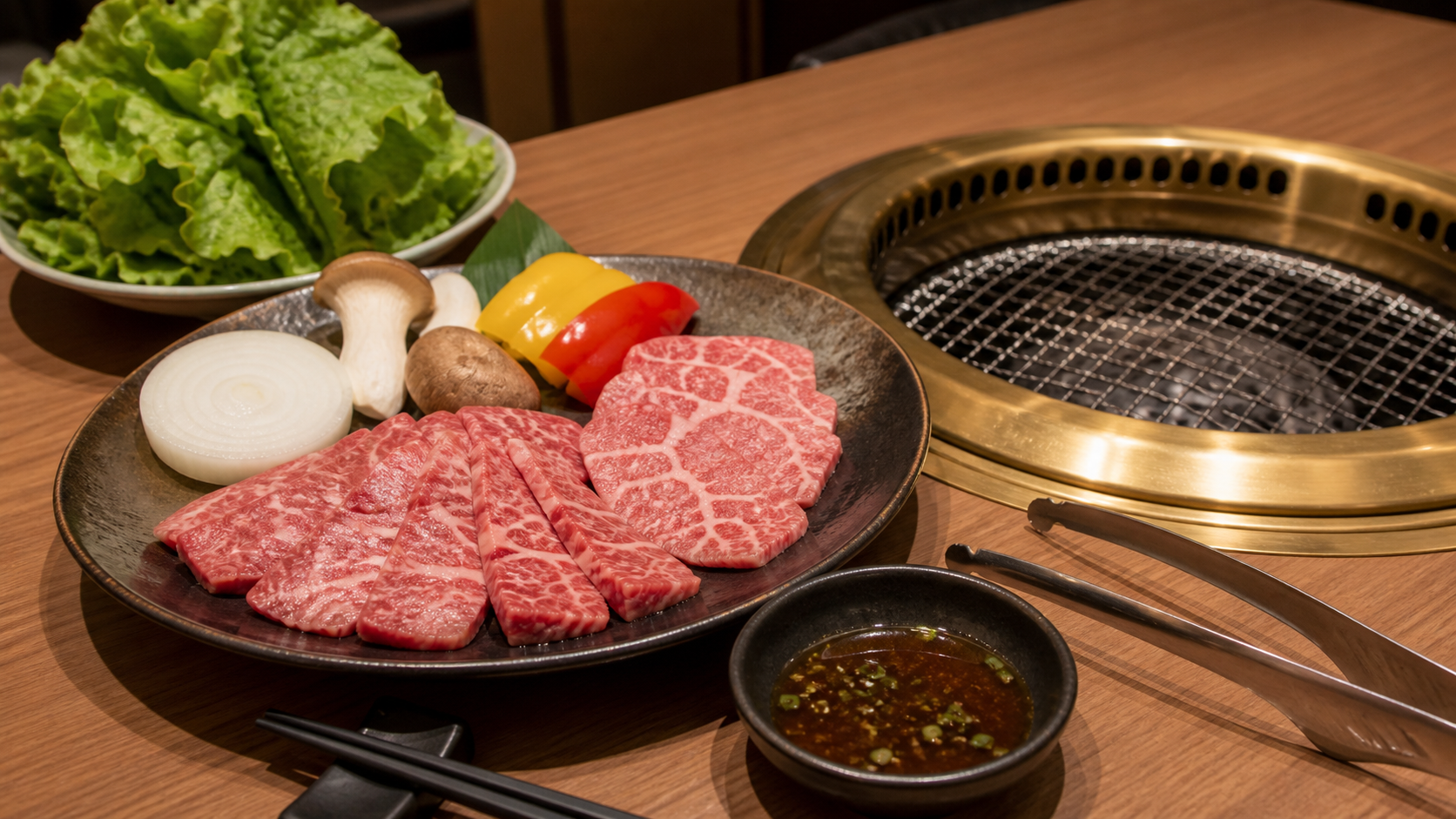
Information checked: August 26, 2026. Solo yakiniku is not a separate cuisine: it is Japanese tabletop barbecue arranged so one diner can choose small portions and control a personal grill. Tokyo has counters, divided booths and ordinary restaurants that accept solo guests, but not every shop offers single portions or a private grill. Confirm the actual venue rather than relying on the phrase “hitori yakiniku.”
Check seat type, portions and access before joining the queue
Look for current official information about walk-ins, reservations, counter or booth seating, individual grills, time limits, last order, payment and smoking. A restaurant that welcomes solo diners may still sell only full-size plates. At peak dinner time, a table-focused shop may prioritize groups.
Save the exact address, nearest staffed station and exit, floor, lift access and return route. Ask about entrance steps, counter height, aisle width and toilet access when needed. Large suitcases do not belong beside a hot grill or in an evacuation route; use a station locker or hotel storage unless the shop confirms a safe space.
Set a meal budget after checking every charge
Do not use one nationwide “average price.” Lunch sets, à-la-carte plates, all-you-can-eat plans and branded wagyu courses have different structures. Before ordering, check whether prices include tax, whether rice, soup and drinks are included, and whether there is a table charge, compulsory drink, service charge or time limit.
A fixed personal budget works better than chasing a grade label. An A5 carcass grade is not a promise that every diner will prefer the richest marbling, and “wagyu” is not synonymous with all beef raised in Japan. Order enough to compare, then add only what you enjoy.
A small mixed first order teaches more than one luxury plate
| Menu term | Typical character |
|---|---|
| Karubi | Rich rib or short-plate style cuts; exact cut varies |
| Rosu | Often leaner, but the restaurant defines the cut |
| Tan | Beef tongue, frequently salt-seasoned |
| Harami | Diaphragm-area meat with a substantial texture |
| Horumon | A broad category of offal with varied cooking times |
For one diner, choose a small assortment or two cuts, one vegetable, and rice or soup. Ask the grams or number of pieces, and whether a minimum of two servings applies. Grill lightly seasoned items before heavily sauced meat; order another round after learning your appetite and preferred texture.
Separate raw tools and cook meat thoroughly
- Use the supplied raw-meat tongs to place meat on the grill; never use eating chopsticks on raw meat.
- Remove cooked food with clean utensils or the tool designated by staff.
- Cook meat until its color has changed throughout, following staff instructions. Chicken, pork and offal require particular care.
- Place only a few pieces at once so you can track them and reduce flare-ups.
- Never touch or replace a hot mesh yourself, and never pour water on flames. Call staff.
The Ministry of Health, Labour and Welfare specifically advises travelers to cook yakiniku thoroughly and not reuse tools that touched raw meat for ready-to-eat food.
Ventilation reduces smoke; it does not make clothing odor-proof
Table extraction systems help, but fat and sauce can still produce smoke and splatter. Wear washable layers, secure long hair and loose sleeves, and use the coat cover or storage provided. Do not hang clothing or bags over ventilation ducts, controls or the aisle.
If flames rise, move hands away and call staff. Overloading the mesh and placing very fatty pieces together can worsen flare-ups. Let staff replace a charred mesh; burnt sauce adds bitterness and smoke.
Restaurant allergy control must be confirmed directly
Marinades and dipping sauces may contain wheat, soy, sesame, apple, alcohol-derived seasoning or seafood ingredients. Kimchi, soup and side dishes may also contain fish products. A shared kitchen, grill and tongs can cause cross-contact, and packaged-food labeling rules do not prove that a restaurant can provide an allergen-free meal.
Explain the ingredient and severity before ordering and ask what the kitchen can safely handle. A meat-only-looking plate is not automatically halal; sourcing, seasonings, utensils and alcohol matter. Vegetarian diners must also confirm broth, sauce and shared grills. For a severe allergy, contact the venue in advance and carry prescribed emergency medication.
One seat still shares a room with other diners
Learn the burner controls from staff instead of experimenting. Keep phone, paper menus, sleeves and napkins away from heat. Do not photograph neighboring diners, staff or the kitchen without permission, and avoid flash. Calls and videos should not disturb the counter.
Follow the stated table time, order through the supplied tablet or call button, and ask before moving seats. At payment, check tax, course conditions and discounts; tipping is not customary. If drinking alcohol, Japan’s minimum age is 20 and driving or cycling afterward is not an option.
Useful Japanese and first-time FAQ
| Japanese | Meaning |
|---|---|
| 1人です (Hitori desu) | One person. |
| 一人前は何グラムですか? | How many grams is one serving? |
| これはよく焼く必要がありますか? | Does this need to be cooked thoroughly? |
| 網を交換してください | Please replace the grill mesh. |
Is a reservation necessary?
It depends on the shop and time. Confirm weekend, course and counter rules; a one-person seat does not guarantee immediate entry.
Can staff cook everything for me?
Some shops assist, others expect self-grilling. Ask before ordering if you cannot safely operate the grill.
Can I eat quickly before a train?
Allow time for seating, cooking and payment. Never rush cooking or eat meat that is inadequately heated.
Official references: JNTO yakiniku guide / MHLW food-safety guidance for travelers / Consumer Affairs Agency allergy sheets