



Information checked: August 26, 2026
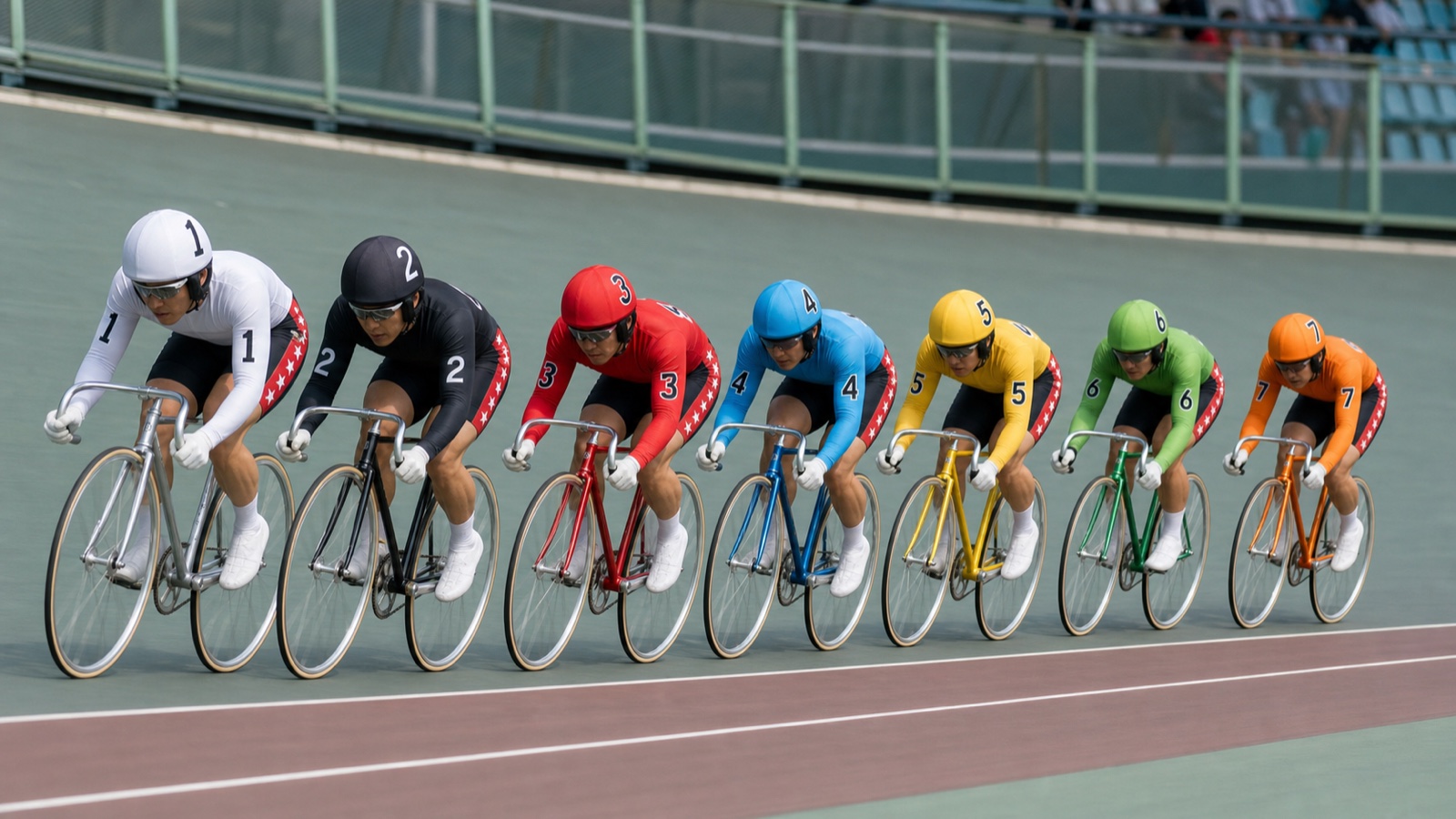
Keirin was born in Japan after the Second World War and is now both an Olympic cycling discipline and a distinctly Japanese public racing culture. At a domestic velodrome, professional riders form temporary “lines,” shelter from the wind and fight for position before the final sprint. Understanding that tactical cooperation—and the moment it becomes an individual contest—is the key to enjoying a race.
A Japanese public sport, not a casino
Keirin is conducted by local governments under the Bicycle Racing Act and supervised by the Ministry of Economy, Trade and Industry. The JKA Foundation handles rider registration and safeguards sporting integrity. Part of the proceeds supports local finance, mechanical industry, social welfare and other public-interest programs.
How “line racing” works
Riders often cooperate according to their registered region, training relationship and racing style. A self-powered front rider accepts the wind and may attack early; the second rider protects position and tries to overtake near the finish. In Japanese race data, common winning moves include nige (front-running), makuri (sweeping past from behind), sashi (late pass) and mark (following).
Check the free race card before the start. First identify the predicted lines, then watch how they rearrange behind the pacemaker. The tension often rises around one and a half laps remaining; riders ultimately compete as individuals at the finish.
Bet types and buying with cash
Standard tickets start at ¥100. A beginner can understand 2-sha fuku (select the first two riders in either order) or Wide (both selected riders must finish in the top three) more easily than order-sensitive 2-sha tan or 3-rider combinations.
- Confirm the host velodrome and race number.
- Mark the bet type, rider numbers and amount on the card.
- Insert the card and cash into the machine.
- Check the printed ticket immediately; a completed purchase cannot normally be changed.
Online betting generally requires registration and a compatible Japanese payment environment, so an official on-site cash machine is usually simpler for a short-term visitor. Odds change until sales close. A fixed ¥100–¥500 trial budget is enough to learn the system.
Tokyo Oval Keio-kaku: practical information
| Address | 4-31-1 Tamagawa, Chofu, Tokyo 182-0025 |
|---|---|
| Access | Immediately beside Keio-tamagawa Station on the Keio Sagamihara Line. On live race days, a free bus runs from JR Yanokuchi Station and takes about 10 minutes |
| Admission | General admission is free. Main-stand reserved seating is ¥500; Royal seats are ¥3,000 when available |
| Typical opening | About 10:00 for day/combined meetings and 14:00 for night meetings. Always check the individual event |
| Closed | No fixed weekly closing day; entry depends on the official schedule. Midnight keirin is held without spectators |
| Recommended | Free beginner guidance area, track-level general seating and a live night meeting |
The temporary gate at Keio-tamagawa Station has separate operating hours—such as 9:30–16:30 for a day meeting—and is not itself the velodrome opening time.
A 90-minute first-visit plan
- Confirm that the calendar says a live home meeting, not merely off-track sales.
- Collect a race card and use the free beginner area to identify colors, numbers and lines.
- Watch one race without betting, focusing on the final two laps.
- If you choose, try ¥100 on a 2-sha fuku or Wide ticket in the next race.
- Wait for the official result; take a winning paper ticket to the appropriate payout machine.
Age, payout and responsible participation
- Anyone under 20 is prohibited from buying or receiving a keirin ticket. This differs from the venue’s entry rule.
- Keep paper tickets safe and confirm the payout deadline and compatible facility. The official beginner material states a 60-day validity period.
- Winnings may be taxable in Japan depending on amount and purchasing pattern.
- Set an entertainment budget before arriving and never increase it to recover a loss.
- Follow signs for photography, restricted areas and smoking; avoid filming other visitors at close range without consent.
Frequently asked questions
Can I enjoy keirin without betting?
Yes. Keio-kaku’s general admission is free, and the bank angle, rider introductions, tactical formations and food stalls make a worthwhile cultural visit.
Can I watch Midnight Keirin at the venue?
No. Midnight Keirin is held without spectators and tickets are sold online. Choose a live daytime or night meeting for an in-person visit.
Is track cycling keirin the same as Japanese professional keirin?
They share Japanese origins, but Olympic track keirin uses international sporting rules. Domestic professional keirin has its own race format, rider system and legal ticket sales.
Official sources: KEIRIN.JP beginner guide / Keio-kaku access / Admission and FAQ