


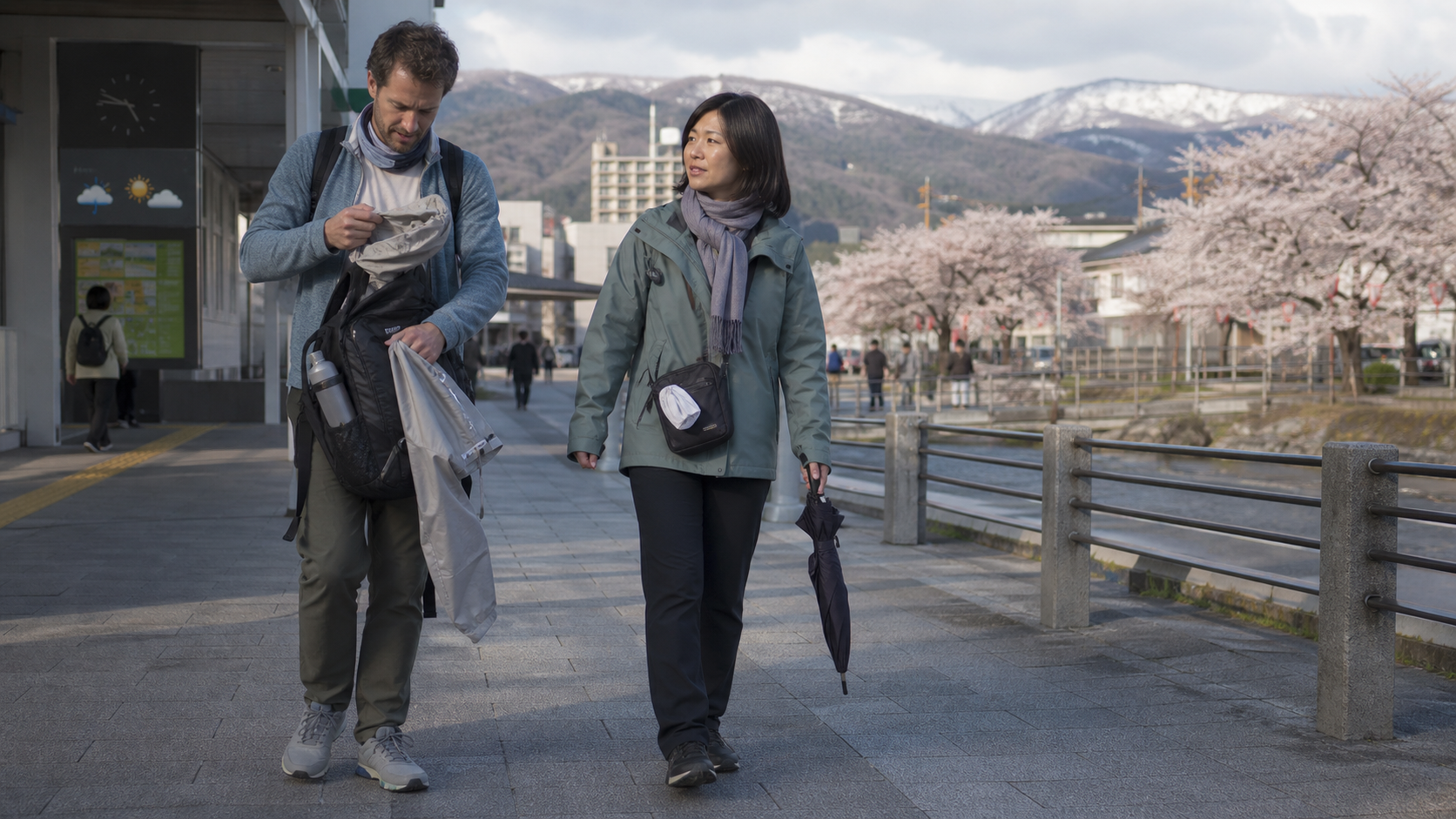
“Spring in Japan” is not one temperature. Hokkaido may remain wintry while western and central cities warm; mountains can hold snow after cherry trees bloom at lower elevations. The useful answer is not one coat but an adjustable system checked against the exact city, elevation and hour.
1. Why one spring outfit fails
Japan stretches from subarctic Hokkaido to subtropical Okinawa, and roughly 70% of the land is mountainous. A Tokyo forecast cannot dress you for Sapporo, an alpine ropeway or a coastal ferry. Morning shade, sunny midday, evening wind and heated trains can feel like different seasons on one day. Check both high and low temperatures, wind and precipitation—not only the weather icon.
2. The three-layer system
| Layer | Purpose | Useful examples |
|---|---|---|
| Base | Moves moisture and stays comfortable indoors | Breathable long- or short-sleeve top; avoid cotton-only for strenuous hiking |
| Mid | Adjustable warmth | Cardigan, light fleece, thin knit or compact insulated vest |
| Shell | Blocks wind and light rain | Packable hooded jacket with room over the mid-layer |
Add or remove one piece before you sweat or shiver. A scarf and warm socks give fine control without carrying a second heavy coat.
3. Early, middle and late spring are planning labels
Early spring: retain a warmer mid-layer and possibly a light insulated jacket, especially at night. Cherry-blossom period in central cities: a knit or fleece plus shell usually gives more flexibility than one bulky coat. Late spring: lighter base layers work in cities, but keep a thin shell for rain and air-conditioned transport. Dates shift yearly, so month labels never replace a forecast.
4. Region and elevation matter more than a national average
- Hokkaido and northern Tohoku: late snow, cold nights and wet slush remain possible.
- Tokyo, Kyoto, Osaka and much of central/western Honshu: large day-to-night swings; shade and wind can feel cool.
- Sea of Japan coast and mountains: changeable rain, wind and lingering snow; footwear needs more grip.
- Kyushu and Okinawa: generally milder, but rain, humidity and strong sun still require a shell and sun protection.
A mountain at 1,500 metres is not dressed by the city forecast below it. Check the attraction or trail operator for snow, closures and required equipment.
5. Dress for a real travel day
06:30 temple or market: base + mid + shell, scarf if useful. 12:00 city walk: shell folded in the daypack; do not carry it loose. 15:00 shaded garden: add the mid-layer before cooling. 20:00 river or station return: put the wind shell back on. Heated museums and trains reward layers that are easy to remove without taking up a second seat.
6. Rain, wind, pollen and footwear
Use a hooded shell or compact umbrella for ordinary rain; in strong wind, a rain jacket is easier to control. Choose broken-in walking shoes with grip, not new fashion shoes for a 20,000-step day. Waterproof shoes still need time to dry; pack spare socks.
Spring pollen affects many people. A mask, glasses and medication already approved for you may help, but this guide cannot diagnose or recommend treatment. Check official health advice or a pharmacist. Sun protection also matters on cool clear days.
7. Compact packing list
- Two or three breathable base tops.
- One cardigan/fleece and optional light vest for colder routes.
- One packable wind-and-rain shell.
- Comfortable walking shoes, spare socks and blister care.
- Compact umbrella, scarf, hat, sunscreen and reusable water bottle.
- Small daypack or tote that can hold removed layers.
Use hotel laundry or laundromats rather than packing a separate outfit for every day. For snow country or hiking, add activity-specific equipment instead of stretching a city wardrobe beyond its purpose.
8. Forecast workflow and FAQ
- Three to seven days out, compare all destinations and elevations.
- The night before, check JMA high/low, three-hourly temperature, rain and wind.
- On the morning, dress for the coldest exposed segment and make layers removable.
- Carry the shell even if midday looks mild; revise outdoor plans when warnings or closures appear.
Should I pack a down coat? It depends on region, altitude and date; early Hokkaido or mountains differ from late-spring Osaka. Are sneakers enough? For dry cities, often; not automatically for snow, mud or trails. Can I buy layers in Japan? Yes, but sizing, late-night access and rural stock vary—bring one workable system from arrival.
Official references: JNTO spring guide, JNTO weather and geography, JMA three-hourly forecast, and Safety tips. Recheck the exact destination before travel.