


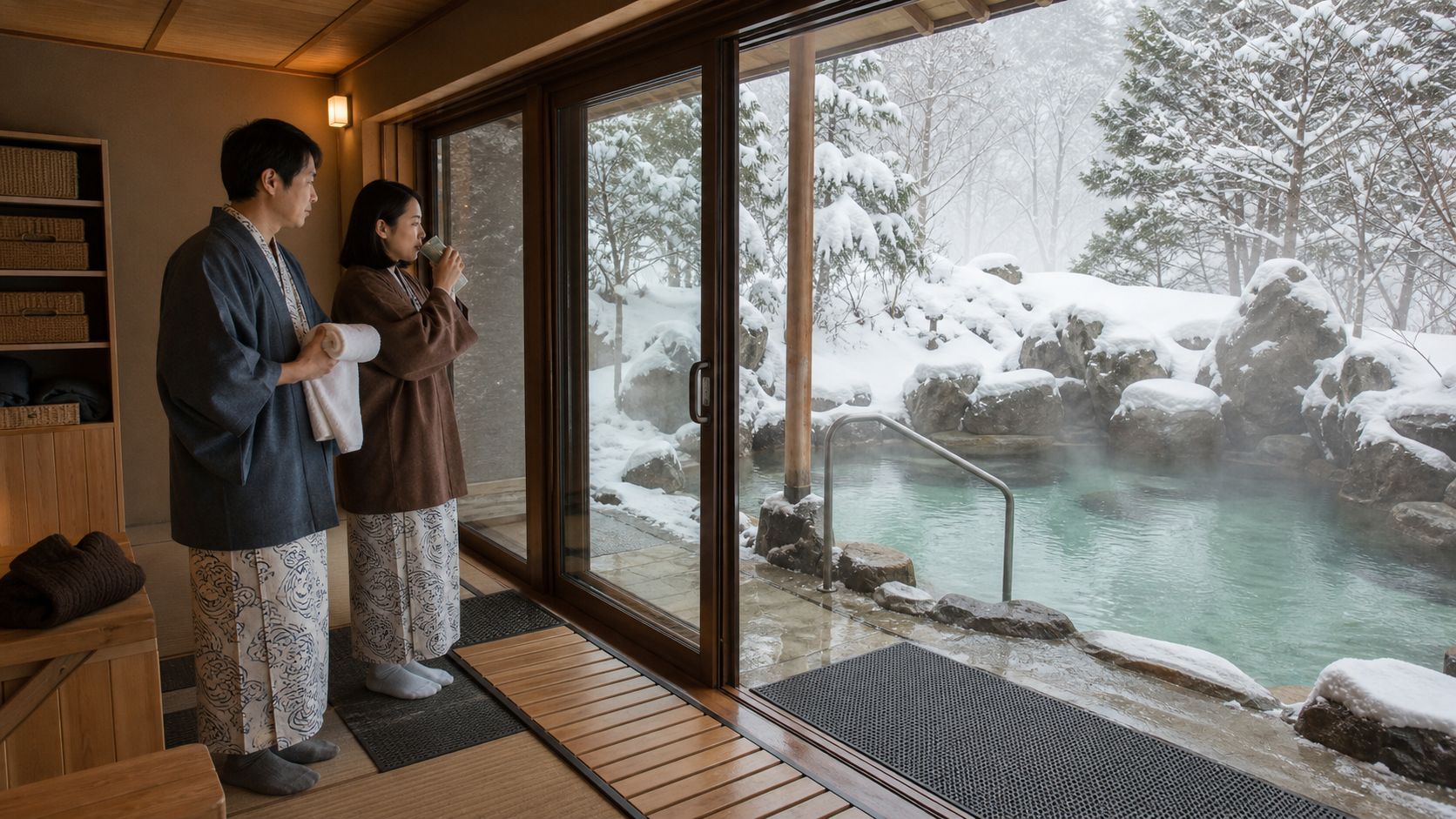
Watching snow from a steaming rotenburo can be a memorable winter experience, but the bath is only one part of the trip. Snow may cancel buses, ice can form between changing room and outdoor bath, and sudden heat can burden the body. Plan transport, access and a short, gradual soak before chasing the view.
1. Snow viewing changes the setting, not the basic culture
Yukimi-buro means a bath enjoyed with a snow view; rotenburo means open-air bath. It is not a separate medical treatment or a promise that snow will fall during your booking. The cultural value lies in quiet seasonal awareness—cold air, hot water, steam and a changing landscape—while sharing clean water respectfully.
2. Choose the actual facility, not a promotional photo
| Option | Best for | Confirm |
|---|---|---|
| Ryokan communal bath | Overnight meal-and-bath experience | Bath hours, gender swaps, tattoo policy |
| Day-use onsen | Short visit without lodging | Last admission, towel fee, closed day |
| Reservable private bath | Families, privacy or some access needs | Time limit, extra fee, tattoo and assistance rules |
| Room with bath | Maximum privacy | Whether water is genuine onsen and outdoor route safety |
Record the precise address, nearest staffed station, shuttle reservation, admission, towel rental, day-use hours, last entry, regular closure and weather cancellation. “Open year-round” does not guarantee every outdoor bath opens during snow removal or high wind.
3. Winter access is part of the booking
Prefer a reserved train/bus and official shuttle over an unfamiliar rental car. Check the return bus before entering; mountain services can be infrequent and stop earlier in winter. If driving, verify winter-tire and chain requirements, road closures and parking snow removal—ordinary rental tires are not enough.
Allow time for delayed trains and icy walking. Use boots with grip, keep hands free, take short steps and use handrails. Never cross a rope or walk onto a snow-covered garden for a photograph.
4. Before entering the water
- Do not bathe after drinking alcohol; do not bring alcohol into the bath.
- Eat neither a very heavy meal immediately before nor arrive dehydrated.
- Ask a clinician if bathing is appropriate when you have relevant heart/blood-pressure conditions, acute illness, pregnancy concerns or medicines that affect heat tolerance.
- Use the toilet, store valuables, remove jewelry that mineral water may discolor and drink water.
- Move from cold outdoors into the warm changing area gradually; do not run straight into very hot water.
5. A gradual bathing flow
- Undress in the changing room; public baths are normally nude unless the facility specifies special bathing wear.
- Wash thoroughly while seated and rinse all soap.
- Use kakeyu—pouring bath water over feet and body—to adjust gradually; it does not replace washing.
- Enter slowly using the handrail. Start with a shorter soak and keep the chest out if the heat feels intense.
- Leave before dizziness, nausea, headache, palpitations or weakness; seek help rather than “enduring.”
- Dry fully, dress warmly, rest and drink water before walking into snow.
There is no universal ideal number of minutes: water temperature, age, health and tolerance differ. Frequent short breaks are safer than competing to stay longest.
6. Shared-water etiquette
Keep towels and long hair out of the bath, speak softly, and do not swim, splash or occupy the best view indefinitely. Phones and cameras stay outside changing and bathing areas—even when nobody appears present—because privacy includes the next guest and minors. Follow signs about rinsing after mineral water; facilities differ.
Identify 男 (men) and 女 (women) curtains each time because ryokan may swap baths. Never assume swimsuit use; mixed baths or special facilities may provide approved garments under their own rules.
7. Tattoos, children and accessibility
Tattoo rules remain facility-specific. Ask in advance whether tattoos are allowed, whether an approved cover is acceptable, or whether a private bath solves the issue—do not hide a tattoo against an explicit rule. Families should check diaper/toilet-training and age/gender rules; never leave a child unattended near water.
For mobility needs, confirm steps, changing benches, shower chairs, handrails, water-entry height, staff assistance, accessible toilets and whether the snow route from reception is cleared. “Private” does not automatically mean accessible or medically supervised.
8. Packing list and FAQ
Pack: gripping winter footwear, warm dry socks, easy layers, water, hair tie, skin moisturizer if personally suitable, and cash where required. Towels and toiletries may cost extra at small day baths.
Can I photograph the empty bath? Only with explicit facility permission and never during operating access to changing/bathing areas. Will snow always be visible? No; snowfall, melt and bath opening change. Can I bathe while drunk? No. Do onsen cure illness? Do not treat broad promotional claims as diagnosis or a substitute for care.
Official references: JNTO onsen guide, JNTO hot springs overview, and Japan Ministry of Health bathing guidance. Check the facility and transport operator immediately before travel.