



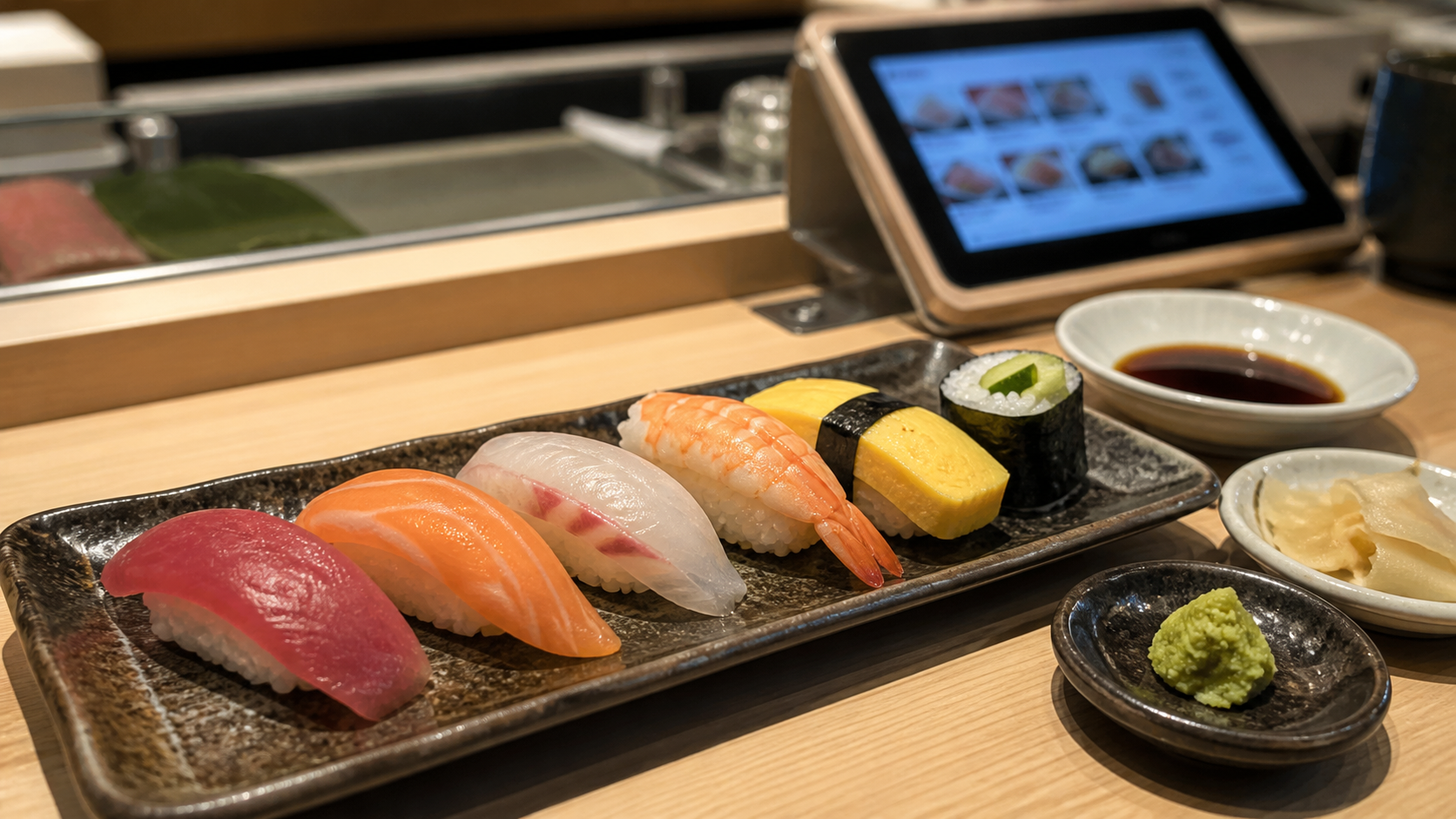
Information checked: August 26, 2026. Kaitenzushi means conveyor-belt sushi, but modern restaurants do not all work alike. Some circulate plates continuously; others deliver almost every tablet order on a dedicated lane. Plate colors, prices, check-in systems and payment methods vary by location. Read the actual instructions before touching a plate.
Check in before joining what looks like the line
A reception screen may ask party size, counter or table preference, and a telephone or ticket number. Register first, keep the ticket and watch the display or listen for your number. A physical line can be for already-called guests, takeaway or payment—not necessarily new arrivals.
Check the exact address, nearest staffed station and exit, opening days, last order, reservations, current waiting system and payment. Ask about entrance steps, booth dimensions, movable chairs and toilets if accessibility matters. Strollers and suitcases must not block aisles, emergency exits or a moving lane.
Circulating plates and dedicated orders are different
You may take a freely circulating plate once it reaches your seat, but never touch it and put it back. Tablet orders may arrive on an upper express lane, a lower belt or a numbered carrier. Wait for your seat number or alert; do not take another party’s order just because it stops nearby.
Some carriers must be returned by pressing a button; others leave automatically. Follow the screen and table instructions. If an item is missing, damaged or not yours, call staff rather than placing it on the general belt.
The plate is part of the bill
Do not publish a nationwide “from ¥100” promise. One restaurant may charge by plate color, another by each tablet item, and premium plates or side dishes may use different prices. Confirm tax, serving count and whether a displayed price is per plate, pair or single piece.
Keep finished plates in the designated place. Some shops count stacks, scan plates or ask guests to insert plates into a collection slot; never combine cups, chopsticks, ginger packets or rubbish with plates unless the system explicitly requests it. Do not move plates between tables.
Tea equipment is convenient—and can be very hot
Many tables provide cups, powdered tea, soy sauce and pickled ginger. Some have a hot-water tap operated by pressing the cup against a lever. Water can be near boiling: place the cup flat, keep fingers clear, use two hands when needed and supervise children closely. Do not experiment with a tap you do not understand; ask staff.
Use condiments hygienically and only for your party. Sushi may already be seasoned. Add a small amount of soy sauce rather than soaking rice; ginger refreshes the palate and is not normally piled on every piece. Ask for no wasabi instead of scraping it into shared containers.
Mix familiar sushi with one seasonal discovery
Nigiri places a topping on vinegared rice; maki rolls rice and fillings in seaweed; gunkan wraps rice to hold soft toppings. A first meal might combine two familiar fish, one cooked item, a vegetable roll, soup and one current seasonal item. Order gradually so food stays fresh and the bill remains visible.
Travelers who avoid raw fish may find cooked shrimp, grilled eel, egg, inari, cucumber rolls or hot side dishes, but availability and preparation vary. “Cooked topping” does not prove that sauce, broth or shared equipment meets a dietary restriction.
Icons and translations do not guarantee cross-contact control
Sushi may contain fish, shellfish, shrimp, crab, egg, wheat, soy, sesame or other allergens. Soy sauce commonly contains wheat and soy; imitation crab, mayonnaise, sauces, vinegared rice and desserts add other ingredients. Shared knives, boards, gloves and lanes can create cross-contact.
Tell staff the exact allergen and severity before ordering and use the Consumer Affairs Agency communication sheet. If staff cannot confirm safe preparation, do not rely on a menu icon. Vegetarian, vegan and halal guests must also check dashi, gelatin, alcohol-derived seasonings and shared equipment.
A moving belt is food service, not entertainment
- Take only plates you intend to keep; never return a touched plate to circulation.
- Keep hands, sleeves, phones and children’s toys away from the lane.
- Do not stop, rotate or push plates, open protective covers unnecessarily, or place personal items on the belt.
- Do not photograph other guests or staff without consent; avoid flash and filming the screen of a neighboring order.
- Keep voices moderate and leave the seat within any stated time limit.
Sushi may be eaten with chopsticks or clean hands. Never pass food chopstick-to-chopstick or stand chopsticks upright in rice.
Call for the bill only after following the table’s counting system
The tablet may have a checkout button, or staff may scan and count plates before giving a bill. Pay at the register, self-checkout or table as instructed. Check premium plates, side dishes, drinks, tax and discounts. Tipping is not customary.
Can I reserve?
It depends on the chain and location; some use apps or online queues, others accept only same-day check-in.
Can children take plates?
An adult should supervise the moving lane, hot-water tap, cups and small items. Follow the shop’s child-seat rules.
What if I ordered the wrong item?
Do not send it back on the belt. Call staff immediately; cancellation rules vary.
Official references: JNTO sushi guide / JNTO kaitenzushi introduction / Consumer Affairs Agency dining allergy guidance