


Information checked: August 26, 2026. A Japanese izakaya group meal may combine a fixed food course with nomihodai, a time-limited selection of drinks. Neither term means “everything in the restaurant is unlimited.” Menu scope, last order, minimum party size and rules differ by venue, so the organizer should confirm details before collecting money.
Choose for the whole group, not the loudest member
Confirm the exact address, nearest staffed station and exit, floor, lift, entrance steps, seating, toilets, opening days and return route. Ask whether the shop can safely store coats, strollers or luggage. A private room may still require shoe removal, have floor seating or be reached only by stairs.
Before booking, record party size, start time, table duration, food course, drink plan, tax, service or table charge, minimum order, smoking status and payment methods. Do not assume a photograph menu, private room or card payment exists at every branch.
A course fixes the sequence—not every appetite
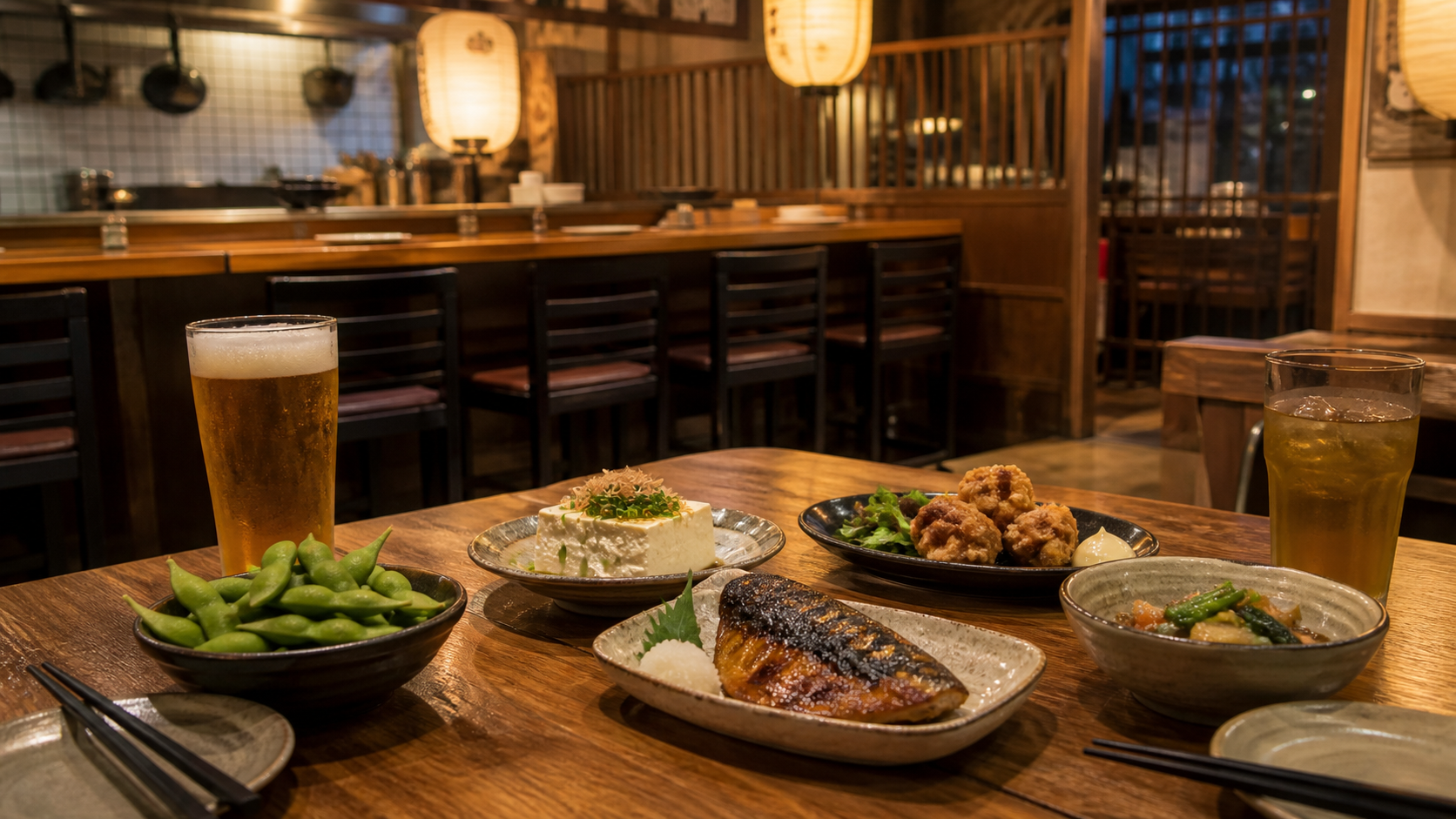
A course may include appetizer, salad or sashimi, grilled or fried food, a main dish and a final rice or noodle item. Check number of dishes, portion assumptions, whether individual or shared plates are used, substitutions, dessert and whether the advertised price includes drinks.
Ask whether everyone must choose the same course and whether children count toward party minimums. Extra dishes are normally charged separately. If the group has very different appetites, à-la-carte ordering may be clearer than a course.
Nomihodai is a defined list within a defined time
Nomihodai usually covers listed drinks for a set period, not every bottle or premium sake. Rules may require all eligible adults at a table to join, one drink per person at a time, an empty-glass exchange, food orders or a minimum party size. Non-alcoholic plans may be separate.
The last drink order often comes before the table end time. A large final round may be refused, and unfinished drinks cannot normally be taken away. Read the actual menu rather than treating “all-you-can-drink” as permission to over-order or drink rapidly.
One toast does not require one alcoholic drink
Collect preferences before ordering: alcohol-free, vegetarian, religious, allergy, spice and raw-food needs. Tea, juice or alcohol-free drinks can be used for the toast. Never make “toriaezu beer” compulsory, and never refill someone’s glass without asking.
Order enough shared plates for each person to taste, use individual side plates and serving utensils, then add food gradually. Keep bags under control and do not let standing conversations block staff or neighboring tables.
A group booking needs ingredient details before arrival
Soy sauce may contain wheat and soy; dashi may contain fish; dressings may contain sesame, egg or dairy; fryers and grills may be shared. A “vegetable course” does not automatically mean vegan, halal or allergy-safe. Ask about cross-contact and what substitutions are realistically possible.
Give the venue the exact allergen and severity, not only “special meal.” Use the Consumer Affairs Agency communication sheet, but do not treat translation as a safety guarantee. A guest with severe allergy should carry prescribed emergency medication and choose another venue if staff cannot confirm controls.
Work backward from each guest’s last safe connection
Course duration, nomihodai last order and table end are three different times. Put them in the group message together with the restaurant floor and station exit. Start on time; late arrival may not extend the booking.
Check each person’s actual destination and last train, not just the nearest station’s closing time. Allow for payment, lifts, large station transfers and platform walks. Nominate a leaving time earlier than the last possible connection and identify a taxi or hotel fallback without assuming availability.
Agree on money before the narrow register
Confirm deposit, prepayment, cancellation deadline, reduced-party fee, no-show charge and whether the bill can be split. A cancelled seat may still be charged because food was prepared. Keep written booking terms and contact the restaurant early if numbers change.
Choose equal split, itemized split or one payer before the meal; include tax and disclosed charges. Some venues accept one payment per table. Tipping is not customary, so do not add an unrequested tip while calculating shares.
The organizer protects choice, dignity and the route home
- Japan’s minimum drinking age is 20; identification may be requested.
- Never pressure, punish or embarrass anyone for declining alcohol.
- Alternate alcohol with water and food; stop serving someone who is unwell.
- No driving or cycling after drinking. Do not leave an impaired guest alone.
- Call 119 for unconsciousness, abnormal breathing, repeated vomiting with reduced response, seizure or other emergency; do not force fluid into an unconscious person.
Does everyone need nomihodai?
Venue rules differ. Ask whether alcohol-free guests can choose a soft-drink plan or pay separately.
Can we extend the table?
Only if staff confirms. A later reservation may make extension impossible.
What does “last order” mean?
It is the final time to place an order, not the closing time or guaranteed departure time.
Official references: JNTO izakaya dining guide / Consumer Affairs Agency dining allergy guidance / National Tax Agency under-20 drinking prevention