



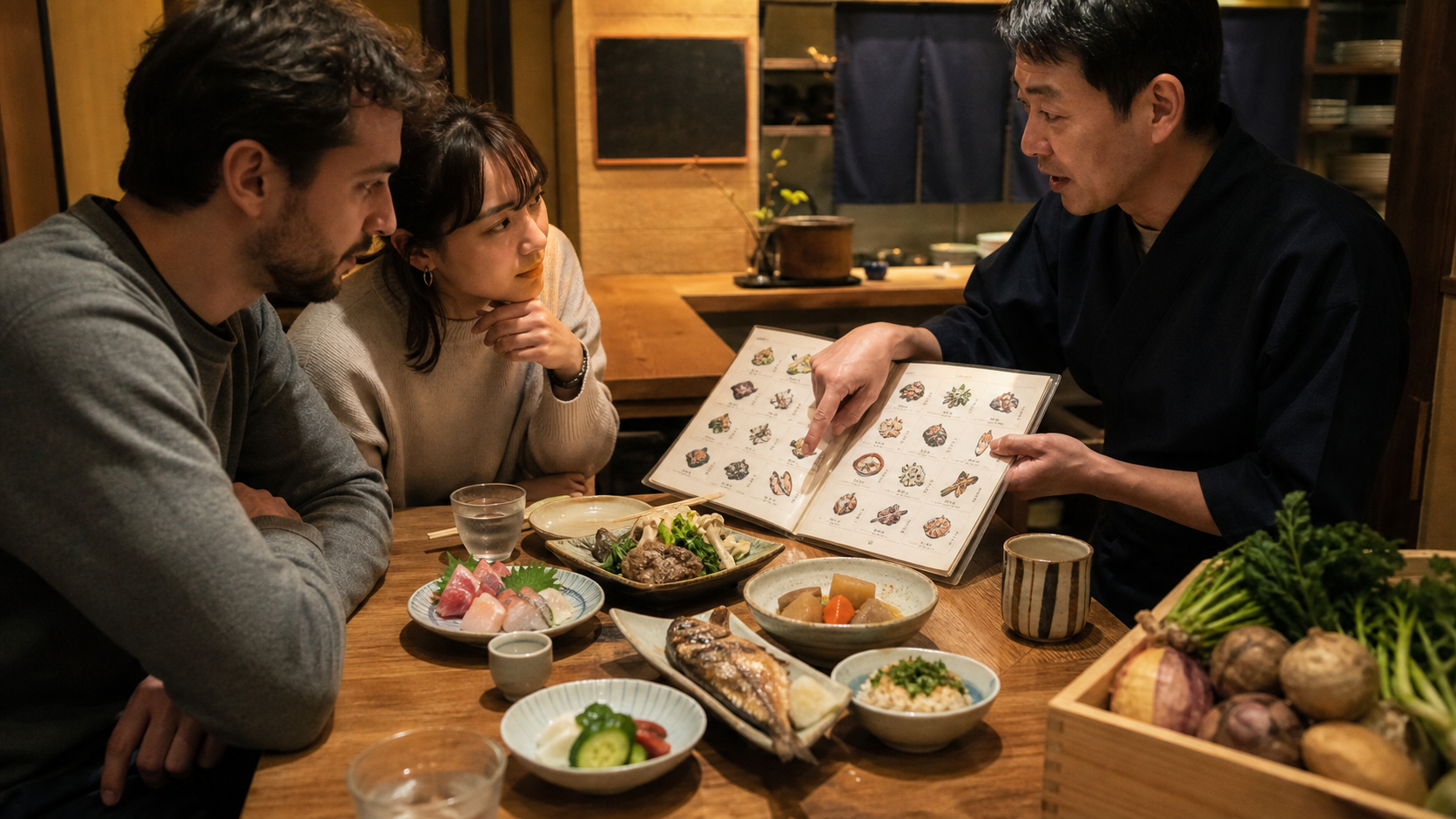
Information checked: August 26, 2026. An izakaya menu can be a small map of Japan: fish from a named coast, mountain vegetables, fermented foods, regional miso and locally remembered home dishes may appear beside national favorites. Yet a “regional” label is not proof of origin, season or tradition. Ask what the restaurant is serving today and why it belongs to the place.
Regional food connects climate, preservation and daily life
Japan stretches from cool Hokkaido to subtropical Okinawa, with long coastlines, mountains and varied farming conditions. MAFF documents local cuisines from all 47 prefectures. Salt-curing, drying, fermentation, miso, vinegar and simmering helped communities use seasonal harvests and preserve food, while ports and migration added outside influences.
A dish can be a local household food, festival food, preservation product or modern specialty. It does not need to be luxurious or ancient. Conversely, a dish sold in a region is not automatically traditional or made entirely from local ingredients.
Menu words are clues, not certificates
| Japanese | What to confirm |
|---|---|
| 郷土料理 (kyōdo ryōri) | Local cuisine; ask which area and its background |
| 名物 (meibutsu) | Known specialty; origin and current producer may differ |
| 地物/地元産 | Local product; ask the exact prefecture, port or farm |
| 旬 (shun) | At its favored season; availability still changes |
| 本日のおすすめ | Today’s recommendation, not necessarily regional |
| 限定 | Limited; check quantity, period and reason |
Prefecture names beside fish, sake or vegetables can indicate origin, style or brand. Ask which one rather than translating every place name as a guaranteed origin claim.
“In season” depends on location, weather and preparation
Spring shoots, summer vegetables, autumn mushrooms and winter hotpots are useful cultural patterns, not a nationwide calendar. Harvests and fishing vary with latitude, altitude, sea conditions and weather. Preserved, farmed or frozen ingredients can also appear outside a short harvest window.
Ask what arrived today, whether the dish is fresh, preserved or previously frozen, and whether the special has sold out. A handwritten board may change after the printed multilingual menu. Never promise that a named item will be available on a future visit.
Compare landscapes instead of reducing regions to one famous dish
Coastal areas may emphasize local fish, seaweed and shellfish; mountain and inland areas may feature mushrooms, wild plants, river fish, roots and preserved foods; farming regions may highlight vegetables, grains, tofu, meat or miso. Island cuisines can reflect distinctive climates and trade histories. These are starting questions, not rules.
Use MAFF’s prefecture database before travel, then look for one product, one preparation and one story in the actual menu. A Tokyo izakaya may specialize in another prefecture; that can be valuable, but it is different from eating the dish in its home community.
Ask three questions before ordering the “local special”
- これはどこの料理ですか? — Which region is this dish from?
- 今日の旬の食材は何ですか? — Which ingredient is in season today?
- どんな調理法ですか? — How is it prepared?
Also ask the number of pieces, portion size, raw or cooked status, bones, strong fermentation, spice and price. Staff may be busy; one clear question at a time is more respectful than requesting a long lecture during peak service.
Create a tasting sequence without wasting food
For two people, begin with one cold seasonal plate, one vegetable or fermented item, one grilled or simmered dish and rice or soup. Add another plate only after checking portion size and appetite. This reveals contrasting textures and preservation methods without turning “local culture” into an oversized banquet.
Use side plates and serving utensils. Taste delicate dishes before heavily smoked, spicy or sweet items. Alcohol is optional: local tea, water and soft drinks can reveal flavor just as well. If ordering sake or shochu, ask about a small serving and never assume local food requires alcohol.
Traditional does not mean allergen-free or suitable for every diet
Dashi may contain fish; miso and soy sauce may contain soy and wheat; dressings may contain sesame or walnuts; pickles and fermented foods may use seafood, alcohol-derived seasonings or shared equipment. Mountain vegetables and mushrooms should not be assumed safe merely because they are plants.
Give staff the exact allergen and severity, ask about cross-contact and use the Consumer Affairs Agency communication sheet. Vegetarian, vegan, halal and religious needs must be checked against broth, seasoning, alcohol, animal products and shared fryers or grills.
Food stories deserve accuracy, permission and fair expectations
Ask before photographing handwritten menus, staff, cooks, producers or other guests. Do not publish an unverified “secret recipe,” identify foraging locations or describe a modern restaurant creation as centuries-old tradition. If staff explains a local story, credit it as their explanation rather than universal fact.
Is the most expensive dish the most authentic?
No. Everyday pickles, tofu, simmered vegetables and preserved fish can carry deep regional history.
Must I visit a countryside restaurant?
No, but confirm whether a city restaurant represents another region and how it sources ingredients.
Can I order only the daily special?
Yes if available, but check portion, price, cooking method and dietary needs first.
Official references: MAFF Traditional Foods in Japan / MAFF Our Regional Cuisines / JNTO local foods / Consumer Affairs Agency dining allergy guidance