



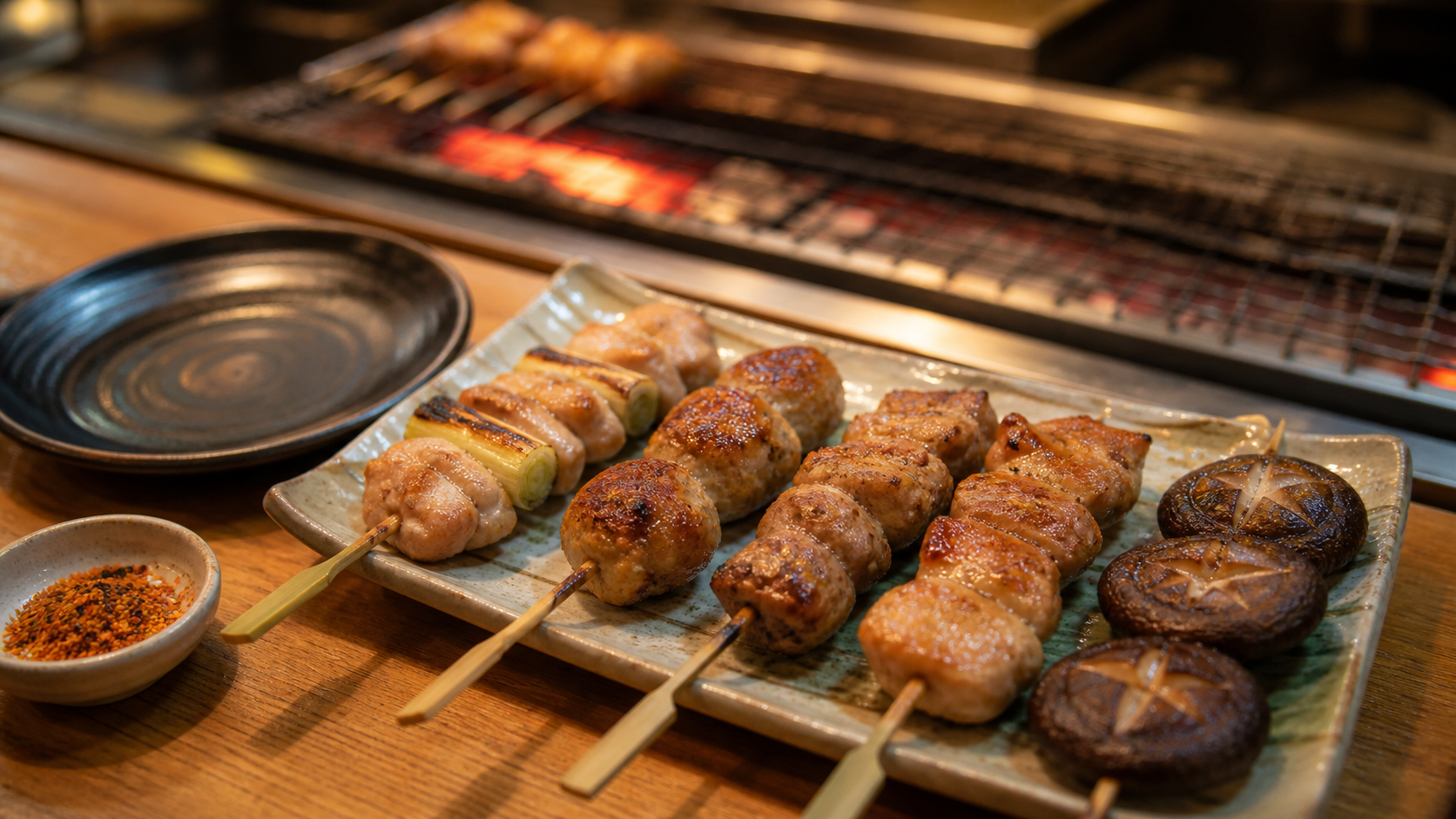
Information checked: August 26, 2026. Yakitori is chicken grilled on skewers and seasoned with salt or a savory-sweet tare sauce. A specialist shop may serve thigh, skin, heart, gizzard, liver and meatballs, turning one bird into a sequence of contrasting textures. This “use many parts carefully” approach is part of the craft, but visitors should never confuse freshness with permission to eat chicken undercooked.
Why the counter is part of the experience
At a small counter, the cook adjusts each skewer’s distance from the heat, turns it repeatedly and serves it at the intended moment. Some restaurants use binchotan charcoal, while others use different charcoal, gas or electric grills. Equipment alone does not prove quality; trimming, skewering, heat control and timing matter more.
Common menu cuts
| Japanese | Meaning and texture |
|---|---|
| Momo | Juicy thigh; an easy first choice |
| Negima | Chicken alternating with scallion |
| Mune / sasami | Leaner breast or tenderloin |
| Tsukune | Chicken meatball; recipe may include egg, breadcrumbs, dairy or yam |
| Kawa | Rich skin, served soft or crisp |
| Sunagimo | Firm, crisp gizzard |
| Hatsu | Springy heart |
| Reba | Strong-flavored liver |
Yakitori centers on chicken. Kushiyaki is the broader term and may also include pork, beef, seafood and vegetables.
Shio or tare?
Shio means salt seasoning. Tare is usually based on soy sauce, sugar and mirin. There is no universal “correct” choice; the cook may match a seasoning to each cut. Say “shio de onegaishimasu” or “tare de onegaishimasu” when a choice is offered, or accept the house recommendation.
A practical first order
- Begin with momo and negima.
- Add tsukune to compare texture.
- Try sunagimo or hatsu if interested in offal.
- Add shiitake, shishito pepper or another vegetable skewer.
- Order in small rounds so each skewer is eaten hot.
Menus may price one skewer, two skewers or a course. For omakase, confirm the total number, price, stop procedure and excluded ingredients before service. Also check tax, table charge and drink requirements.
Chicken must be cooked through
Japan’s Ministry of Health, Labour and Welfare states that raw or undercooked chicken is a major source of Campylobacter food poisoning. Its May 2026 update recorded Campylobacter as one of Japan’s most frequently reported bacterial food-poisoning causes. Chicken, liver and offal should be thoroughly heated at the center. If meat looks clearly raw or cold inside, stop eating and ask staff to recook or replace it. “Fresh” is not a safety guarantee.
Allergies, dietary needs and etiquette
- Tare may contain wheat and soy; tsukune may contain egg, dairy, breadcrumbs or yam.
- Grills, brushes and sauce containers can be shared, so vegetarian skewers are not automatically vegan or allergen-free.
- Explain serious allergies before ordering and use the Consumer Affairs Agency’s multilingual communication sheet.
- Eating directly from the skewer or removing pieces with chopsticks are both acceptable; mind the sharp tip.
- Place used sticks in the provided container or neatly at the plate edge.
- Ask before photographing the cook, grill or other diners, and keep luggage out of narrow aisles.
Frequently asked questions
Can I avoid offal in an omakase course?
Often if requested before service, but substitutions depend on the restaurant. Say “naizo wa taberaremasen.”
Can children enter?
Policies vary. Check smoking rules, counter seating, minimum orders and whether skewers can be served safely to children.
Where is yakitori easy to find?
It is available nationwide. JNTO highlights Tokyo areas such as Omoide Yokocho, Shinbashi and Koenji, Osaka around JR Temma, and Fukuoka’s Nakasu stalls. Check each shop’s current hours and reservation policy.
Official references: JNTO yakitori guide / MHLW Campylobacter Q&A / Consumer Affairs Agency allergy guidance