

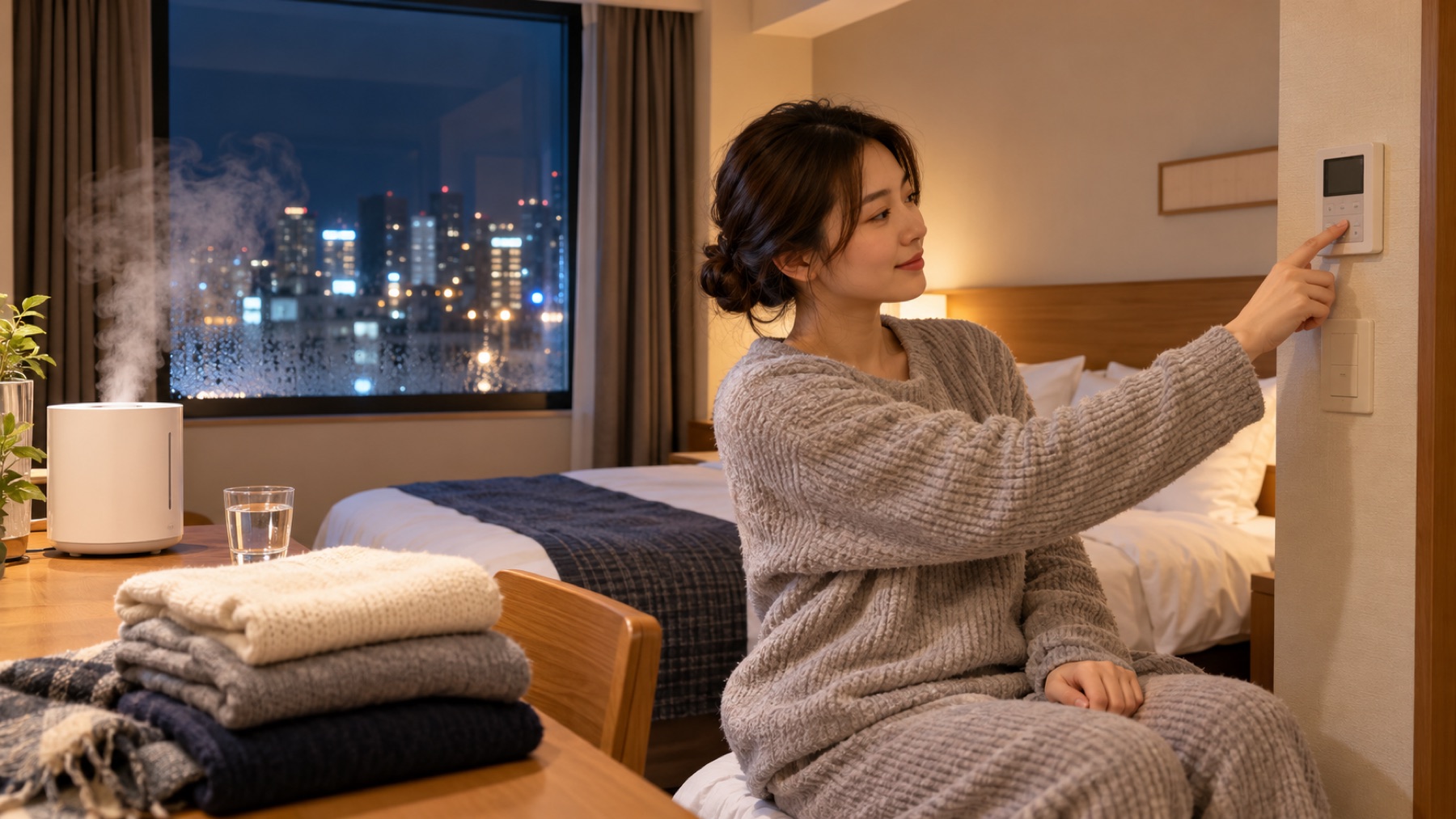
Winter hotel rooms in Japan can feel very different from the street outside. A compact room may warm quickly, yet the air can become dry, windows may collect condensation, and the control panel may be unfamiliar. This guide explains a safe first-night routine for using heating, ventilation and humidification without assuming that every hotel has the same equipment.
A five-minute room check
- Find the temperature control. Look for a wall panel, bedside controller or air-conditioner remote. Common labels include 暖房 (heating), 冷房 (cooling), 自動 (automatic), 風量 (fan speed) and 停止 (stop).
- Check what actually operates. Some hotels centrally switch between heating and cooling by season; the room panel may control only temperature or fan speed. Ask the front desk if the room does not respond after a reasonable time.
- Locate ventilation. A normal room air conditioner often recirculates air rather than bringing in outdoor air. Do not cover an air inlet or bathroom exhaust vent.
- Inspect the humidifier. If one is supplied, check that the tank and tray look clean and follow the hotel’s instructions. Do not add fragrance or anything except the permitted water.
- Keep the exit clear. Luggage, drying clothes and bedding should not block the door, vents or any heater.
Set comfort gradually
Start with a moderate setting, close the curtains without covering the outlet, and give the system time to work. Japan’s Ministry of Health highlights the health importance of winter room temperature and introduces 18°C or above as a widely used minimum reference. That is not a promise that every guest will feel comfortable at the same number: age, health, clothing, bedding, room position and drafts all matter. Add a layer or request an extra blanket before turning a small room excessively hot.
Dry air and humidifiers
Heating can make your throat, skin or eyes feel dry. Drink water normally, avoid placing wet items on electrical equipment, and use the room humidifier only as directed. A humidifier should not produce heavy mist over the bed, wall or electronics. If the room smells musty, the tank looks dirty, or water leaks, switch it off and contact the front desk rather than trying to repair it.
Government building-health guidance uses 40–70% relative humidity as a management range for qualifying large buildings, while influenza guidance has described 50–60% as a useful reference in dry indoor settings. These are context-dependent references, not a requirement to chase an exact number in every hotel room. Visible condensation or damp surfaces mean it is time to reduce humidification and improve ventilation.
Ventilation without freezing the room
Keep built-in continuous ventilation running unless the hotel instructs otherwise. Bathroom exhaust can help remove moisture after a shower. Where windows can be opened, short ventilation may be useful, but upper-floor safety locks, severe weather and hotel rules take priority. Ministry guidance notes that winter ventilation can be combined with heating and that a small continuous opening may limit temperature swings better than leaving a window wide open for a long time.
Condensation: what to do
- Move luggage, paper and electronics away from a wet window.
- Reduce humidifier output and use the bathroom exhaust or permitted ventilation.
- Wipe small amounts with a hotel towel only if appropriate; report persistent dripping, wet walls or damp carpet.
- Do not dry large amounts of laundry across vents or against the window.
Heater and fire safety
Use only equipment provided or approved by the property. Never bring a flame, camping stove or unapproved fuel heater into a guest room. Keep curtains, clothing, paper and bedding away from any heat source. Do not defeat a smoke detector, prop open a fire door or leave an unfamiliar portable heater running while asleep or away. If you smell fuel, see smoke, feel dizzy around combustion equipment, or hear an alarm, stop using the device, leave the room if necessary and alert hotel staff immediately; call 119 for an emergency.
Useful Japanese phrases
| Japanese | Meaning |
|---|---|
| 暖房の使い方を教えてください。 | Please show me how to use the heating. |
| 部屋が暖まりません。 | The room is not getting warm. |
| 加湿器を借りられますか。 | May I borrow a humidifier? |
| 窓の結露がひどいです。 | There is heavy condensation on the window. |
| 毛布をもう一枚お願いします。 | May I have one more blanket? |
Before sleeping
- The room is comfortable rather than overheated.
- No clothes, bags or curtains touch a heater or block airflow.
- The humidifier is stable, clean-looking and not wetting nearby surfaces.
- Ventilation openings and the exit remain clear.
- You know how to contact reception and where the emergency exit is.
For outdoor clothing, icy pavements and disrupted transport, continue with our Hokkaido winter travel guide. Indoor comfort is only one part of a safe winter itinerary.
Official references
- Ministry of Health: winter room temperature and health
- Ministry of Health: indoor environmental management standards
- Ministry of Health: ventilation guidance
- JNTO: Winter in Japan
Information checked October 30, 2026. Hotel equipment and rules vary; the property’s instructions always take priority.