
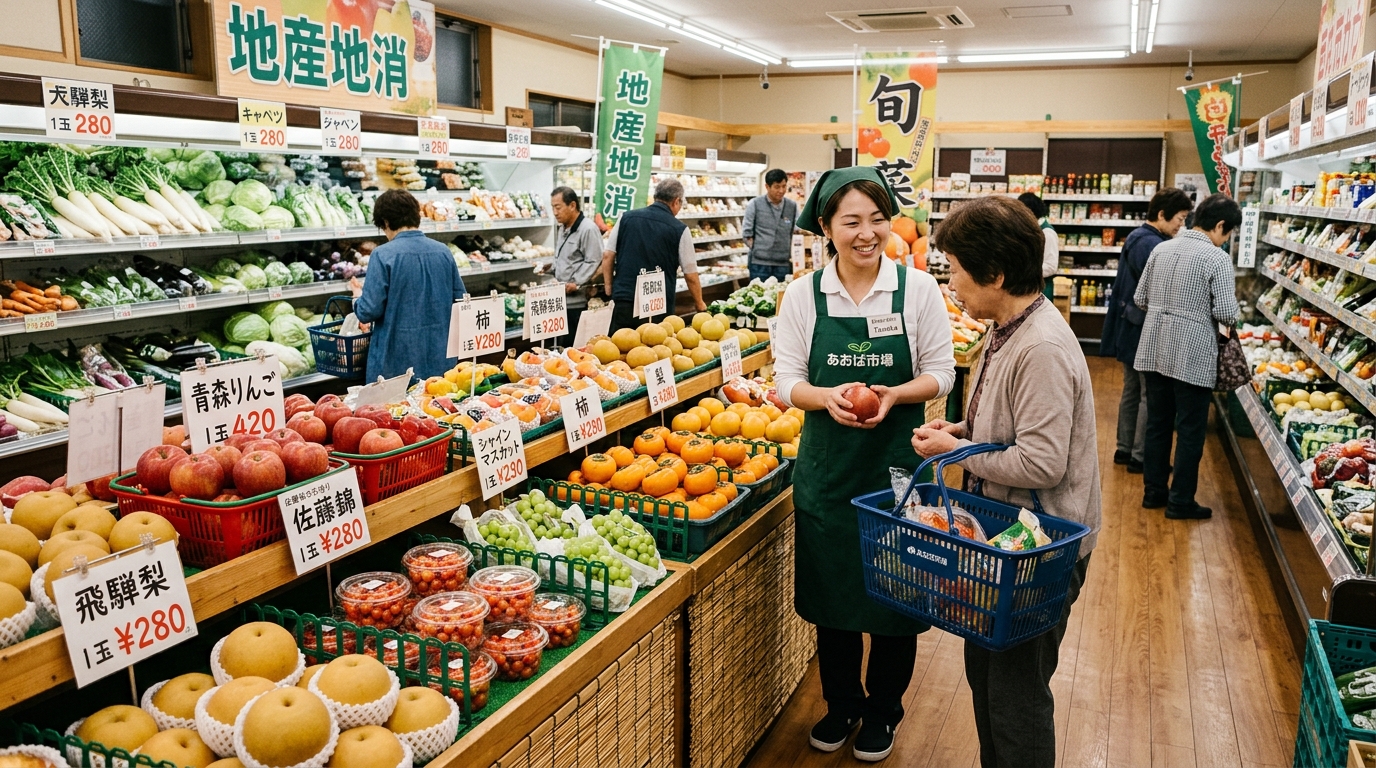
A Japanese supermarket is useful for more than inexpensive meals. It shows what local households are cooking now: seasonal produce, regional fish, prepared side dishes, rice, miso, pickles and products made by nearby companies. For travelers, it is also a practical place to buy breakfast, picnic food and compact edible souvenirs.
Quick answer: visit after checking the store’s hours, start with the produce and regional-product sections, read storage and allergen labels, and use the bagging area without blocking the register.
Supermarket or convenience store?
| Choose a supermarket when you want | Choose a convenience store when you want |
|---|---|
| More produce, meat, fish and family-size choices | A quick stop with minimal comparison |
| Regional brands and household staples | Ready-to-eat food near stations or late at night |
| Prepared-food markdowns and wider bento selection | ATM, printing or other branch services |
Many supermarkets close earlier than convenience stores. JNTO’s business-hours guidance notes that shop hours vary by area and that rural stores can close earlier, so verify the branch rather than relying on a nationwide assumption.
Start with seasonal produce
Fruit and vegetables often reveal the season and region most clearly. Look for a prefecture name on the price card or package, but do not assume every product is local merely because it appears in a local store.
- Spring: bamboo shoots, peas, strawberries and mountain vegetables.
- Summer: tomatoes, cucumbers, eggplant, melon and watermelon.
- Autumn: grapes, pears, persimmons, mushrooms and sweet potatoes.
- Winter: mandarins, daikon, napa cabbage and hot-pot vegetables.
Premium fruit may be sold as a gift product. Check the unit: a displayed price can apply to one piece, one pack or a measured weight.
Prepared foods: what to try
The sōzai section contains cooked side dishes such as karaage, croquettes, grilled fish, salads and simmered vegetables. Bento, sushi and rice bowls usually have a separate display. Useful Japanese terms include:
- 弁当 — bento meal
- 惣菜 — prepared side dish
- 揚げ物 — fried food
- 焼き魚 — grilled fish
- 要冷蔵 — keep refrigerated
Some stores provide a microwave or eating area, while others do not. Do not open food before paying, and do not assume the store can heat every item.
How markdown stickers work
Stores may discount perishable food later in the day, but timing and percentage are store decisions—not a fixed national schedule. Common stickers include 値引 (discount), ○円引 (a stated yen amount off) and 半額 (half price).
Wait until staff finish applying stickers and do not move stickers between packages. A discount does not extend the use-by date; buy only what you can store and eat safely.
Reading dates and storage labels
- 消費期限 (shōhi kigen): use-by date for more perishable products.
- 賞味期限 (shōmi kigen): best-before date, mainly about expected quality.
- 保存方法: storage instructions.
- 要冷蔵: refrigeration required.
- 開封後: instructions after opening.
Japan’s Consumer Affairs Agency provides official food-labeling guidance and explains that food sold in Japan is labeled in Japanese. A camera translation can help, but confirm crucial information rather than relying on a single automated translation.
Allergens: do not rely on appearance
Packaged-food allergen rules and covered ingredients can change. Use the current Consumer Affairs Agency material rather than memorizing an old list. The agency also offers a downloadable food-allergy communication sheet.
Fresh deli food, bakery items and food packed in-store may not provide the same information as sealed factory products. Cross-contact is possible. Travelers with serious allergies should ask staff, carry a translated allergy card and choose only food whose ingredients can be confirmed.
Finding regional products and souvenirs
Look for displays marked 地元 (local), 県産 (produced in the prefecture), ご当地 (regional specialty) or 銘菓 (noted local confection). Good travel-friendly choices include tea, seasoning, dried noodles, rice crackers and individually wrapped sweets.
Before buying meat, fruit, seeds or other agricultural products to take abroad, check the destination country’s customs and quarantine rules. Store staff cannot determine whether an item may enter another country.
Payment, bags and the checkout flow
- Place the basket at the register and keep personal bags out of the cashier’s work area.
- Confirm the total and choose an accepted payment method.
- Pay for a bag if needed; bag policies and prices vary.
- Move to the separate packing table before organizing purchases.
- Return the basket to the designated stack.
Many stores accept cards and electronic payment, but smaller or rural stores may have fewer options. Keep some yen available. Self-checkout layouts vary; if a payment fails, ask before trying repeatedly.
Food safety during a travel day
Refrigerated sushi, raw seafood, dairy products and chilled deli food should not spend hours in a warm bag. Buy them near mealtime, use an insulated bag when necessary and follow the package’s storage directions. During hot weather, shelf-stable food is safer for a long sightseeing day.
Hotel refrigerators can be small and may not cool like a household refrigerator. Check before buying a large amount of perishable food.
Etiquette inside the store
- Ask before photographing displays or staff.
- Use tongs or provided bags for loose bakery products.
- Do not eat unpaid items.
- Keep carts and luggage from blocking narrow aisles.
- Handle produce gently and return unwanted chilled food promptly.
- Use store rubbish bins only according to their labels.
A useful 20-minute shopping route
- Check the regional display near the entrance.
- Walk through seasonal produce and note prefecture names.
- Choose one local staple such as rice, miso, tea or noodles.
- Compare two or three prepared dishes for an immediate meal.
- Read dates, allergens and storage instructions before checkout.
- Pack chilled food together and eat it promptly.
Frequently asked questions
What time do supermarket discounts begin?
There is no universal time. It depends on the store, day, stock and closing time.
Can I eat supermarket food inside the store?
Only in a designated eat-in area when one is provided. Otherwise take the food away.
Are supermarket prices tax-free for visitors?
Do not assume so. Tax-free eligibility depends on the store, product, purchase conditions and current rules. Check the store’s official counter information before shopping.
Can I take Japanese food home?
Packaged snacks are often easier than fresh food, but customs and quarantine rules belong to the destination country. Check before purchase.
Summary
A local supermarket is one of the easiest places to observe everyday Japanese food culture. Shop by season, verify regional claims, read labels carefully, protect the cold chain and follow the store’s checkout and photography rules.
Food-label and business-hours information checked September 18, 2026 against Consumer Affairs Agency and JNTO official guidance. Store services, prices and discount timing vary.