

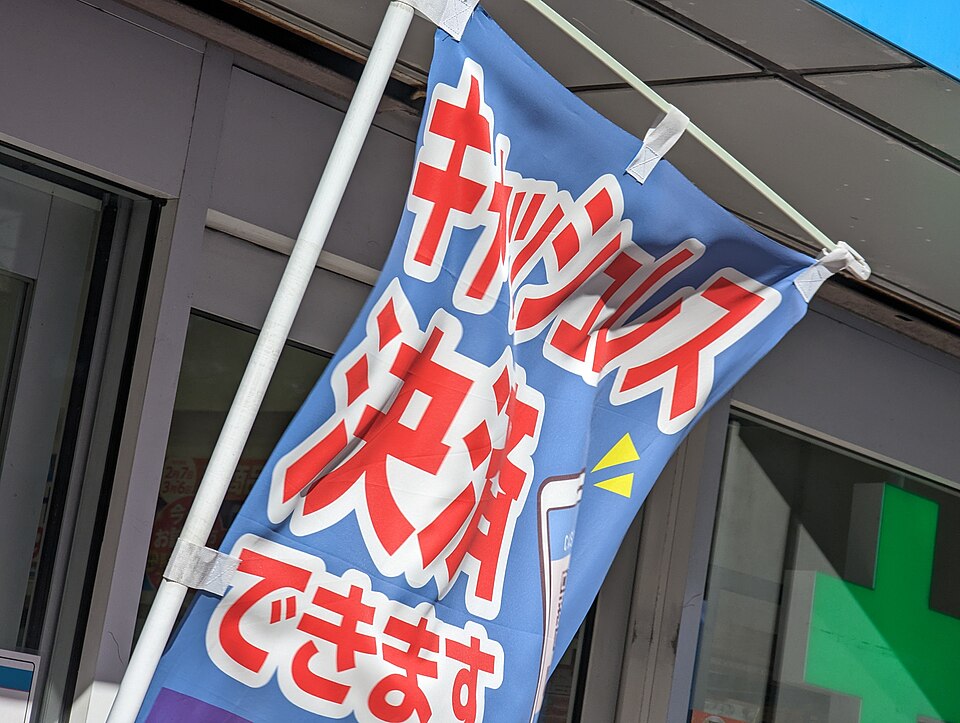
Japan is increasingly cashless, but the smoothest trip still uses three tools: an international card, a transport IC card and a small reserve of yen. This 2026 guide explains where each works, when cash remains necessary, how to avoid exchange-rate traps and what to do when a payment fails.
1. Is Japan cashless in 2026?
Cashless payment is now mainstream. Japan’s Ministry of Economy, Trade and Industry reported that cashless payments represented 58.0% of consumer spending in 2025 under its domestic indicator. Credit cards accounted for most of the cashless value. That national figure describes the market, however—not a promise that every restaurant, temple or rural bus accepts cards.
Large hotels, department stores, chain shops, convenience stores and major stations usually offer several electronic options. Family-run restaurants, market stalls, temple and shrine offices, mountain facilities, older ticket machines and rural accommodation may still require cash. Network outages and foreign-card security checks can also interrupt an otherwise cashless day.
2. The most reliable setup for a visitor
| Payment tool | Best use | Main limitation |
|---|---|---|
| International credit or debit card | Hotels, shopping, larger restaurants and reserved transport | Issuer blocks, PIN problems or merchant non-acceptance |
| Suica, PASMO, ICOCA or another interoperable IC card | Local trains, buses and small purchases displaying the IC logo | Not accepted everywhere; cash top-up is often the easiest option |
| Japanese yen | Small businesses, admission boxes, rural areas and payment backup | Needs secure storage and produces many coins |
Bring two cards from different networks or issuers, stored separately. Add an IC card for urban transport and keep enough cash for at least one meal, local transport and an unexpected card failure. The exact cash reserve should reflect your itinerary: a remote ryokan stay needs more preparation than a day in central Tokyo.
3. Credit and debit cards: what to check
Visa, Mastercard, JCB and other international brands are widely accepted at affiliated merchants, but acceptance varies. Look for card logos at the entrance or register and ask before ordering at a small restaurant. Some unattended machines require a physical card and PIN even when your phone wallet normally works.
- Tell your issuer your travel dates if it recommends doing so, and confirm that overseas transactions and ATM withdrawals are enabled.
- Know your PIN; signatures are not always an alternative.
- If a terminal offers conversion into your home currency, compare it carefully. Choosing Japanese yen usually lets your own card network perform the conversion; dynamic currency conversion can include a less favorable rate.
- Keep the issuer’s international contact number somewhere separate from the card.
4. Contactless cards and phone wallets
Contactless acceptance has expanded at convenience stores, chains and many urban merchants. The symbol on the terminal matters more than a general “cashless” sign: a store may accept Japanese IC cards but not your particular contactless bank card.
Apple Pay or Google Wallet does not make every card universally compatible in Japan. Device region, card issuer, network and merchant terminal all affect the result. Carry the physical card and do not depend on a phone with a low battery as your only payment method.
5. Transport IC cards: convenient stored value, not a bank card
Interoperable IC cards such as Suica, PASMO and ICOCA can be tapped on many trains and buses nationwide and used at shops showing the IC symbol. They are ideal for ordinary local fares and small purchases. They do not automatically cover every highway bus, rural line, limited-express supplement or Shinkansen journey.
Visitor products and sales locations change. JR East currently provides Welcome Suica options, including Welcome Suica Mobile for eligible devices. Check the issuing railway’s official page immediately before travel. Physical-card availability can be limited, and visitor cards may expire without refunding the remaining stored value. At many station machines, charging a physical card with yen cash is the simplest method; do not assume a foreign card will work for top-ups.
6. QR-code payment apps: useful locally, unreliable as a visitor’s main plan
PayPay, Rakuten Pay, d払い and au PAY are visible across Japan, but domestic apps may require a Japanese phone number, identity verification or a supported funding source. Downloading an app does not guarantee that an overseas visitor can activate and fund it.
Alipay, WeChat Pay and other overseas wallets are accepted by some tourism-oriented merchants, but coverage is not universal. Check the exact wallet logo at the register. Note that LINE Pay ended its Japanese service in 2025, so older guides listing it as a current nationwide option are outdated.
7. Situations where yen cash remains useful
- Small restaurants, bars, markets and independent shops
- Temple or shrine admission, offerings, amulets and goshuin
- Coin lockers, laundries and older vending or ticket machines
- Rural buses, taxis, mountain huts and remote accommodation
- Emergencies, power failures or rejected foreign cards
Ask a countryside hotel or ryokan about payment before arrival—especially if dinner and local transport make leaving difficult. Carry some ¥1,000 notes and coins rather than relying only on a ¥10,000 note for a small purchase.
8. Withdrawing cash: ATM access, limits and hidden costs
JNTO identifies Japan Post Bank and Seven Bank as useful options for overseas-issued cards. Seven Bank states that supported networks include Visa/PLUS, Mastercard/Maestro/Cirrus, UnionPay, American Express, JCB, Discover and Diners Club, although a card bearing a listed logo can still be declined.
| Before confirming a withdrawal | Why it matters |
|---|---|
| Check the ATM fee and your issuer’s withdrawal fee | Two separate charges may apply |
| Check your card’s daily and per-transaction limits | The ATM and your bank can impose different limits |
| Compare yen billing with home-currency conversion | The offered conversion rate may include an additional margin |
| Keep the receipt and retrieve card, cash and phone | Useful for resolving discrepancies and avoiding loss |
Do not repeatedly retry a blocked card. Contact the issuer, then use your backup card or another supported ATM.
9. Simple payment etiquette and useful Japanese
Place cash or a card on the small payment tray when one is provided rather than reaching across the counter. State the method before tapping, because staff may need to select it on the terminal.
- Kaado wa tsukaemasu ka? — Can I use a card?
- Taatchi kessai wa dekimasu ka? — Can I pay contactless?
- Suica de onegaishimasu. — Suica, please.
- Genkin dake desu ka? — Is it cash only?
- Ikkatsu de. — One payment, not installments. This is a common response when a Japanese terminal prompts staff to ask.
10. Five-minute checklist before departure
- Enable overseas purchases and ATM use; memorize both card PINs.
- Save issuer contact details and keep the backup card separately.
- Compare foreign-transaction and cash-withdrawal fees.
- Check the current official IC-card sales options for your arrival airport or station.
- Prepare initial yen for transport, food and a failed payment.
- Use transaction alerts and a device passcode; never reveal a one-time verification code to a stranger.
Official references: METI’s 2025 cashless-payment ratio, JNTO cashless-payment guidance, JNTO IC-card guide, JR East Welcome Suica and Seven Bank’s overseas-card information.
Information checked August 27, 2026. Payment services, card availability, fees and acceptance can change; confirm critical details with the provider before travel.