
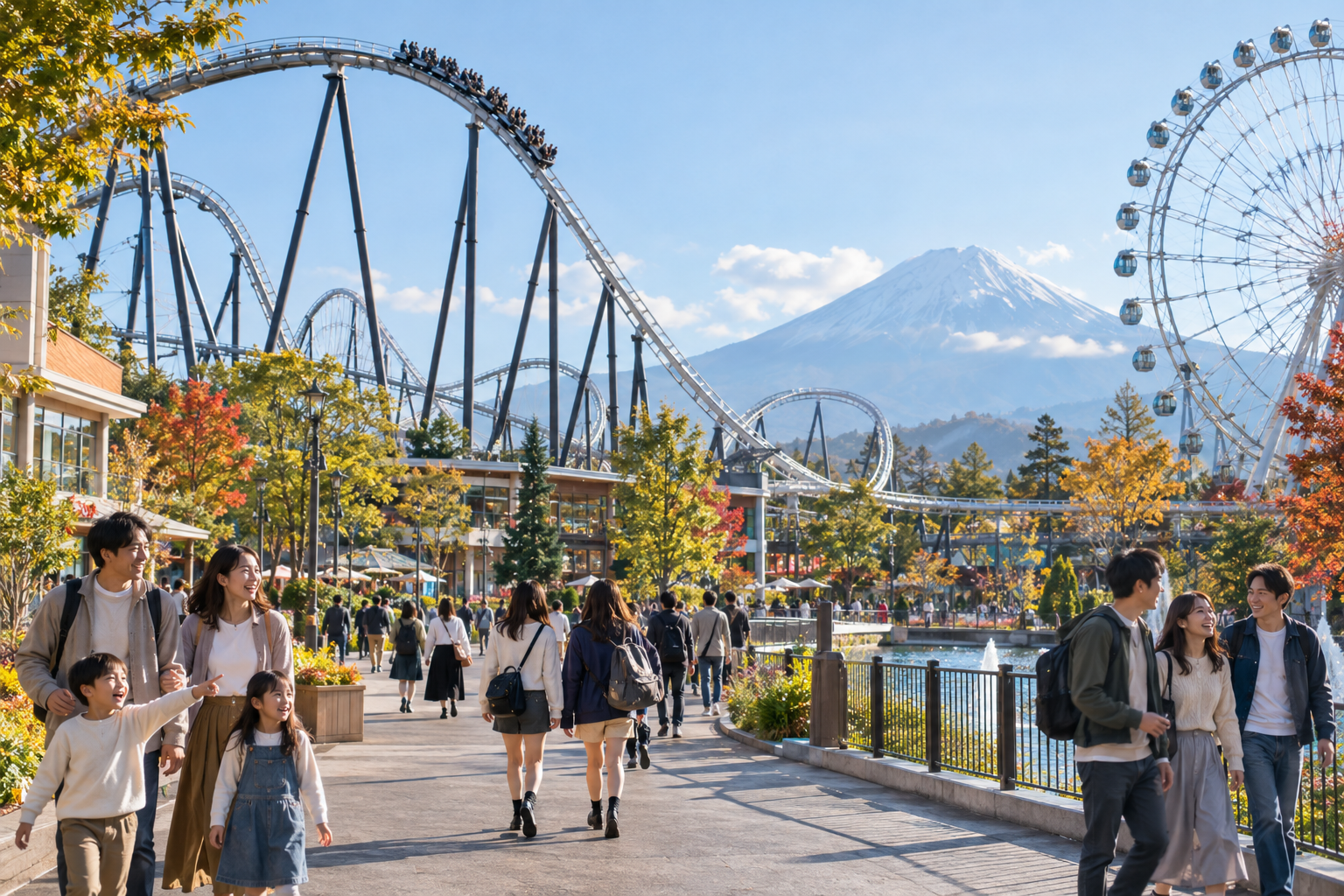
Kanto’s amusement parks serve very different trips. Fuji-Q Highland is strongest for major coasters, Sanrio Puroland is an indoor character park, Yomiuriland combines rides with seasonal events, Tokyo Dome City works for a flexible central-Tokyo visit, Seibuen focuses on a retro town experience, and Nasu Highland suits a longer regional stay. Choose by group, weather, and transport—not by an outdated fixed ticket price.
Quick comparison
| Park | Best for | Weather risk | Access style |
|---|---|---|---|
| Fuji-Q Highland | Major coasters and Mount Fuji area | Outdoor rides can close for wind or weather | Rail or highway bus; full-day trip |
| Sanrio Puroland | Character fans, younger children, rainy days | Main areas are indoors | Tama-Center stations |
| Yomiuriland | Families, rides, seasonal illumination | Many outdoor attractions | Train plus gondola or bus |
| Tokyo Dome City Attractions | Flexible half-day in central Tokyo | Some rides affected by weather | Suidobashi, Korakuen, or Kasuga |
| Seibuen Amusement Park | Showa-retro atmosphere and immersive town | Outdoor schedule can change | Seibuen-yuenchi Station |
| Nasu Highland Park | Regional family trip and varied rides | Mountain weather and seasonal operation | Car or carefully planned bus connection |
Fuji-Q Highland: plan around ride operations
Fuji-Q is the strongest choice for travelers prioritizing large roller coasters. Admission itself can be free, while rides require individual tickets or a pass. Official one-day pass prices vary by date, and priority products have separate conditions. Check the operating status on the morning of your visit: wind, rain, inspection, and maintenance can suspend key rides.
Fuji-Q Highland Station is beside the park, and highway-bus packages are available from several cities. Do not schedule a non-refundable evening immediately after a day centered on outdoor coasters.
Sanrio Puroland: indoor and reservation-sensitive
Puroland is mainly indoors and works well in rain, heat, or cold. It is reached from Tama-Center—not Seiseki-sakuragaoka, as older summaries sometimes claim. Character greetings, shows, and restaurant demand can shape the day more than thrill rides do.
Check the official admission calendar, required visit procedures, show timetable, and maintenance closures before traveling. Popular days can sell out.
Yomiuriland: rides by day, lights by night
Yomiuriland is useful for mixed-age groups and becomes especially distinctive during the winter Jewellumination season. The 2026–27 illumination begins October 29, 2026. The park has date-dependent hours and ticket choices, so decide whether your priority is daytime rides, evening lights, or both.
From Keio-yomiuriland Station, use the gondola or bus; from Odakyu Yomiuriland-mae Station, use a bus. Confirm the final return connection.
Tokyo Dome City: the easiest flexible visit
Tokyo Dome City Attractions does not require a single all-day itinerary. You can enter the area freely and buy individual rides or a pass, making it useful after a museum, baseball game, or rainy-day schedule change. Stations include Suidobashi, Korakuen, and Kasuga.
Individual attractions may stop early when queues reach capacity, and operating status can change because of weather or maintenance. Check the live official information rather than assuming every ride runs until the site’s closing time.
Seibuen and Nasu Highland: regional alternatives
Seibuen Amusement Park emphasizes a recreated Showa-era shopping street and performance-based atmosphere. It is directly accessible from Seibuen-yuenchi Station, but show times and seasonal events should be checked in advance.
Nasu Highland Park is a better fit for a Tochigi or Nasu trip than for a rushed central-Tokyo day. Public transport is more limited, and mountain weather matters. Build the park into a regional itinerary with lodging or nearby attractions.
How to choose
- Thrill rides first: Fuji-Q Highland.
- Indoor character experience: Sanrio Puroland.
- Winter night event: Yomiuriland.
- Two or three flexible hours: Tokyo Dome City.
- Retro immersive atmosphere: Seibuen.
- Nasu regional family trip: Nasu Highland.
Booking checklist
- Check the exact-day calendar and whether entry reservation is required.
- Read refund and date-change rules before buying.
- Check height, age, health, and accompaniment restrictions for must-do rides.
- Save the official ride-status page.
- Confirm the last train, bus, or gondola connection.
- Prepare an indoor or regional backup plan for bad weather.
Frequently asked questions
Which park is easiest from central Tokyo?
Tokyo Dome City is the simplest flexible stop. Puroland and Yomiuriland need a suburban train journey; Fuji-Q and Nasu Highland deserve much more travel time.
Which is best on a rainy day?
Sanrio Puroland is the most weather-resistant because its main experience is indoors. Outdoor rides elsewhere may suspend operation.
Should I buy a pass?
Only after comparing the rides you can and want to use. Individual tickets can be better for a short Tokyo Dome City or Fuji-Q visit, while a pass may suit a full day.
Official sources
- Yomiuriland
- Sanrio Puroland
- Fuji-Q Highland
- Tokyo Dome City Attractions
- Seibuen Amusement Park
- Nasu Highland Park
Summary
There is no single “best” Kanto amusement park. Choose Fuji-Q for coasters, Puroland for indoor characters, Yomiuriland for seasonal lights, Tokyo Dome City for flexibility, Seibuen for retro immersion, and Nasu Highland for a regional family trip.